


Housekeeping
Hello friends! We do hope this email finds you well. I (Clayton) am writing from 36,000 feet over the Atlantic while Oren is somewhere on the East Coast.
We're heading to Miami to kick off our North American tour this month. ICYMI, we’re hosting 4 in-person, half-day workshops (something we’d never done before!) in Miami, Toronto, and NYC. Miami and Toronto are locked in, but if you haven’t signed up already and still want to attend one of the NYC workshops next week, you can do that here.
In this week’s HYPER we’re going to share three of the five exercises we’re doing on tour, and dive into standout analogue marketing.
Today Oren broke down a few of the exercises we’re going to be doing live, and you can download the worksheets he shows for your own use here:
Download now
Breakdowns below:
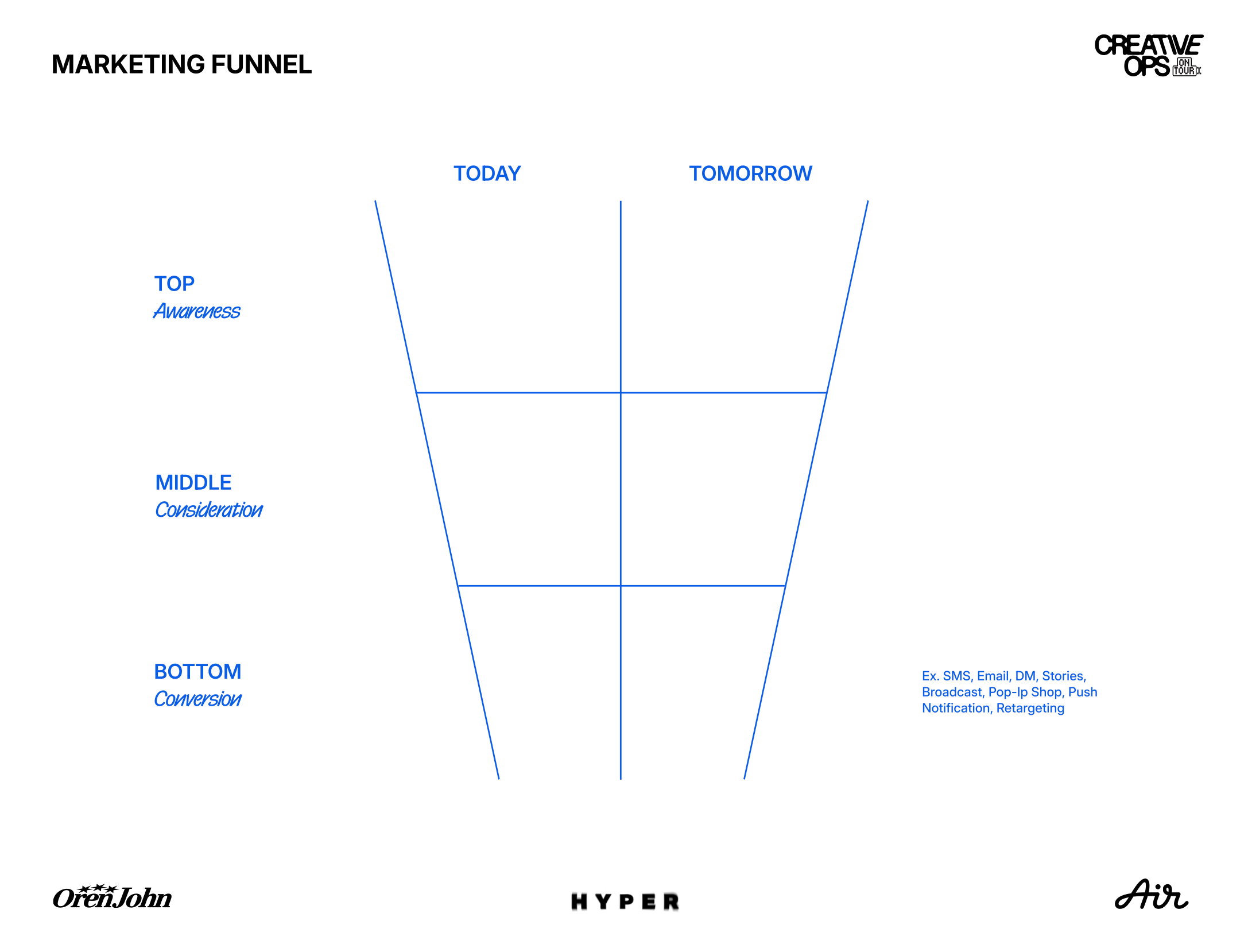
Full Funnel Mapping
Purpose:
Identify where your growth is breaking.
How to run it:
Break your funnel into:
Top: Awareness
Middle: Education / Trust
Bottom: Conversion
Write down what you currently do at each stage.
Identify gaps (e.g. strong awareness, no conversion).
Define what an ideal version of each stage would look like.
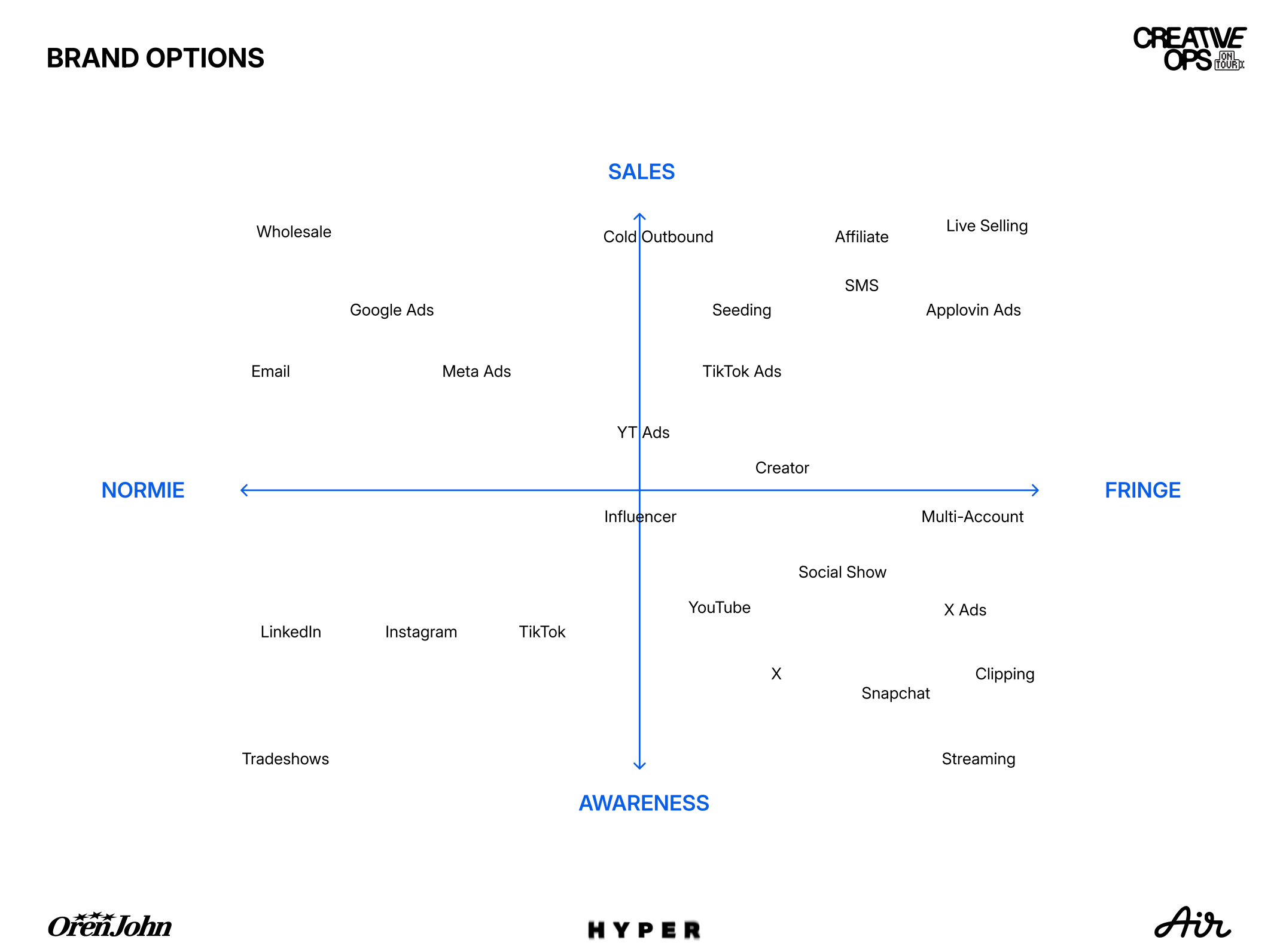
Assign 1–2 tactics to fix the weakest stage first, either improving existing programs or choosing from the program matrix (this matrix isn’t perfect, just a guideline)
Content Funnel & Pillar Grading
Purpose:
Turn “content pillars” into a performance system.
If you’re new to the content pillars concept he mention its detailed it in-depth in this video.
How to run it:
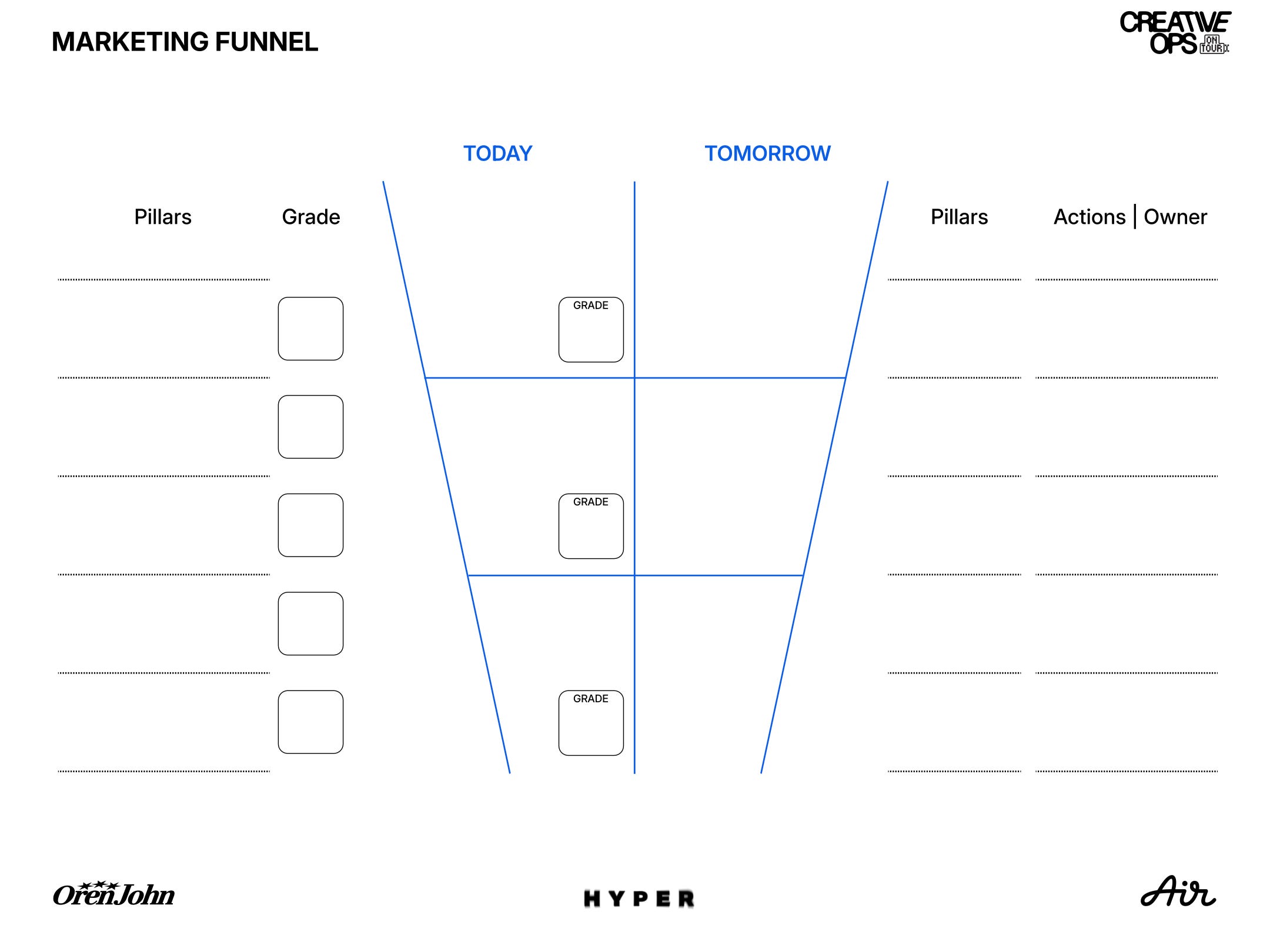
List your existing content pillars (3–5 max).
Assign each pillar to:
Top / Middle / Bottom of funnel
Grade each pillar honestly (A–F) based on:
Reach
Engagement
Business impact
Identify:
What to kill
What to fix
What to double down on
Propose new pillars only after grading the current ones.
Key principle:
Don’t add pillars to avoid fixing bad ones.
Output:
A rationalized content system with clear improvement priorities.
Executive-Friendly Justification Exercise
Purpose:
Get buy-in from stakeholders who don’t “get” content.
How to run it:
Use the funnel + grades as proof of underperformance.
Show where the brand is failing (D/F areas).
Clearly state:
What will change
Why it must change
What success looks like
Tie changes to performance, not creativity.
Annual Marketing & Content Calendar
Purpose:
Stop reactive posting and random launches.
How to run it:
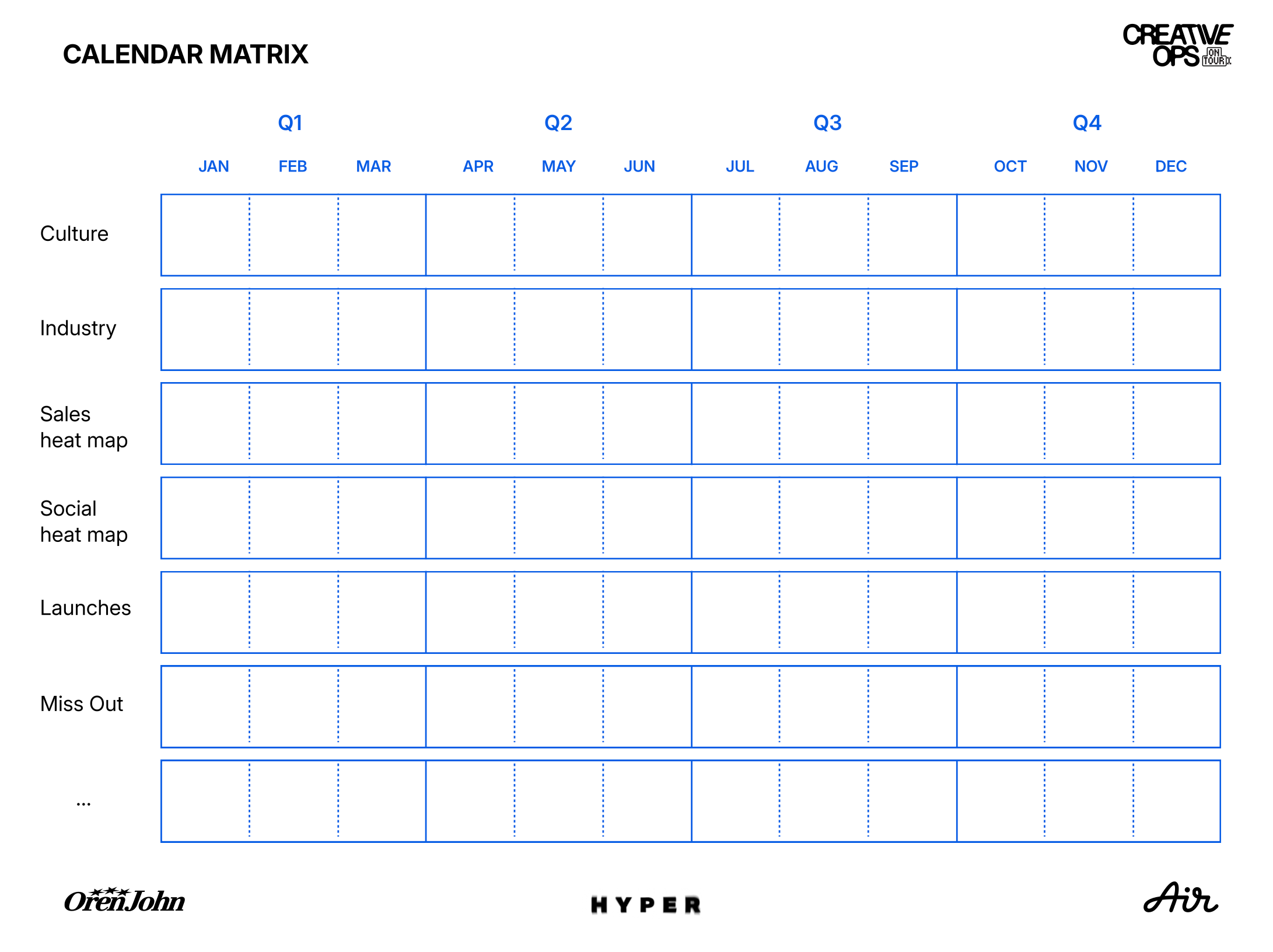
Create a 12-month calendar.
Fill in these rows:
Sales heat map (high vs low months)
Social performance history
Cultural moments
Industry events
Planned launches
Missed opportunities from last year
Identify:
Dead zones
Overloaded periods
Repeatable wins
Decide what kind of content belongs in each season.
Rule:
Different months require different content energy (education ≠ summer).
Output:
A realistic yearly operating plan for marketing and content.
IRL is back, baby!
If there was ever a time to double down on in-person experiences, this is it.
We’ve spent the last decade optimizing every inch of our lives; apps for everything, notifications for nothing, subscriptions to things we don’t even own anymore. And somewhere along the way, it all started to feel like a trap.
We’re watching an entire generation reassess their relationship to technology, because we’re just tired, man.
Run and hike clubs were the early signals of this, along with niche meetups over birdwatching, scrapbooking or look-a-like contests. And it’s really fascinating, because it’s hinting at something much deeper, which is a desire to participate, not just consume.
Influencer CatGPT threw a no-phone party in LA that drew over 700 people. If you pulled out your phone, you got sticker-shamed.
Birkenstock is hosting dinners in LA paired with meditation ceremonies designed to create a space for reflection and conversation).
About:Blank and Nothing teamed up to host a late-night Audio Lab party in an old Georgian townhouse in London, part of an ongoing creative series built around music, curation, and experience.
Happy Medium, an art café in NYC, built its entire brand around hobby culture and helping people get their hands dirty through crafting, painting, and pottery.
What’s great about these examples is that they feed off of participation. You have to show up, slow down, and remember what it feels like to interact with other people in a real setting.
And if you’re a brand thinking about how to show up in 2026, just remember that this shouldn’t be some trend you package up and commoditize sold.
It should be a real shift in how you decide to engage with your customers.
Do it because you want to connect and create participation, not perform.
Appreciate you reading,
Clayton & Oren
I have this 12-month calendar. I can’t imagine marketing strategy without it.