
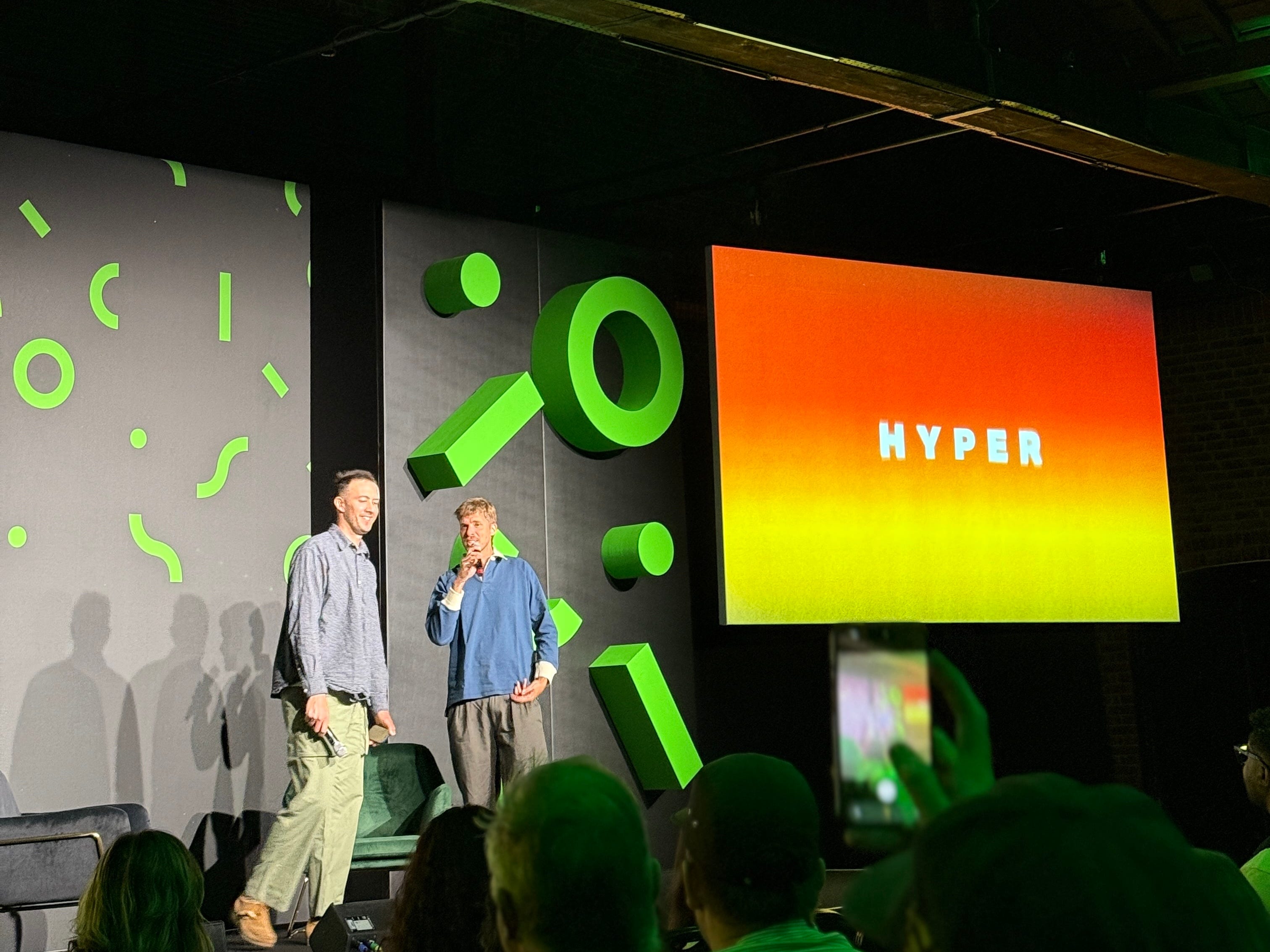
Hello friends, we’re tapping in from London, where Clayton and I spent a couple of days at Pulse, a commerce-focused summit for both luxury and consumer brands.
Our friend Paul Rogers, who runs Vervaunt, an agency that operates Pulse, kindly invited us to speak about how brands should be leveraging creators.
Since most of you couldn’t make it, we’re doing a recap on two things:
The State of eComm based on insights shared at this event
Spark notes from the talk we gave on Creator Strategy
Hope this is useful for you! And huge thanks to Paul for having us.
Field notes from LDN: the state of eCom
We wanted to share some takeaways from the conference that everyone working on or with a brand that sells online should be aware of.
7 universal takeaways
1. Costs are up
You are not alone; there has been a global rise in CAC (customer acquisition cost) for performance, both Meta and Google. 22% for Meta, Google up 11%.
Customers are getting more expensive, the auction is more competitive, and we cannot overstate how important it is to be redirecting more of those dollars to organic acquisition, where you have less attribution (but far more of a competitive edge) because this is a mirror of last year’s rises.
2. Affiliate is back
1 in 10 pounds spent at retail in the UK now traces back to an affiliate. That number is growing, but it’s happening less from traditional media websites and more from creators.
Worth acknowledging that the word “affiliate” has a reputation problem. For a long time it meant Pepperjam, CJ Affiliate, leaked discount codes, garbage traffic, etc.
And that version still exists, obviously, but what’s actually expanding right now is creators making content on a percentage model, talking about products they actually use to a real audience, and getting paid when it converts.
This is also part of what we discussed, and we’ll share more on that topic soon.
3. Creator investment
There’s a 56% increase in creator investment year over year. It’s no longer fringe; we’re entering the main segment of the bell curve, where there is more creator demand than supply, and a gap in education on how to connect the dots and scale these programs.
4. All in on partnership ads
Partnership ads are up 2x year-over-year. If you’ve seen Oren’s face on ads for marketing software... those are partnership ads. They outperform in the ad account, so much so that it’s often worth a premium for a good asset or a known face, and especially for both.
If you’re running these actively, it’s worth finding your own version of partnership ads in Meta and TikTok.
5. Loyalty programs
40-55% of revenue from premium brands is driven from 8% of the most loyal customers… The question is: how are you targeting them?
LTV is overweighted to the best customers, and some random AI copy flow isn’t going to save you. Retention needs a dedicated focus, and premium brands need CRM.
In the conference sessions, the Represent team detailed how they identified bottlenecks in their tier system and focused not just on discounts but also on product releases, artifacts, and product development discussions available only to their upper tiers of loyalty.
6. AI Adoption
There is a massive gap between the LinkedIn and X posts and the reality of AI in brand workflows. In a survey of eCommerce brands, 5% say they get a high from AI, 43% medium/somewhat, 52% low to none.
Of the 48% who get some value, it’s almost entirely driven by copy and customer support. Meanwhile, the sentiment is that there are usually 1-2 enabled employees doing some great things, very little scale, and too much time wasted talking about AI and implementing something that doesn’t stick.
Meanwhile, for content, performance, and design teams, 65% are using generative AI. Whatever the resistance is online, the reality in companies is that it's everywhere, whether the customers know, see, or not.
We’ll continue to caution creatives who are vocal in their resistance that it will ultimately cost them work.
How to work with creators in 2026
Notes from our talk —
We spent our session breaking down how brands should think about working with creators in 2026. Here are some things you should take away from this.
The starting point is that the media landscape shifted, and most brands missed it. The gatekeepers, magazine editors, TV buyers, retail buyers, the entire layer of institutional authority that used to decide what was culturally relevant, have been replaced by individual voices who built their own credibility from scratch.
You can still buy a placement… you just can’t buy your way into genuine cultural relevance anymore.
That requires relationships, and relationships take time.
Most brands are operating in what we’d call the enabled layer: social platforms, paid placements, and boosted posts. That layer still works. But the organic layer is the most important one, when someone else’s audience trusts your brand because a creator they already follow has genuinely vouched for you.
But you can’t manufacture that in a single post. It compounds over time, which means the brands that start building those relationships now are the ones who’ll have a real edge in two years.
The other thing worth noting is that specialization won. The creators with real authority aren’t covering everything. They go deep on one (or a few) thing(s) and build more trust in that lane than any publication could afford to staff.
The brands worth studying right now are the ones that have this instinctively. Jacquemus turned its fashion show invites into collectibles, resulting in a massive earned media play.
Huckberry is giving its UGC creators financial upside by rewarding them with a percentage of ad spend that drives conversions.
And NYX Beauty has built a massive compounding strategy by sending product to creators with zero creative direction, fully trusting that each creator knows best how to speak to their audiences.
All of these examples are meant to show the power and impact of working actively with creators as part of your strategy.
All you have to do is recognize that the landscape has changed, make a plan for how you want to interact with them effectively, and build it into your marketing plans as a core component, not an afterthought.
We’ll share the framework brands can use to work with creators in another newsletter.
How to structure your offer as a creative
In last week’s YouTube, I talked about how a lot of creatives I know are really good at the work… and have no idea how to sell it.
And the reason is not that they’re bad at business. Nobody ever explained how selling actually works, so most of them have been winging it for years.
Your core offer should be a sentence.
I make brand identities for DTC founders for $8,000 in three weeks.
I write landing pages for SaaS companies for $2,500 a page.
Not “I do design, branding, copywriting, whatever you need.” Nobody buys a capabilities deck in the social media era.
The reason this matters more than most people realize: when a client has to book a call just to find out if they can afford you, half of them don’t, smart offers get them through the door faster.
What makes an offer work.
Once you think in this framework, now you need to position: better, faster, or cheaper. Pick at least one. Ideally two.
If the work is genuinely exceptional, lean on that and charge accordingly. But look at it honestly. Most people aren’t in the “better” category yet and that’s fine. Speed and price are real levers. A sprint format, a locked deliverable, a one-week turnaround.
Full video here.
V good read