

To start, some personal news, I am joining Darkroom as a partner to lead their creative team.
Darkroom is a creative-driven growth marketing agency that you have seen me on many events and collabs with over time, including our recent Cannes villa.
At their core they offer performance creative, media buying and retention for brands scaling attention on Meta, TikTok (and TikTok shop) and Amazon.
Importantly they recognize what I am passionate about as the future of growth marketing: that the core ad agency and performance work no longer happens with editors and designers making assets (although still a part of it), but with a massive web of creators and influencers building a brands world, propelled via online ad accounts focused on social media.
Their clientele include disruptor brands like Sauz, Dedcool, Stillers to established players like Nécessaire, Olipop and Crate and Barrel all the way to Adobe and Amazon.
I can confidently say we operate with standout creative strategy and scale that drives real growth, and I’m excited to be working on creative and telling the Darkroom story with their team going forward.
Learn more here and get in touch here.
In this week’s Hyper I’m going to continue to answer tactical questions about modern marketing work I’ve been getting breaking down the workflow of how agents play a role in marketing team board workflow. Then this week’s YouTube is about how personal brands are the new focus on creative direction work.
Let’s begin.
Agents on Boards
In this video I go through the workflow of how to use agents on a marketing board workflow with Luma.
I recorded a walkthrough this week of how brands are actually using AI agents inside marketing boards. Quick context if you’ve never worked on a board: it’s the shared surface where a marketing team lines up references, versions, comments, and assets in one place. Almost every campaign I touch runs on one.
The biggest workflow difference that’s leading to speed of new assets is integrating agents right onto boards.
Here’s what that looks like in practice:
Reference ideation: Strategists have always started campaigns by pulling references, ads they admire, layouts they want to base new things on. Now you can tell an agent directly, take these ads, take this visual DNA, build me templates and versions for my product. A few minutes later you have a wall of 9x16 or 1x1 concepts to react to. Static concepts can come to reality fast.
The second idea is saved voices. On every project I keep a standing prompt with three copy angles: direct response, evidence-led, and story-led. Three classic styles of marketing, nothing exotic. With an agent directly on the board “Refer to the voices we have here” allows quick headline and copy variations in all three registers off your actual brand information to happen without even switching a tab.
This is all to support creative volume. If you’re running Meta right now, the game is shipping more unique ideas into the account. Most of what the agent generates is a B or a B-minus. That’s fine. That’s the point. The workflow isn’t to make the machine produce A’s, it’s to look at forty B’s, grab the two worth pushing to an A-minus, and work with the team to ship more of those faster than before. Teams could never move at that pace with briefs and design queues alone.
The last piece is memory. Every note, every “we killed this because,” every approval lives on the board. Anyone who joins the project inherits the full context by just asking in chat.
Learn more about Luma here.
This segment is in partnership with Luma.
How to Creative Direct a Personal Brand
The phrase “Creative director” doesn’t mean anything anymore. That’s your opening.
The title has been through three eras. Fashion houses and agencies first, that was my entry, doing Red Bull and Grey Goose client work as a designer who leveled up.
Then the Virgil era, when Hypebeast made kids want to be creative directors instead of athletes.
Now we’re in 3.0, where everyone has the title in their bio and you could argue the term is essentially dead. Does a VC firm need a creative director? A landscaping company? Likely yes, but in a way that means tactically very little related to the initial concept.
Dead terms are opportunities. Because the work behind it is more in demand than ever, most people just can’t define it.
So let’s define it.
Creative strategy is concepts every week, briefs, analytics.
Content operations is a modern producer that integrates strategy that plus running the machine, schedules, vendors, chasing deliverables.
Creative direction is all of it plus the actual decisions: the aesthetic, the through lines, the world.
Most “creative director” job posts are hiring a creative strategist.
Now let’s talk about personal brand, because here’s the part I had to admit after years working on brand social: the brand account matters less and less and less, and the world has become everything.
Founder, team, creators, customers, that ecosystem out-markets the brand’s own channels. Even the ad-heavy brands know it. At Cannes the other week week, every marketer on my panel was recommending 30-plus percent of Meta spend run whitelisted through personalities.
And if the world is the product, the world needs direction. Mailers, sets, hooks, cohesive ideas that aren’t slop…
Content enablement is creative direction.
And that increasingly means strategy, operations and the entire world revolves around personal brands than the product and services brands themselves. You can dive into the tactics of this in the video.
Kitchen Sink
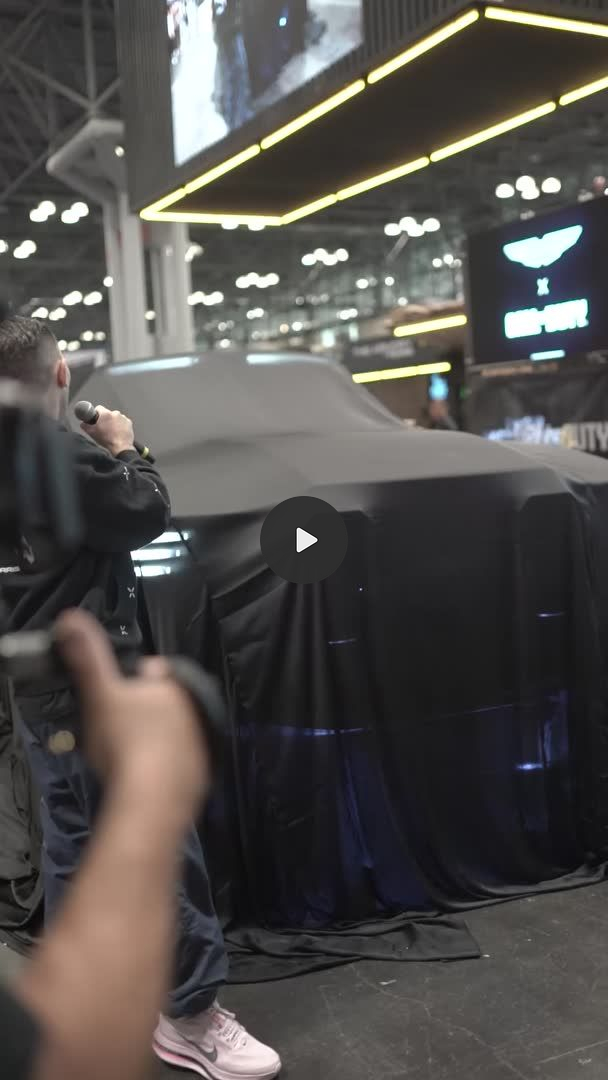
Aston Martin have lost the plot:

If you want to nerd out:


Ana on cultural producers:
Until next time,
Oren
Great read. The shift from editors and designers making assets to a web of creators building the brand's world is the part most agencies still refuse to price in. Congrats on the Darkroom move.
Congrats with a new job!