

This week, I am fresh back from Las Vegas Market, and headed to Idyllwild to speak at FWB.
In this HYPER edition we talk about copy styles for ads in creative strategy, scaling workflows for marketing teams with skills, and get into an example of building a brand world through dedicated creator accounts on organic social.
If you’re trying to be ahead of the brand strategy curve, this is for you.
Let’s begin
Matching ads, content and consumer habits
In partnership with Luma Labs.
I put out a video this morning about how algorithms show ads and organic content to consumers.
The core of this comes down to
interest based content (you watch videos about dogs, you will see more dogs)
format based content (you look at long edited videos, you will see more long edited videos)
creator match (you like female, male, asian, black, old, young etc, you will also likely see more similar creators)
So now when you try to introduce a campaign concept for ads or organic content, you have all these consumers that are trained to consume certain types of content. Then you have consumers who respond to different types of messages. So advertising teams are tasked with creating a wide variety to find what gives them scale (and will often find a lot of ads that spend a decent amount of money, versus ads that generate massive scale for long periods of time).
My copy flow
One tool to have in your marketing toolkit here is the angles of your copywriting. Whenever I’m working on a project, or working with ChatGPT or in Luma on ad copy angles, I use this exact flow to get the copy variations. If an ad style starts to get spend or dominate, we will also match the landing page in the same style.
Expand the concepts I have picked above with a short version (headline and sub headline) and a long version (headline and 3-5 bullets or short paragraph) in these written styles.
A. DIRECT-RESPONSE — urgent, problem-aware, contrarian. Hard deadlines, big claims backed by guarantees, brutal honesty about the status quo. Confrontational headlines. Specific dollar amounts.
B. EVIDENCE-LED — methodical, reason-why, scientific. Specific numbers, demonstrable proof, no adjectives without evidence. Reads like a documented case study.
C. STORY-LED — curiosity-driven, narrative leads. Headline does 80% of the work. Self-interest + specificity. Opens with a small human moment that pulls the reader in.
Skills
If you’re like me, you’re developing these workflows yourself, but also working with lots of other people. Designers, brand teams, agency teams, creative strategists. So when you get something to work, you need to be able to quickly share context etc.
If you’re not familiar with Skills, these are reusable workflows for LLMs. I can make a skill and share it and you can duplicate a workflow with the same results. Think of them like applications that are extensions of your brand guide.
An example here you can use yourself. I wanted to make this video I made today have a unique look, and also was building an advertising style for a more fashion driven concept, so I’ve been engineering these people on white backgrounds, where I can get a fashionable look, on real looking person and get the photo “persona” and an “orbit” video around them.
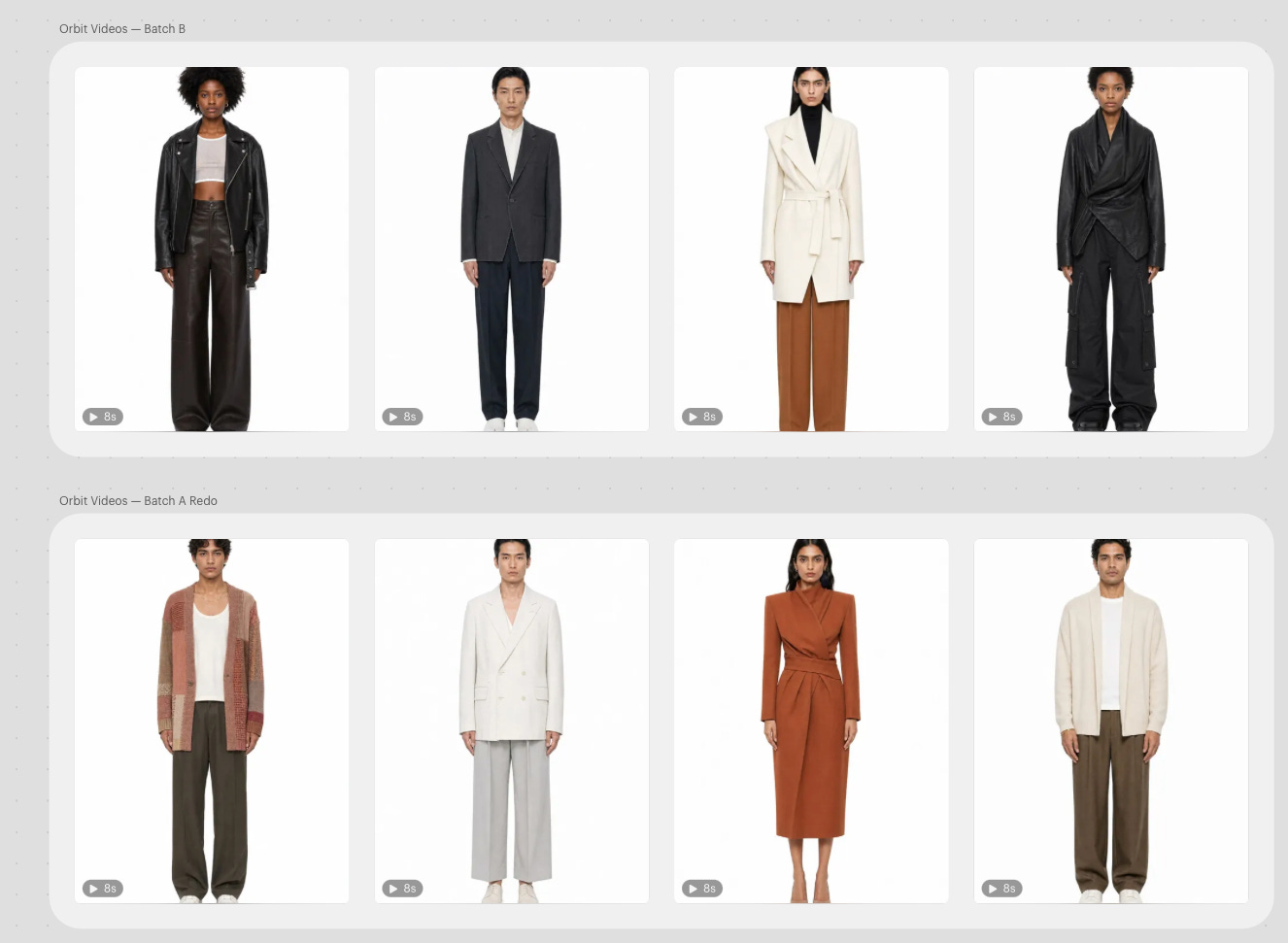
I built out all the DNA with references, feedbacking etc in Luma, then turned it into a skill by asking in Chat. I made it shareable by asking for all dependencies to be removed.
You can do this with copy, with image and video generation, with static ad design styles, and its one of the core reasons I like working so much in Luma on any account where there’s a significant amount of asset generation involved in either concepting or final creative.
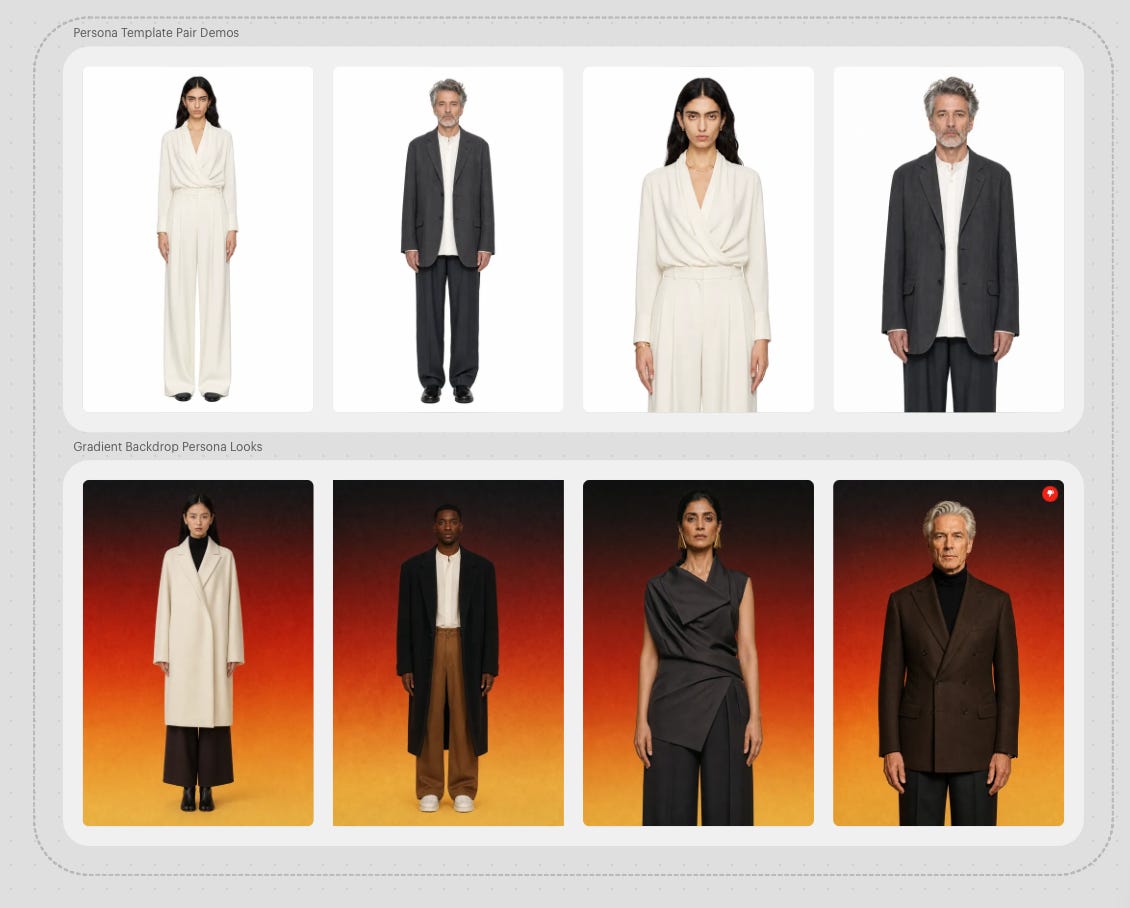
Grab the skill here.
All this work was done in Luma, you can learn more here.
You’ve likely heard me mention this in a video, newsletter or a talk this year, but the core social media account for a brand is no longer the powerhouse, its world is. But what does that actually mean in practice?
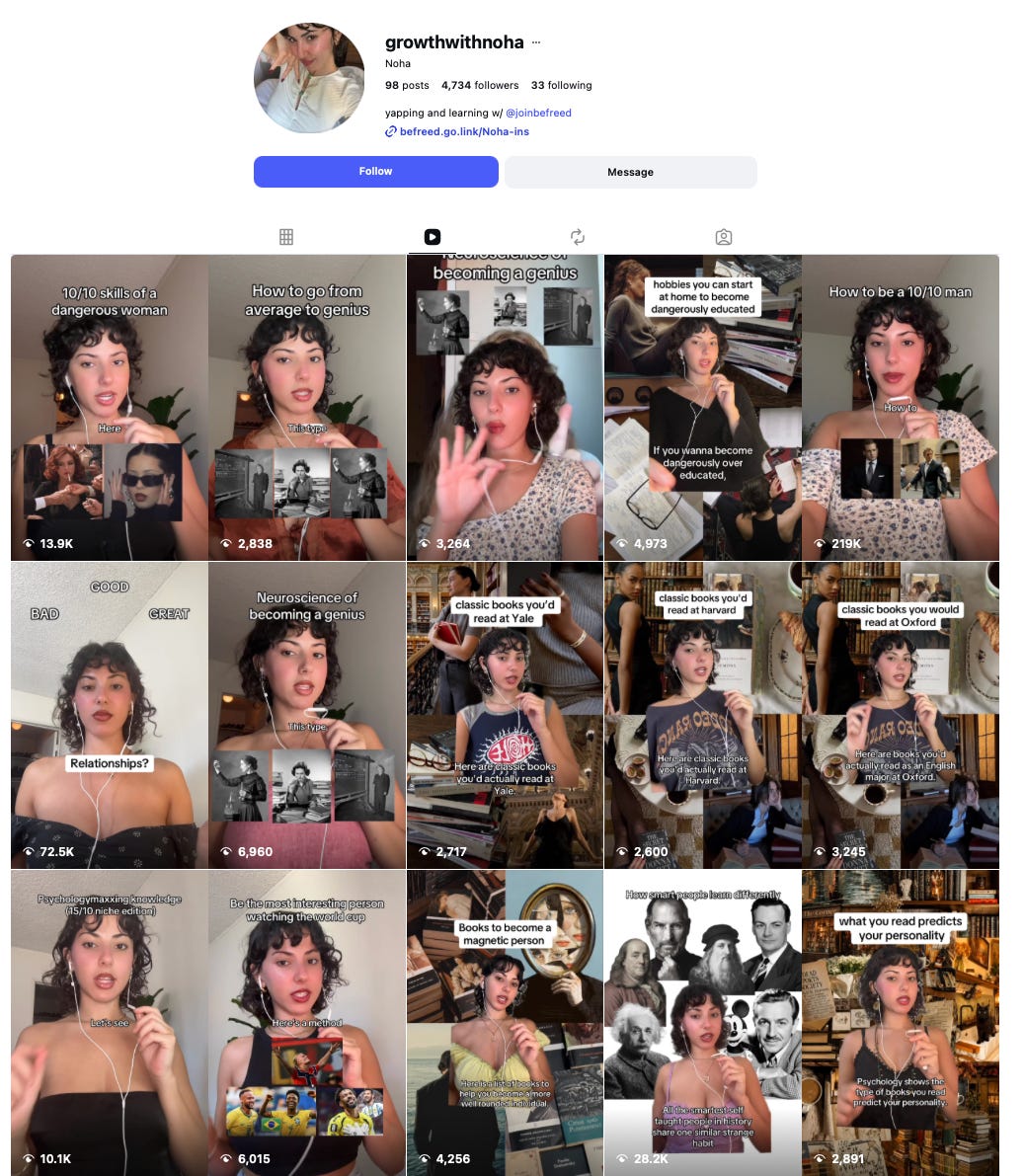
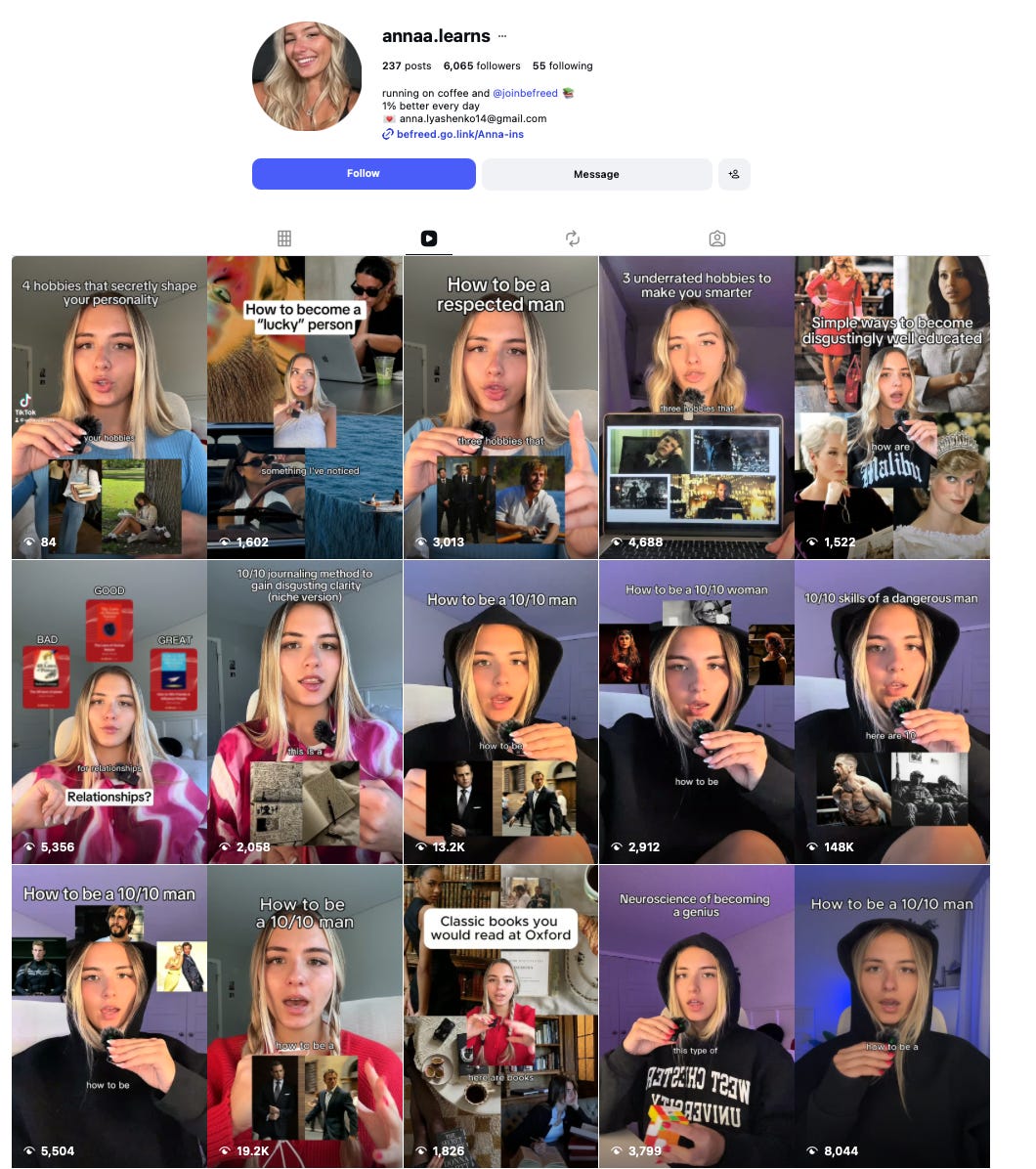
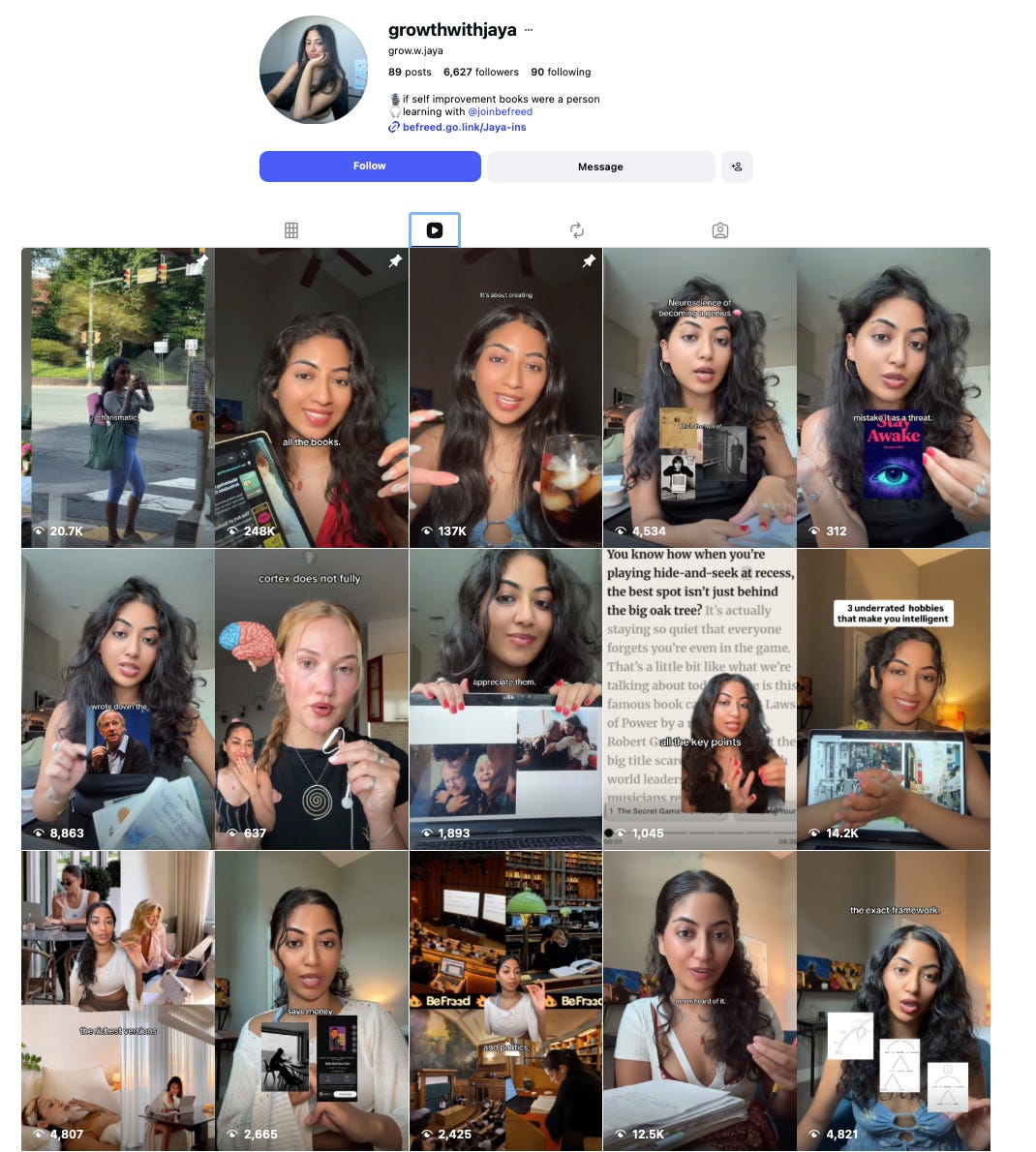
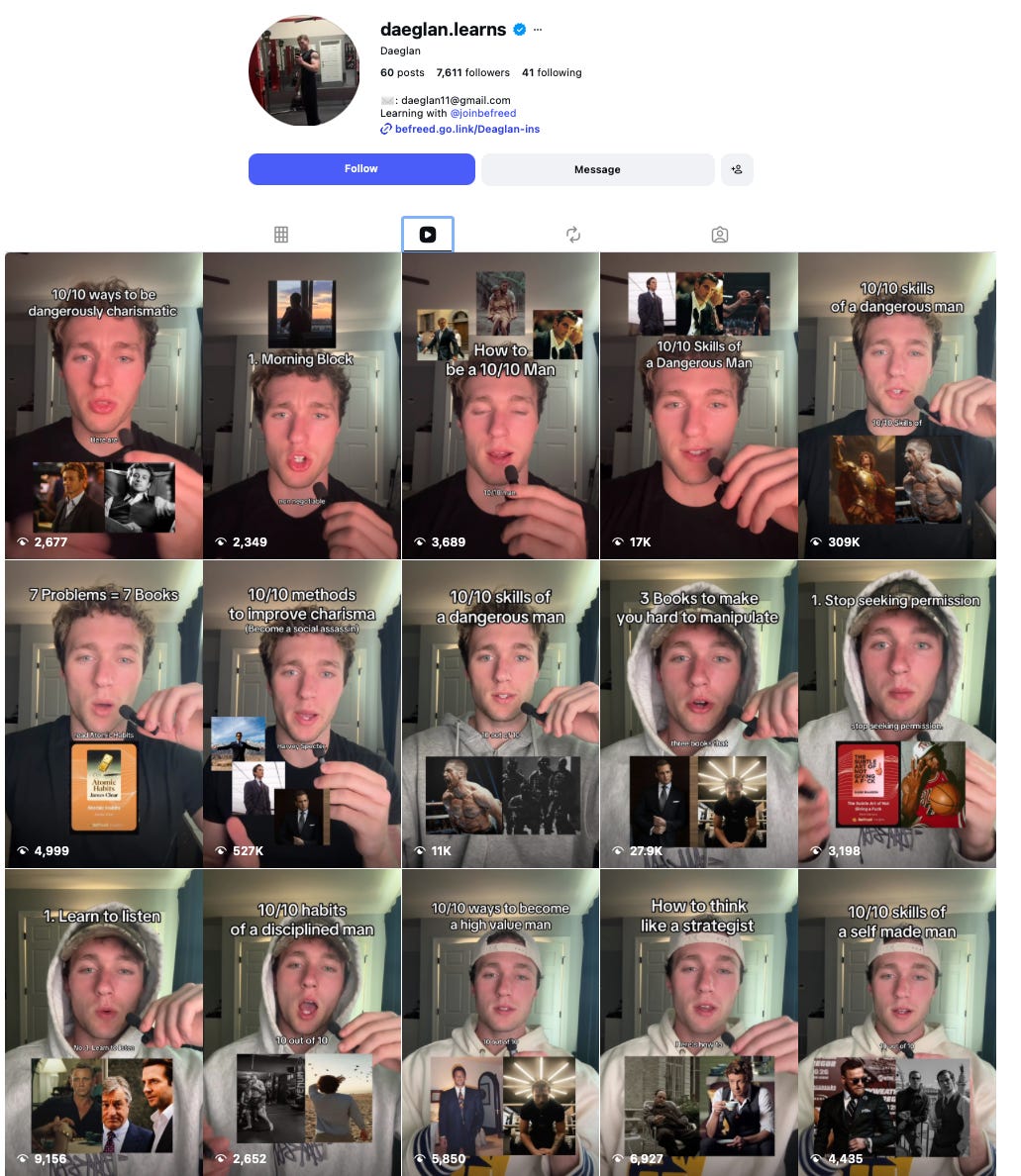
A great example is Befreed, a book app. They have an army of UGC creators with entire accounts just dedicated to the app. Let’s take a look.
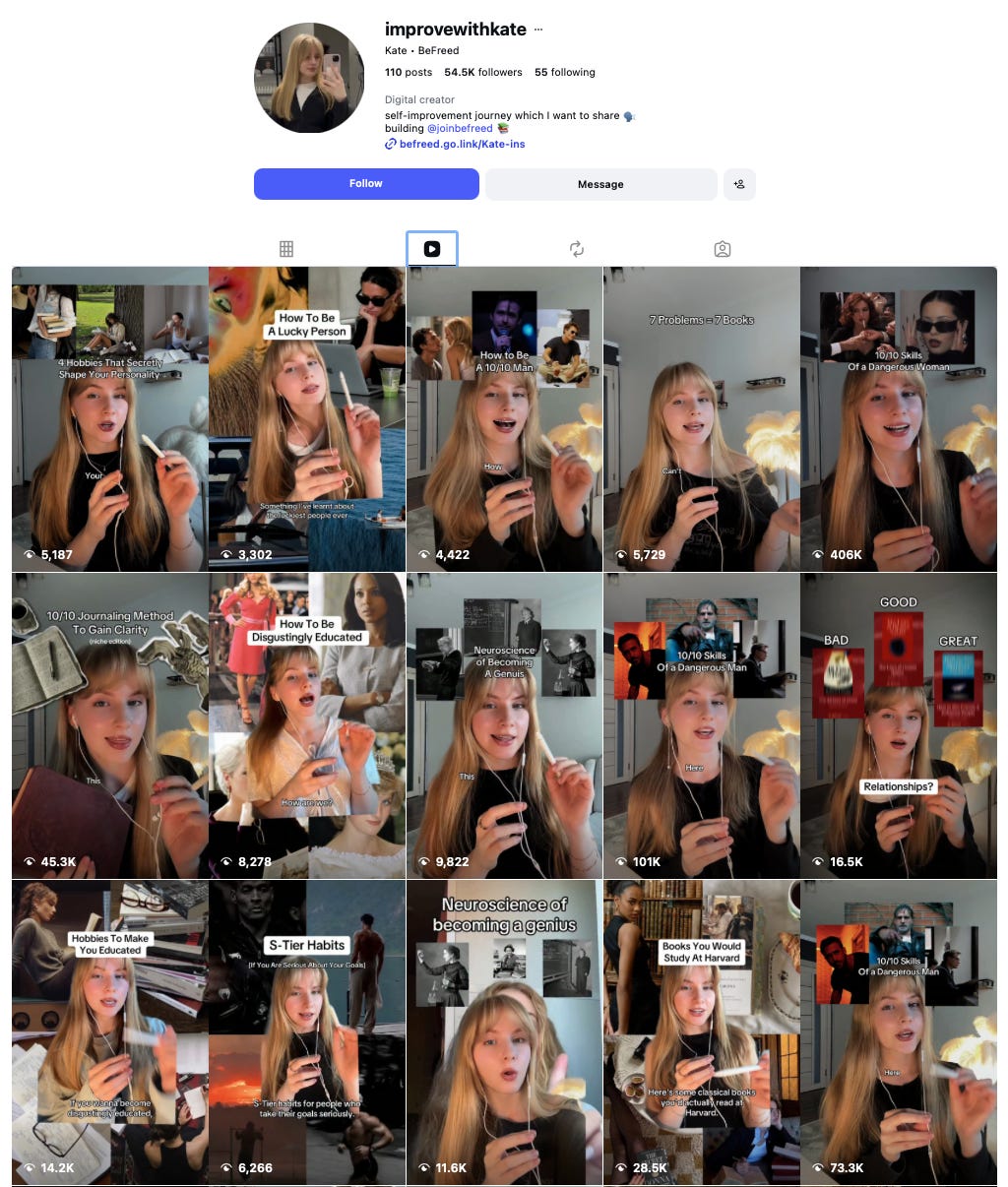
This is just a handful, there are more, and the entire account is Befreed videos, with Befreed in bio. This is on IG, and most are also posted on TikTok. Kate and Edwin have grown very decently, and every account is posting once a day or more.
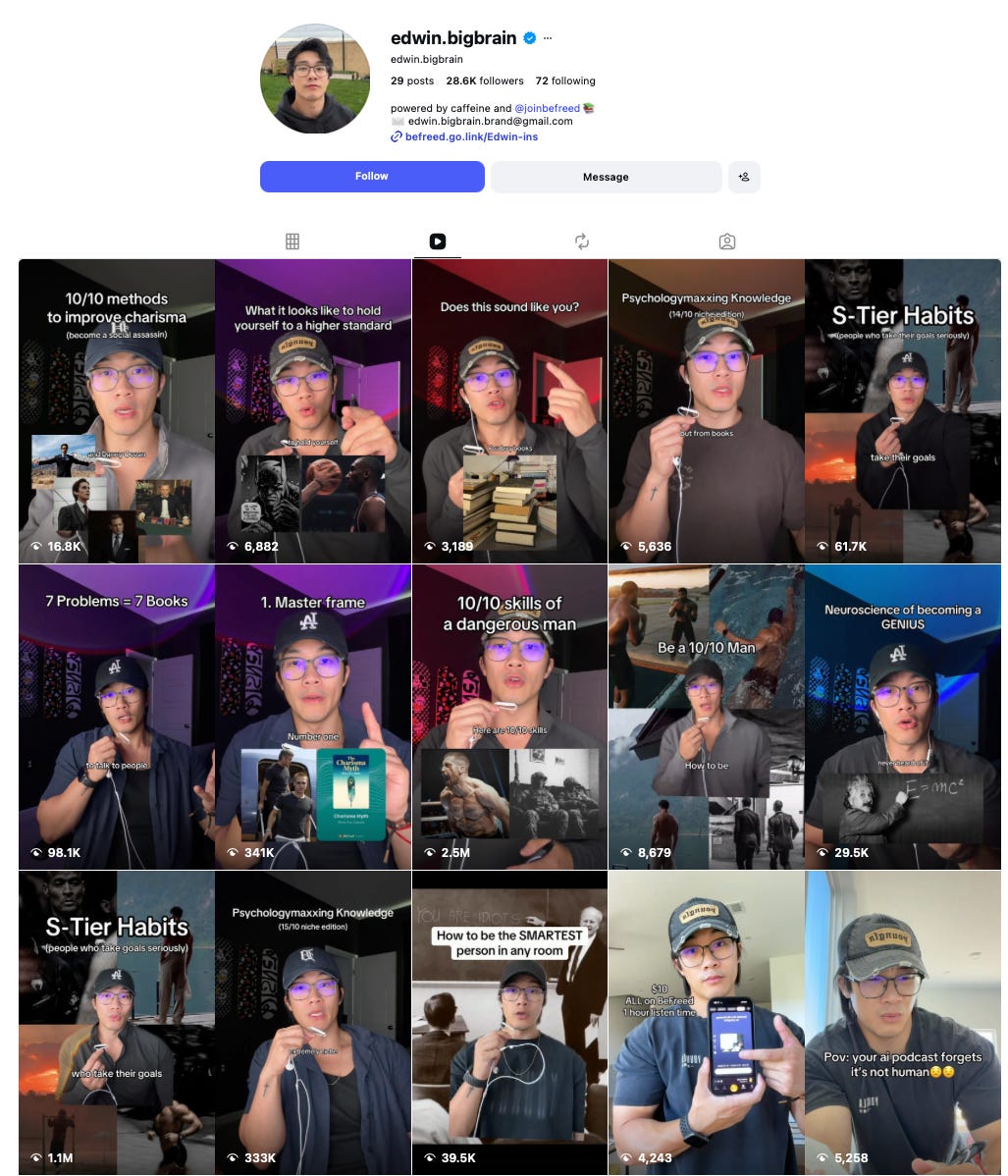
There is a small army of smaller creators running the same strategy, all green screen or yap, all with the same hooks but their own spins on the content.
The content is a combination of Manychat “comment for ____” links and just references to profile, and all the content is value driven.
This is not AI or bad reaction videos, it is a comprehensive, thought-out strategy, and this is how every brand should be approaching the space, whether B2B, B2C, software, product… A strategy done by someone that knows what they’re doing, with learnings scaled across as many people as you can model.
Executing this well is a couple thousand dollars a creator a month (lets say $2-6k), plus their commissioned on sales from link and ads. Compared to other marketing value propositions, if you know what you’re doing on social the scale and cost modeling of this for any savvy brand is… excellent if you operate leanly and still solid with an agency and a wider team supporting.
This is happening in front of you, videos of this are on everyone’s FYP’s without users even knowing the full strategy. Cosmetics, apps, electrolytes, this is happening in real time while brands fail at posting once on their main feeds and having it rip.
Platforms that are being used for this:
Sideshift: Creator recruitment
Tribe: Creator sourcing for ads specifically, paid on percentage
Later: Campaign recruitment and influencer setup, both managed and unmanaged
How think like a marketer
You have seen a shift in my content this year to be more analytical about why people buy, and sociological factors that influence consumer behavior. I’ve been working on more and more ads, campaigns and direct sales strategy than ever (versus more organic social strategy the years prior), and this content helps me build the muscles for understanding what will make good ads.
If you’re curious about how I think about improving and building and improving my thinking as a brand strategist, the video about is for you.
Until next week,
Oren
Want to scale your brand with us? darkroomagency.com
The next Cut30 short form bootcamp starts August 5th: https://cut30.co