

Content and influence is in an odd place. For years everything from AI to new gen creators to new social networks threatened the death of influence…. and it somehow continues to be more important than ever. But a couple of trends are reshaping how we should think about personalities in the attention economy.
First people are recreating influence in the aggregate with creators at scale… but it’s HARD. You’ll see a lot of the popular brands that are scaling that are now doing the podcast circuit talk about using thousands of creators every month making content about their brand (Bloom, Gruns, Comfort, Cal.ai). Where they will use a lot of volume of low views to make up for not being able to anchor with more traditional influence. This is an excellent strategy but it requires absolute and complete dedication to systems execution and scale for a concept that most marketing teams still can’t even explain to their finance department.
At the same time there is extreme shiny object syndrome. News media is overly influenced by X, and X is having a conversation about clipping because they are overly influenced by the clippers themselves (whose content performs on the platform). A lot of executives are starting to ask “should be clipping our content?”. The problem with this is the content was never good enough to perform to begin with so then certainly isn’t good enough to clip. Every single brand conversation about this is a distraction.
Then on the influencer end things are… frothy. I’ve been served a lot of content recently with what we’ll call “cute day” or “lifestyle” influencers complaining that no one cares about their content and they get no reach anymore. A lot of the comments are, “Yeah, no one cares about your cute life anymore.” The idea that with an aesthetic, a well put together apartment and travel schedule you could continue to find success on social media without driving value, having an extremely charismatic personality is being stress tested. That entire class of early adoption will only see a handful survive.
It’s the same thing with the luxury influencer, the person whose success was based primarily on having either the resources, the debt, or the connections to show off a lifestyle that was so aspirational. The backlash on these now is almost constant. I like to call this the Rimowa Effect.
When people are influenced to buy purchases that they can’t afford and they realize those purchases don’t actually give them self-actualization, they really wish they had that money back and bought the $300 luggage vs. the $2,000 luggage, they begin to develop an innate resentment around the complex that convinced them that in the first place. This is happening en masse. The middle class should not be luxury consumers. They are buying out of their price range disproportionately because of influence and the backlash is here.
But what this does mean is a feast for the influence that is left with resonance and credibility, whether established or new. Because there are only so many authentic voices, those authentic voices are more paid attention to than ever. And brands are beginning to understand that those relationships and their values span beyond clicks and go into affinity and conversation driving that can change the trajectory of their business. In 2026 there is an infinite desire for relevance and really only one class of people that can deliver it: influential people on the internet.
In this HYPER we talk about two topics:
What advanced tactics brands should actually consider in the influence world
In era of more intellectual influence conversation all the ideas have migrated off of Substack or X and now happen on TikTok, YouTube, and Instagram, the written media is a place to recap the video ideas. Journalism then laps up the extra days or weeks later.
The rise of the yapper as someone who can simply communicate their ideas through speaking without a bunch of production has given a very low bar for those who are interesting, who do have that perspective, be able to talk, grow, and succeed, either pushing their business, themselves, or monetizing. I get into that with a step-by-step guide for the “yap” format (and you can kick off with the free 3 day challenge Alex Garcia, Landforce and I are hosting this week).
There’s never a dull moment in the attention economy but we’ll be here to talk you through it.
Oren
Advanced Influence
In previous HYPER editions I’ve talked before about the basics of influencer marketing, developing your initial roster, testing anchor and micro-influence and building interesting content and putting spend behind it. But if you’re already there, what takes you to the edge of what’s interesting?
I dive in below, in partnership with Later (who can execute this for you).
SERIES
The most durable influencer content isn’t a one-off. It’s a recurring series, in the creator’s voice, with your brand embedded as a recurring sponsor or even a “branded set.” Think about how a show has a presenting sponsor: same energy. The advantage here is compounding: the audience builds an association between the creator’s content they already love and your brand showing up inside it, every time, without it being multiple sporadic ads
The brands getting this right are using tools like Later with Later’s EdgeAI to match on more than demographics, they’re predicting which creators have the right audience composition before a dollar is spent.
TEAM
Stop treating influencers like individual contracts and start treating them like a roster. If you have high-performers, get them making content together. For me and most creators I know, the surprise factor of two people who don’t usually collaborate showing up in the same video is an almost guaranteed win. The audience isn’t just consuming content, they’re watching a relationship they didn’t expect.
Think of it the way brands used to build sponsored skate teams. You didn’t just sign one skater. You built a crew that worked together.
IRL
The IRL tie-in is criminally underused. Brief your creators to host a themed event around your brand, not as a brand activation, but as their own content. The prep vlogs, the confessionals, the day-of. that’s four to six pieces of content, most of it organic-feeling, before the event even starts.
I’m waiting for a bank or finance brand to sponsor a “Man in Finance” dating event with the right creator attached. As all these themed meetups and lookalike concepts continue to draw people out they’re perfect for content.
WAVES
Algorithms spike around cultural moments, and the brands who understand this are placing creators at the World Cup, at Coachella, at Davos, even when their product has nothing to do with the event. The event is just the attention vehicle. Build your brand content calendar around the internet’s calendar, not just your own product launches.
PIPELINE
The college-to-creator pipeline is real and accelerating. Alabama. University of Miami. These campuses are producing influencers at an astonishing rate and serving as launch pads for product drops. The brands paying attention are signing these creators early, the way NIL changed college athletics sponsorship, and supporting their growth before the price goes up.
If you want to build any of this with actual infrastructure behind it, not just the ideas, Later can help you execute. Their platform gives you data on what drives not just views, but revenue, and their award-winning team launch campaigns from ideation and execution for top brands
You can schedule a free strategy call with them here: Learn more about Later →
How to Yap
I published a full YouTube on this, and I want to give you the distilled version because I think it’s one of the most slept-on way to start participating in the creator economy right now.
Yapping is talking on camera, just an iPhone, no fancy camera, and to start at least, no graphics. And despite how simple it sounds, it’s become the primary mode of business communication, personal brand building, and audience development in 2025.
Why this matters more than most people realize
The number one benefit I got from starting to make content wasn’t the followers or the revenue. It was becoming a better communicator. Thinking about what message I’m trying to get across, how to dismantle the objections someone has before I even say the main point, how to carry someone from where they are to where I want them to be. I cannot overstate the power making hundreds of videos gives you in helping communicate in all aspects of life
The three formats worth knowing
Standard yap: sitting, iPhone, captions. That’s it.
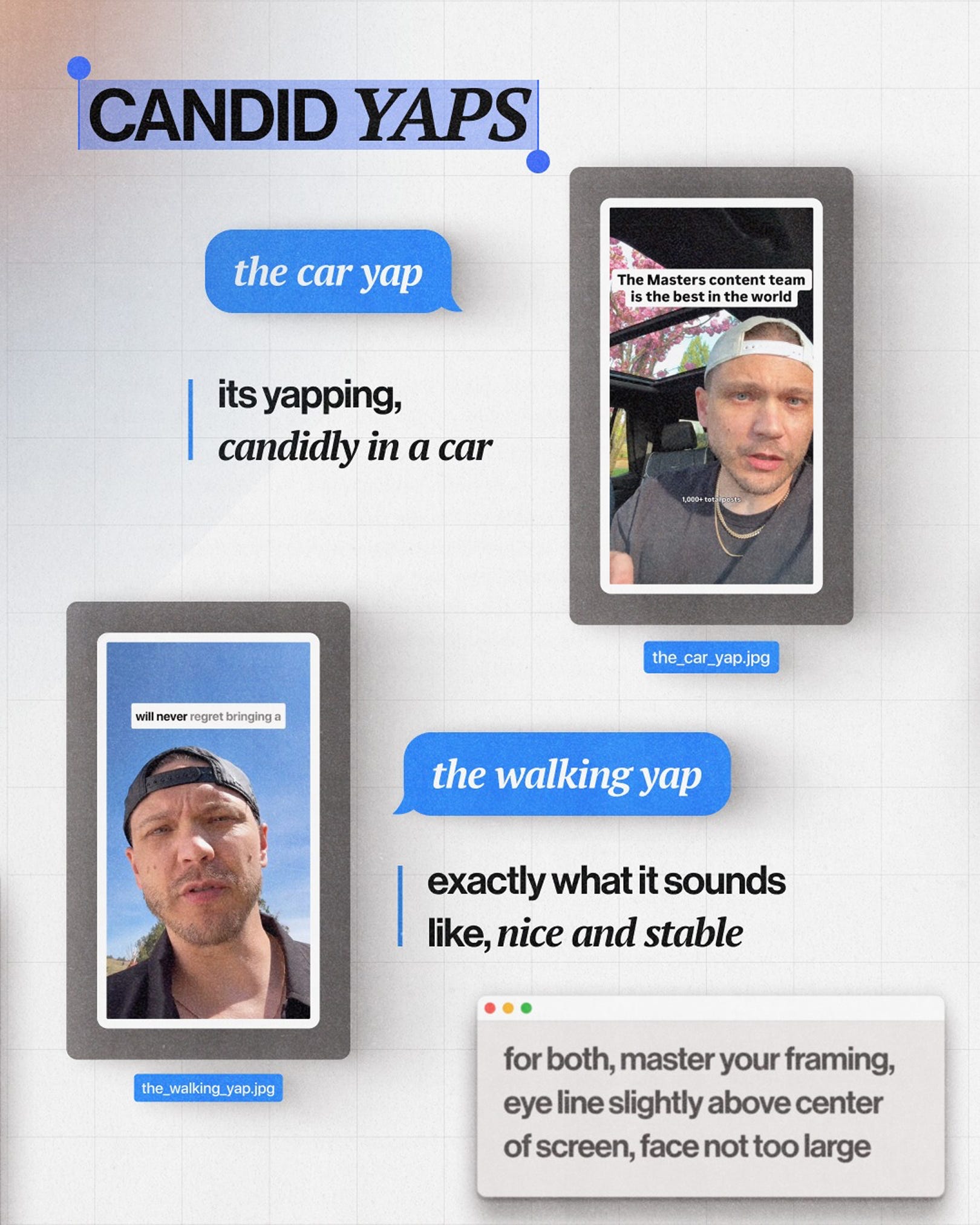
Walking or car yap: more candid, more like a FaceTime. Harder to start with because there are too many variables, but useful once you have reps.
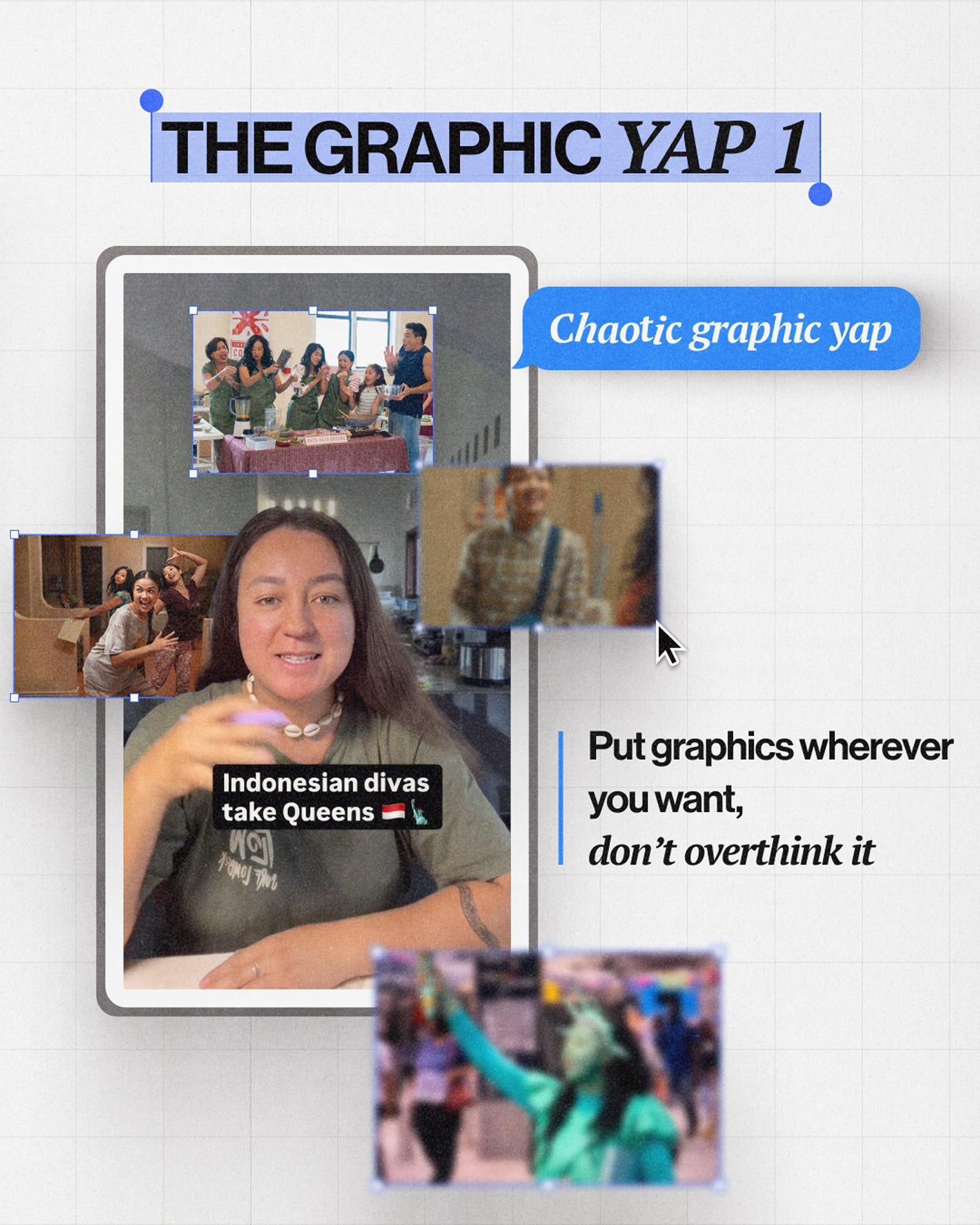
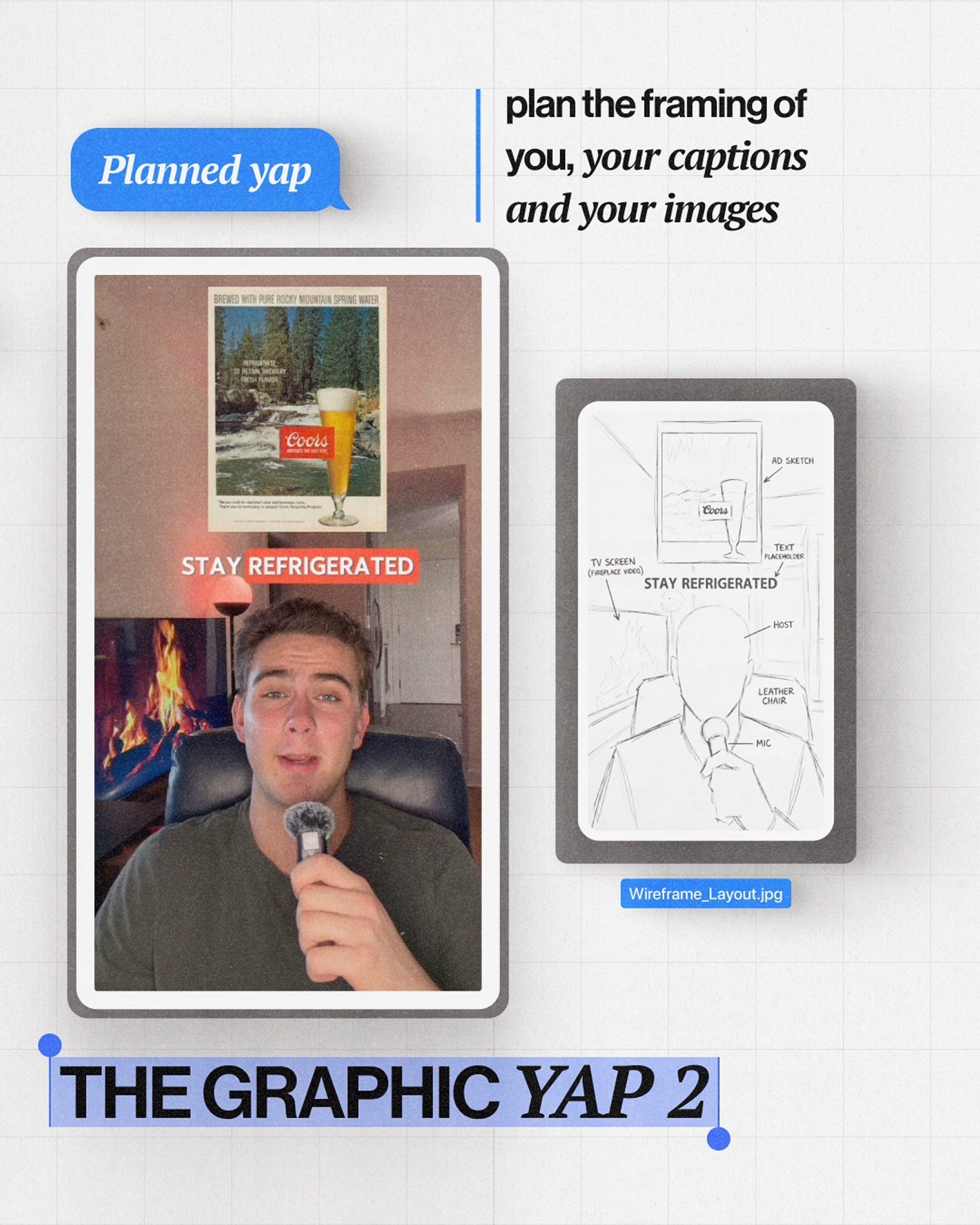
Graphic yap: you overlay images or video over your footage to keep attention. Shoot for one visual roughly every two seconds. This is the format that performs best at scale (templates below)
Notebook yaps: You can also use a notebook or whiteboard to help facilitate the conversation with notes and frameworks written out you reference
The five frameworks that make up 90% of good yap content
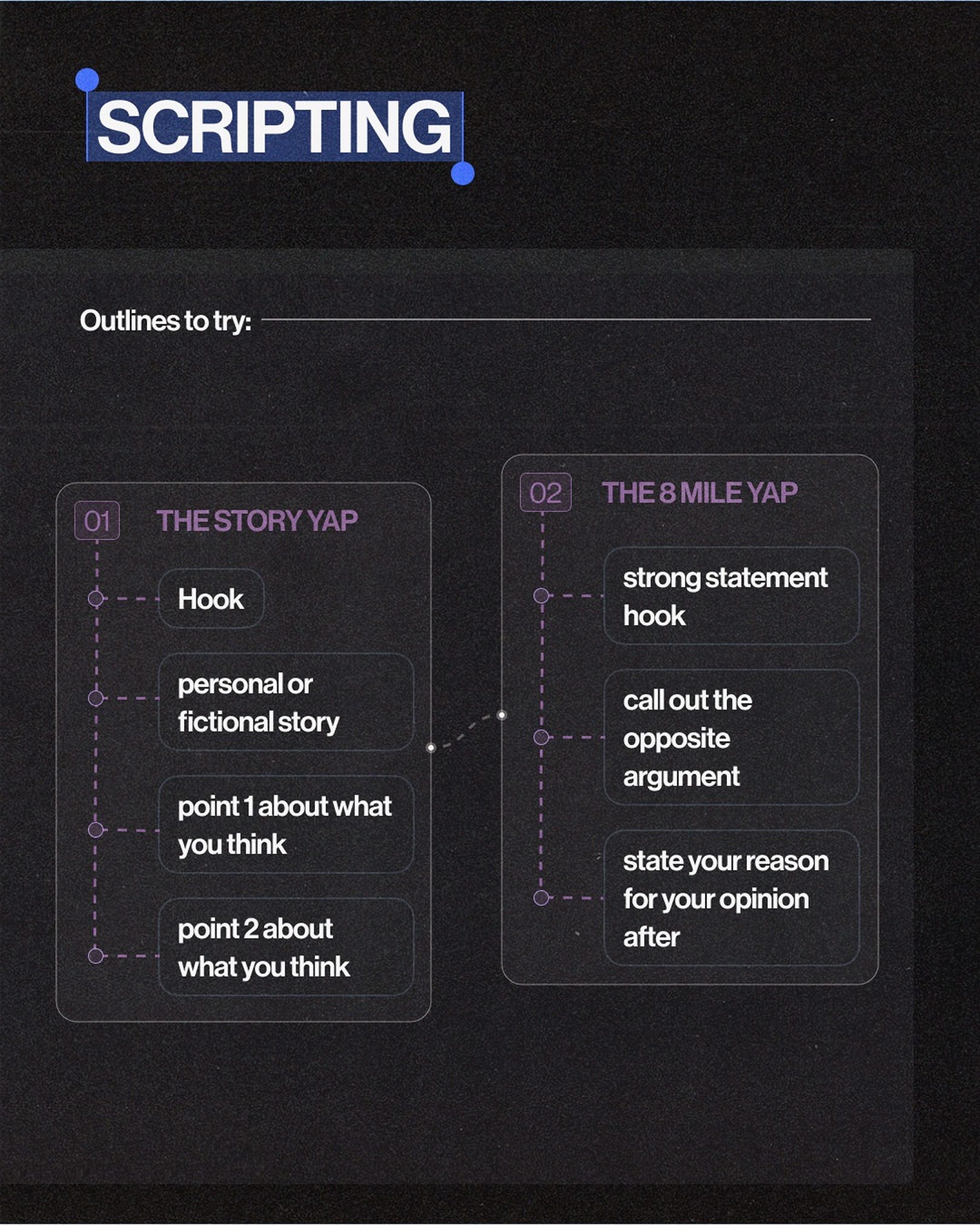
Strong take: say something is the best or worst and defend it. Forces conviction and generates response.
Strong take into education: use the take as a hook, pivot immediately into the breakdown. That’s how you avoid being clickbait without sacrificing attention.
Small epiphany: the relatable observation. “Have you ever noticed...” builds camaraderie faster than almost anything.
Humor: a bit, a critique, a funny scenario. Underrated when you have a voice for it.
Story time: a thing that happened, told as a narrative. Oldest format in the world for a reason.
Two script styles to start with:
The yap map
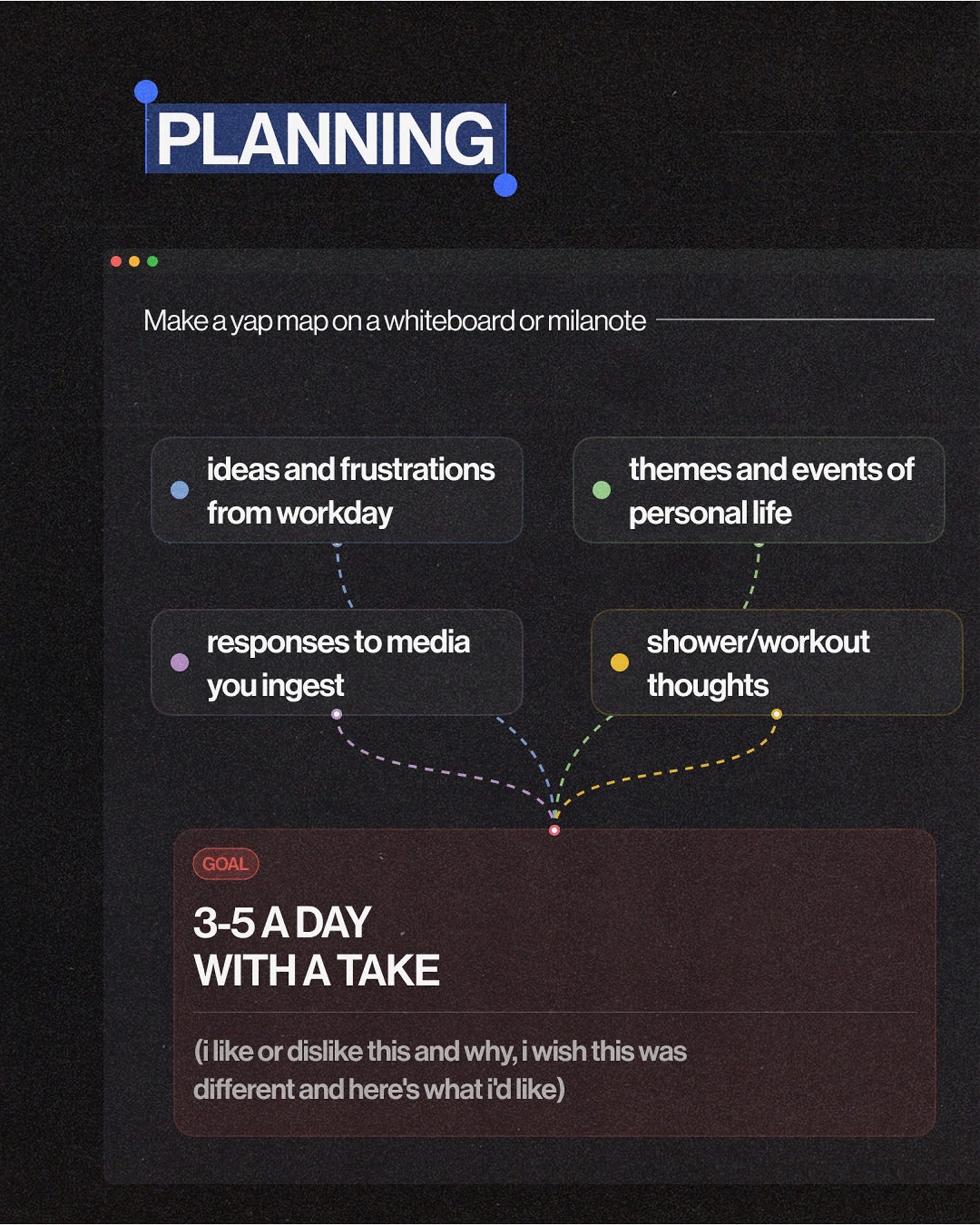
Every day, before you scroll, spend a few minutes mapping what happened. Meetings that surfaced good questions, conversations from lunch, ideas that came up in the shower, things you saw in your feed that you had a reaction to. Your goal is three to five ideas a day. Not fully formed scripts. Just prompts. You’ll be surprised how fast that list gets unwieldy.
The one tactical thing most people skip
Redo your opening at the end of the session. By the time you’re done recording, you’re warmed up. Go back and shoot the intro again. It’s almost always better.
The barrier to starting has never been lower. The ceiling on what talking into your phone can become has never been higher.
If you want to try your hand at your first videos with the Cut30 community, our FREE 3-day content challenge starts tomorrow, sign up here: https://cut30.co/first-10k-views-challenge
Until next week,
Oren
Bookmarking this for my pilot yapping sprint