
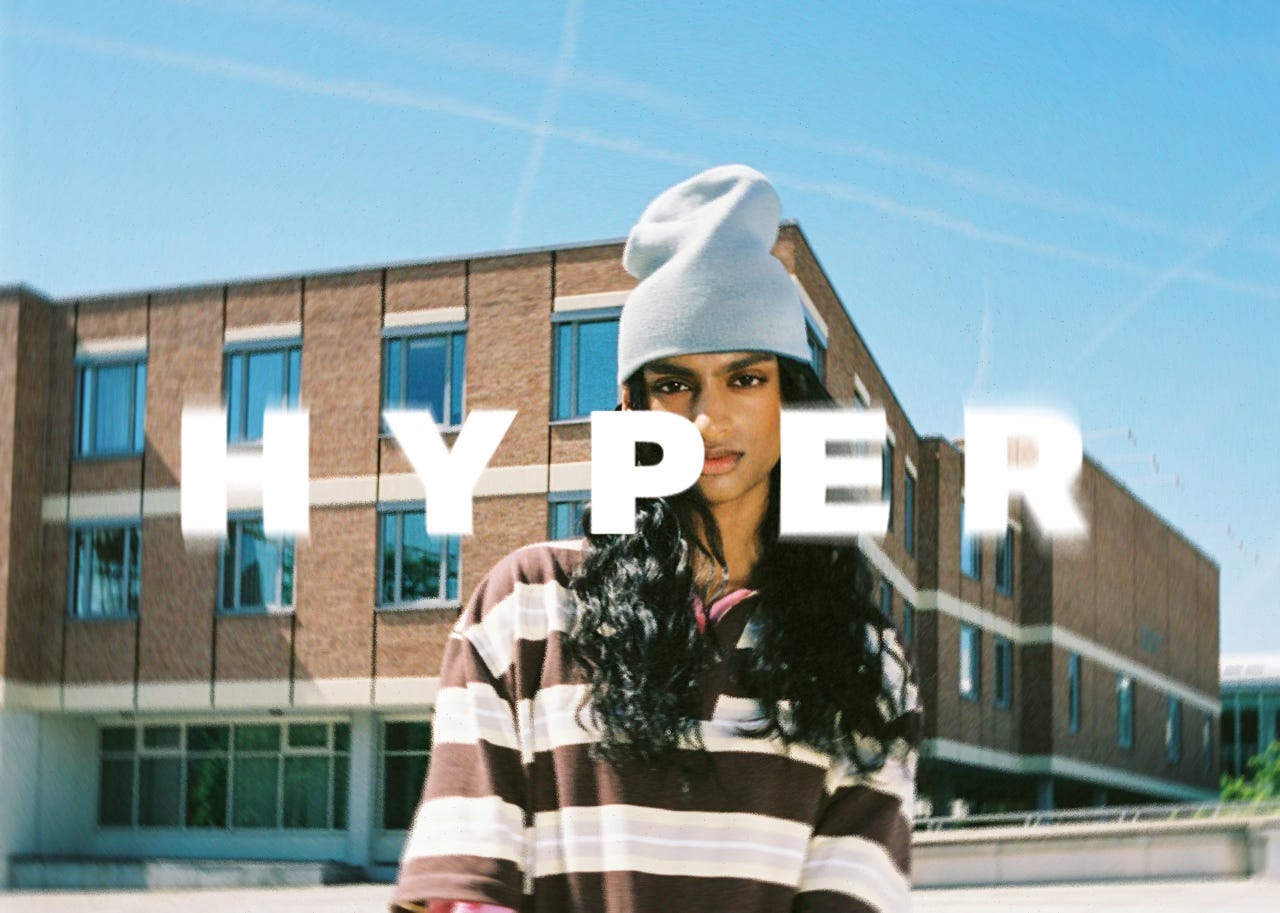
This week, Oren is talking about how businesses use workshops and courses to support their revenue and customer lifetime value, and Clayton is showcasing French tableware.
This week, some of our favorite concepts and inspiration around the internet.
Let’s begin.
Rise of the Etsy influencer and monetizing your hobbies
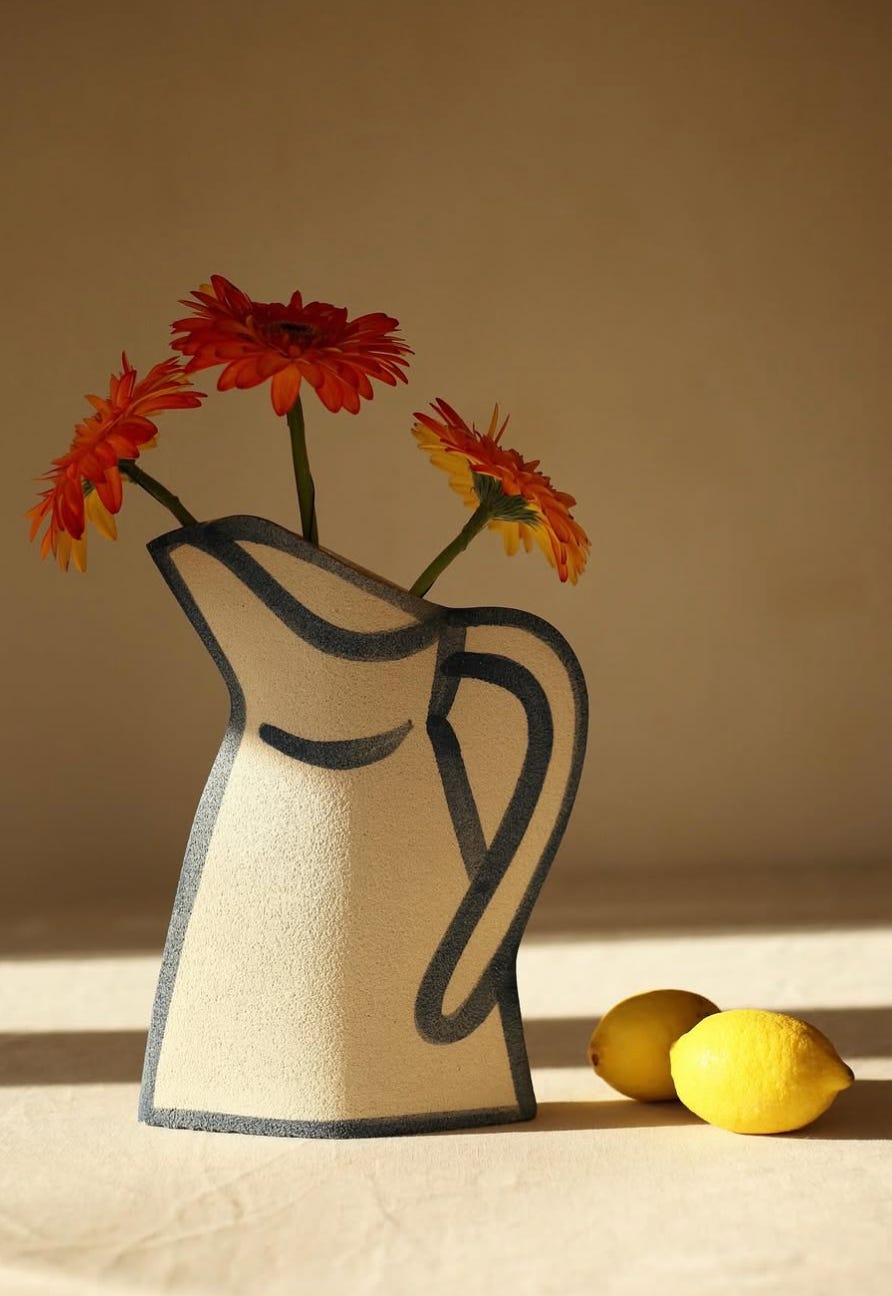
Embroidered tableware. Egg carton mezze platters. Dutchcore tilework.
Ten years ago, if you crocheted, threw pots, or hand-painted ceramics, it was simply a hobby. There was no empire to build. Just a love for the craft. You probably sold stuff to friends, or had a nice little Etsy side hustle.
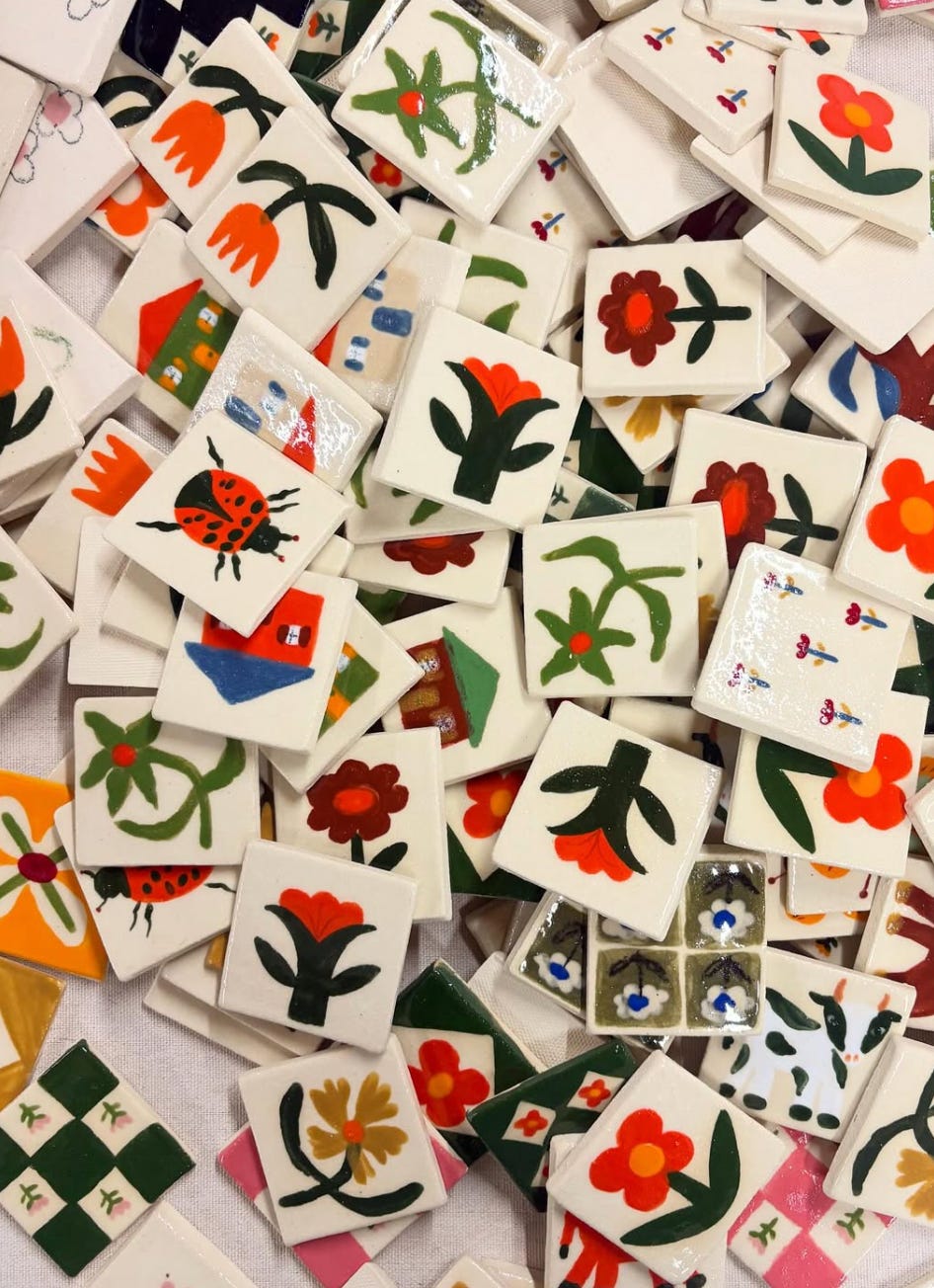
But all that’s changed to the point where hobbyists have become the new designers, in a way. The internet didn’t just give makers a distribution channel; it gave craft a status symbol, both for the maker and the customer.
We’ve obviously talked a lot about the rise of makers and people gravitating toward things that visibly came from someone’s hands.
The bigger shift: “maker” is becoming a more credible creative title than “designer.”
If you have a hobby and want to monetize on it, now’s a great time to be making content about it.
What we can learn from Nike ACG’s rebrand
Nike just pulled out a rare W with the relaunch of ACG, their in-house outdoors brand, and we need to talk about it.
ACG (All Conditions Gear) has been around since 1989, but it never fully got the attention or love it deserved. Which has been disappointing to watch, because it’s genuinely one of their most powerful assets as a large brand (and one that’s struggled immensely in recent years to define its identity).
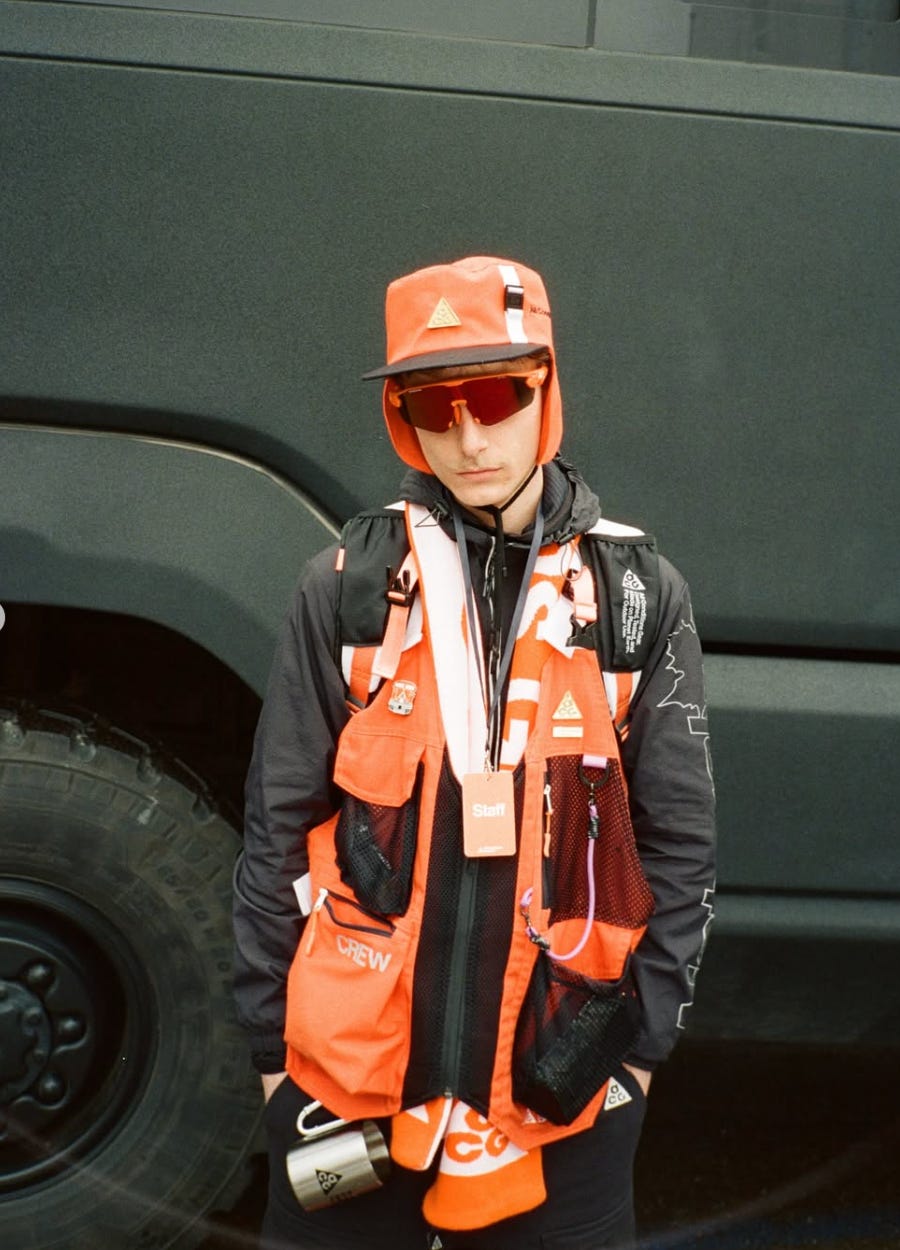
But this month, Nike went all in on a rebrand of ACG, giving it the flowers it deserves and a much-needed reboot to serve the lanes it operates best in, like trail running, hiking, and exploration.
Naturally, Wieden+Kennedy (Nike’s long time agency partner) executed the rebrand, and they went full on world-maxxing in the process.
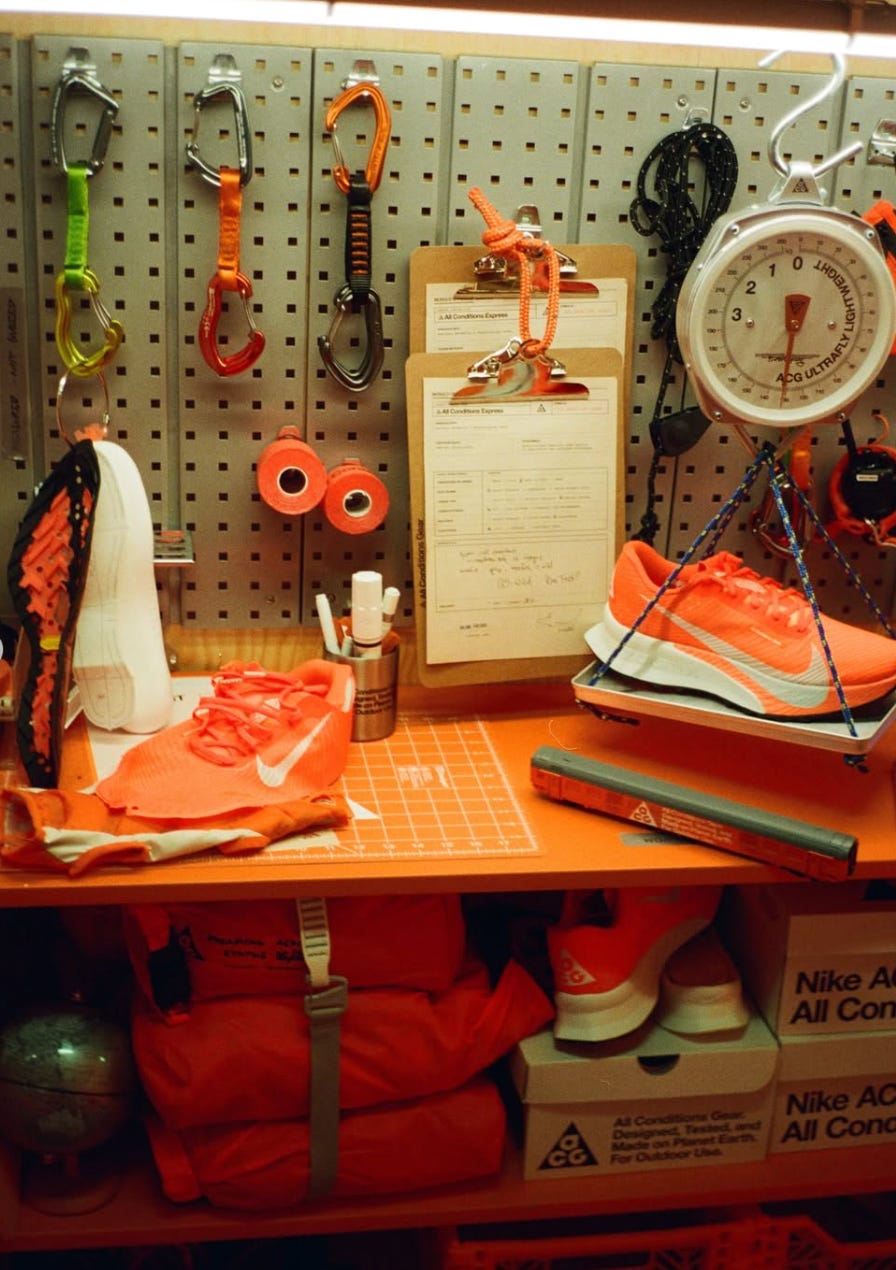
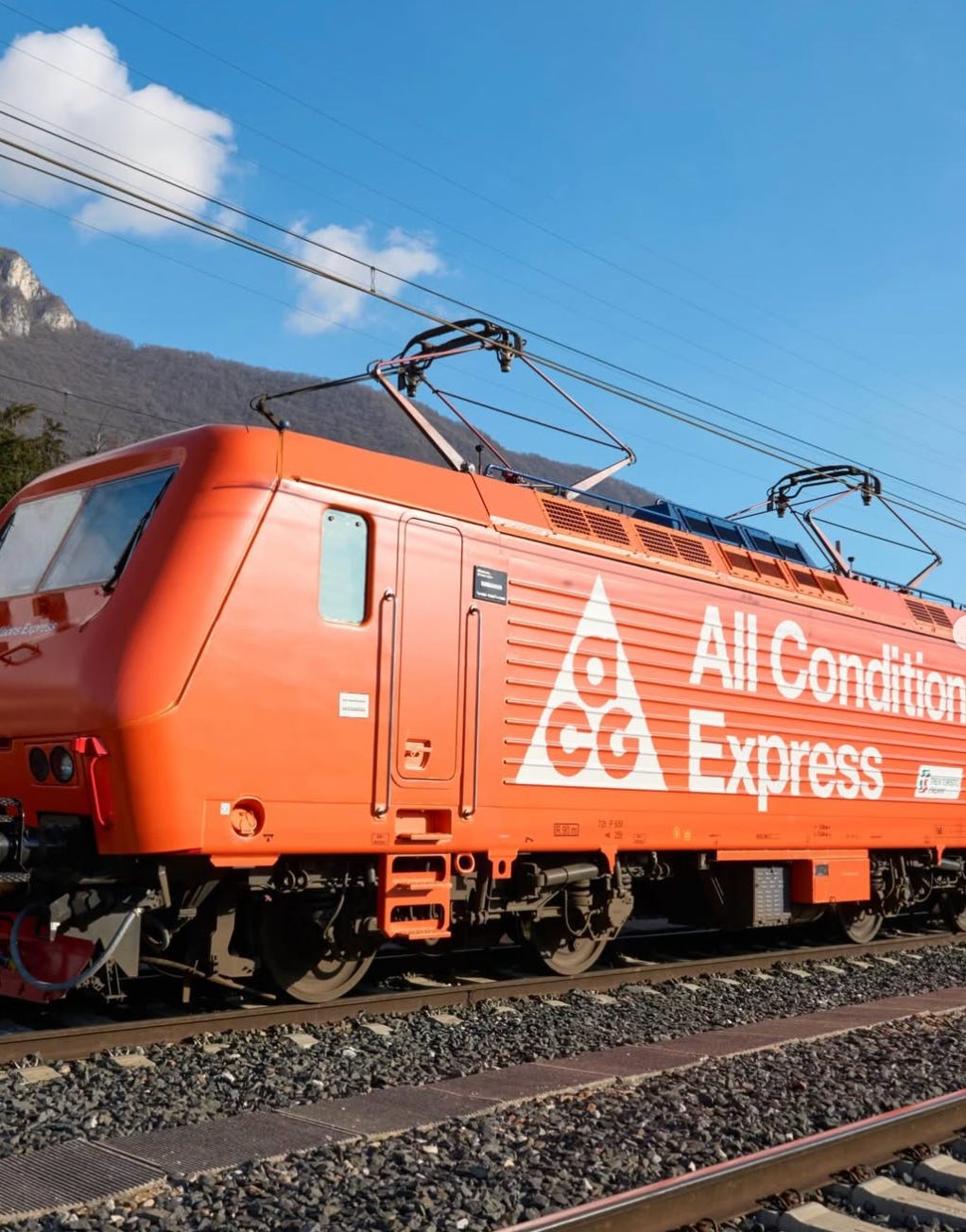
For starters, they tricked out a heritage Italian commuter train, painted it head-to-toe in ACG’s signature orange, and turned it into a rolling basecamp called the All Conditions Express.
The route went from Milan’s Centrale station into the Orobic Alps during the Winter Olympics (Feb 4-8), taking athletes and press on guided trail runs while offering them access to gear labs and recovery stations.
Then they brought on Jannik Sinner, the heir-apparent to Rafael Nadal, to be the conductor and punch tickets on board. Which sounds random until you realize Sinner was an elite skier growing up in the Dolomites before tennis was ever in the picture. He’s not a celebrity cameo. He’s an outdoor athlete coming home.
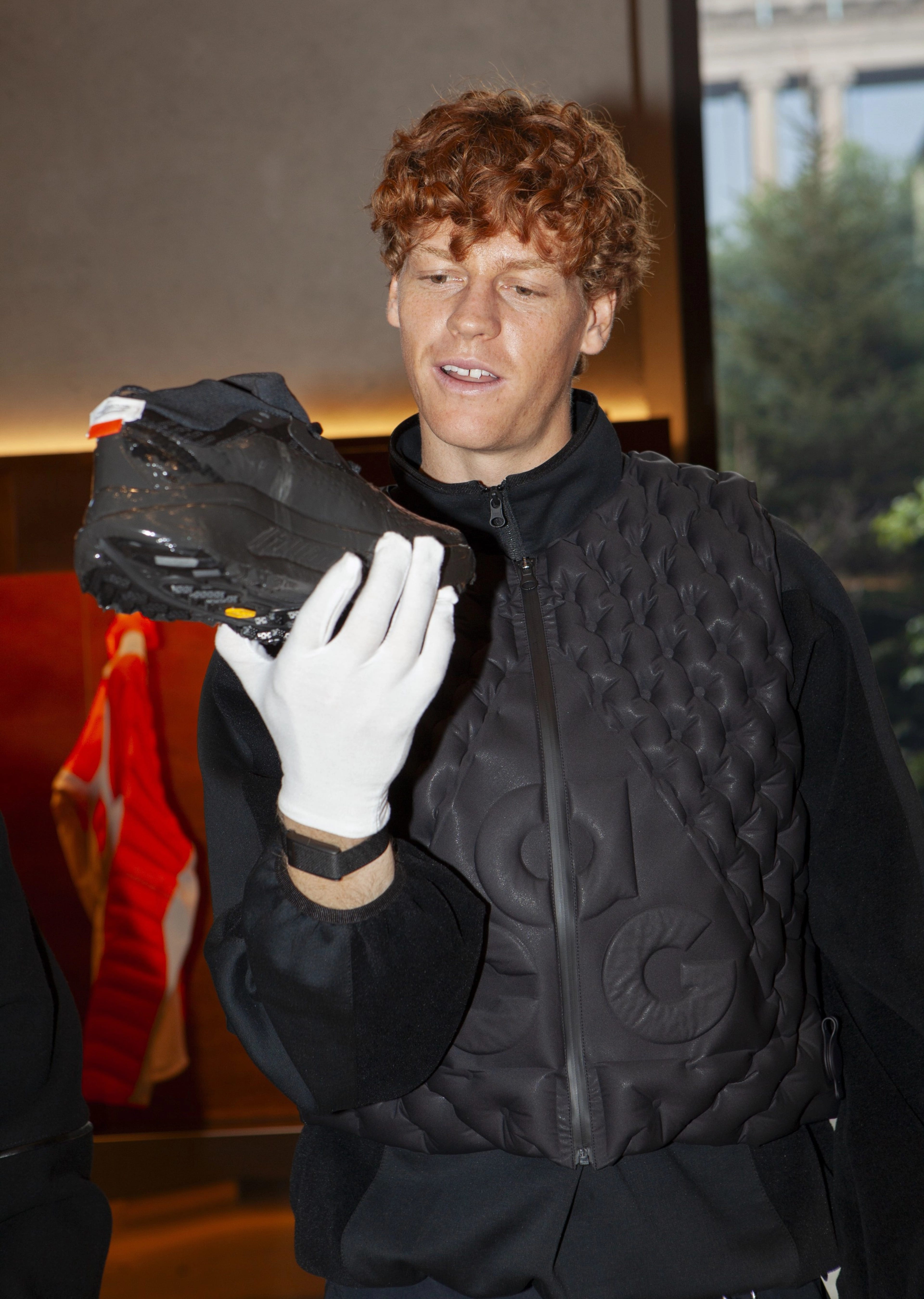
Nike leaned into that backstory with a bespoke one-of-one outfit through their Nike Atelier program; a custom GORE-TEX ACG jacket, A.I.R. vest, and dip-dyed Zegama trail shoes. There were no tennis references, instead they focused it as an homage to where Sinner grew up in Northern Italy.
And as they rolled this out the last month, I’ve been thinking about a number of ways they nailed it. Here’s where I landed…
You can rebrand old ideas. It’s obvious that ACG had morphed into a fashion play over the years, which has a segment, but it lost its core. And instead of killing the whole thing when the brand felt stagnant, Nike redirected it back to the foundation. If your product line or positioning has drifted, perhaps it’s time to think about niching down again.
Show, don’t tell. Nike didn’t just tell people ACG was a performance brand again. They showed it. Caleb Olson won Western States in the Ultrafly. That’s not a campaign. That’s proof.
The activation is the product. Recovery labs, gear demos, alpine trail runs, all happening inside the experience. For smaller brands, this is the principle worth stealing: don’t separate the marketing from the thing. Make the experience and the product the same story.
There are countless legacy brands shouting into the void right now, trying to force their product lines and categories into something they’re not. And while not every brand has Nike’s budget, the principle is the same: sometimes the move isn’t reinvention.
It’s returning to what made you great in the first place.
How On went from unknown to $3B in revenue
On just hosted a giant press trip for the launch of their newly opened factory in South Korea, where 32 fully automated robots are producing their newest products in a fraction of the time it would take humans to do it.
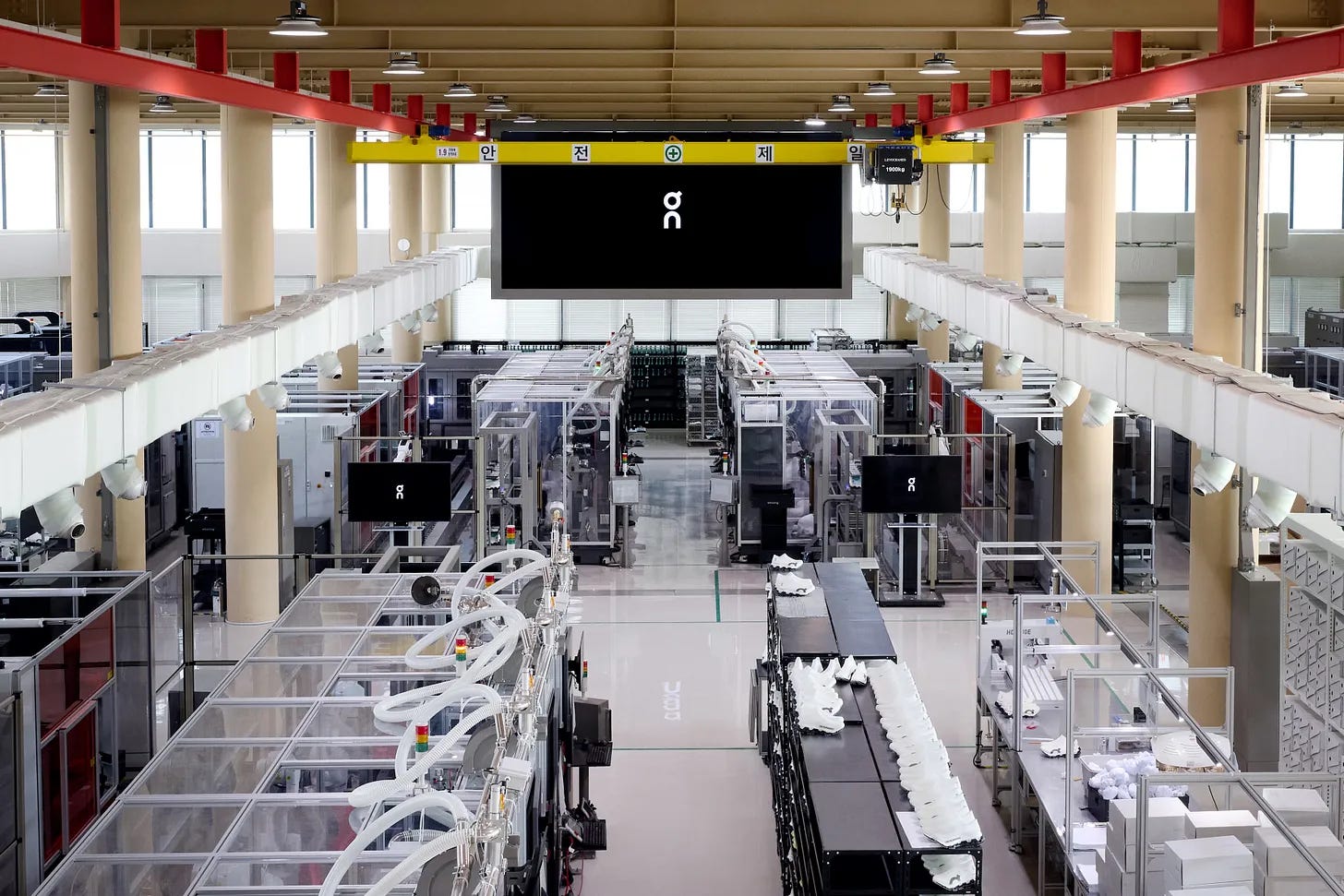
Basically a robotic arm sprays an ultrathin upper onto a shoe in roughly 3 minutes, which effectively replaces a traditional manufacturing process involving 200+ manual steps.
And to give you some perspective, this Busan facility gives On’s LightSpray production capacity 30x its original four-robot setup in Zurich, putting output in the hundreds of thousands of units. Which is wilddd.
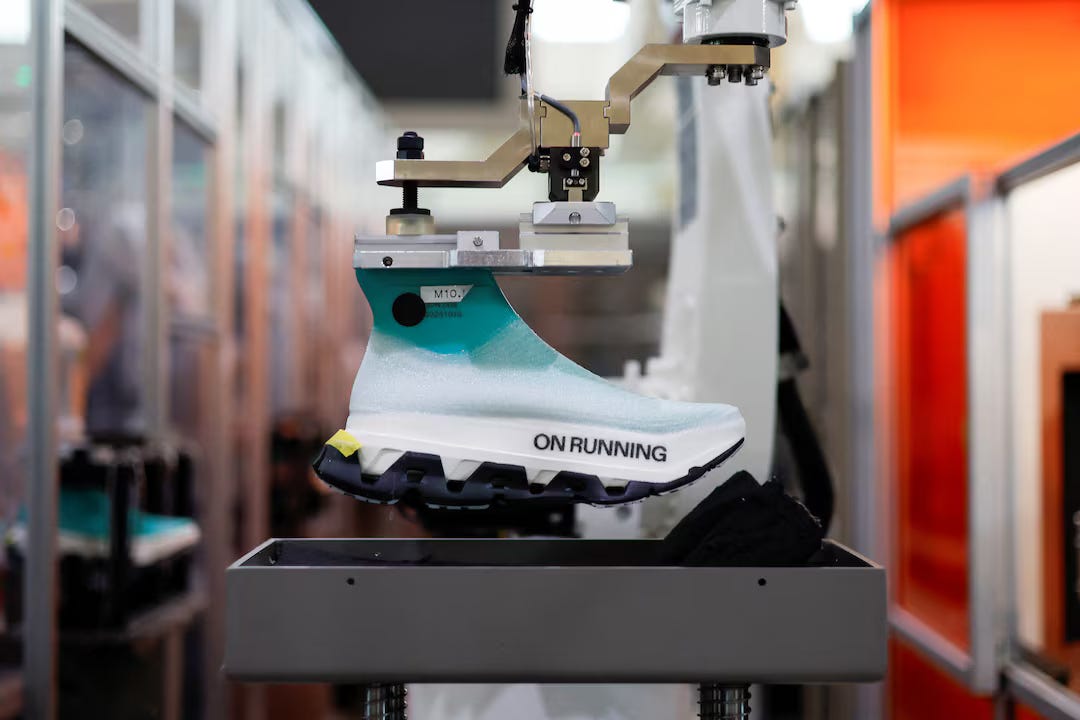
But what’s most interesting for us is how it changes the math for the whole company.
One of On’s co-founder, Caspar Coppetti, mentioned the the current output only represents 3-4% of the facility’s total capacity, and they’re already exploring additional factories in Asia, North America, and Europe.
Oh yeah, and On announced they hit $3 billion in revenue in 2025.
For a company that’s SIXTEEN YEARS OLD, not bad, huh?
Ultimately, I think what this shows is just how massive the outdoor and athletic market is, how much green space exists for small to mid size brands, let alone behemoths like On, and how you can literally scale a brand by relentlessly focusing on making an insanely good product if you sell the message properly.
PS - if you want to hear more about the press trip and factory, our friend Chris from Dot Dot Dot wrote about his experience on the trip here on his newsletter. Tap in.
3 creator-founders you should follow right now
Ronning
Magnus, the founder, has done an amazing job taking you BTS of what it takes to run a clothing business, from his budget report videos showing how much he spent in a month to these factory videos where you see how products are actually made.
If you’re making your own products you should be using your page to do the same thing on a personal level. It builds really strong brand affinity and let’s people see the more human of you.
Sour Milk
is a newer CPG brand making a probiotic yoghurt, and the founders Elan and Kiki have positioned themselves in a unique way to take you on the journey starting the brand and what each phase looks like, including unsexy parts like asking friends to help them package things.
CatGPT
This is perhaps one of the greatest case studies for what being good at yapping gets you in life. CatGPT (I believe her real name is Catherine?) has been making technology and AI focused content for a while, and she lays a nice blueprint for how to evolve from a niche topic into selling an actual product.
Which in her case is Physical Phones, a bluetooth powered device you can use to take real phones calls instead of being on your phone.
Licensing - how does it work?
There is more confusion than ever about collaborations, licensing and how brands working together with various intellectual property works. The Brandfathers brought an expert on this week to break down the basics:
As always, thank you for reading,
Clayton & Oren
Most brands that drift from their core don't get the ACG treatment. They get killed. I study this pattern constantly. The brand starts with a clear identity, gains traction, then someone decides the positioning should be broader because broader means bigger TAM. So a performance outdoor brand becomes a fashion play, a sauce company becomes a lifestyle brand, a DTC shoe company starts selling candles. Revenue goes up for a cycle. Then the core customer can't recognize you anymore and the fashion customer was never loyal to begin with. By the time someone says 'let's go back to what made us great' the original credibility is gone and you can't get it back. Nike could do it with ACG because Nike has unlimited capital and Wieden+Kennedy on speed dial. The other 99% of brands that drift don't get a rebrand. They get a clearance rack and a LinkedIn post from the founder about what they learned