

Our TED Talk for the day
Checking in from one of the worst weeks in marketing, the first week of April - Oren is recapping how the dream of New York luxury grocery lives on in Tokyo, while Clayton hops between cutlery stores and ateliers in Paris. The lads are storemaxxing.
April Fools has always been a bit of a gambit.
Manager asking, “What are we doing for April Fools?” Bad jokes that don’t necessarily get customers excited… and now in the AI era, it’s far worse when you can simply mock up a product idea with a prompt.
What actually constitutes as a joke that people will pay attention to?
Related: One of the most overused words of the last year is authenticity.
Turning on the iPhone and getting the founder (or McDonald’s CEO) on camera… just as what we’re seeing now is that authenticity isn’t really what users want.
First… they want the tea. If anything is dominating feeds this week, it’s everything happening with Summer House. The internet is still a sucker for a good old-fashioned drama.
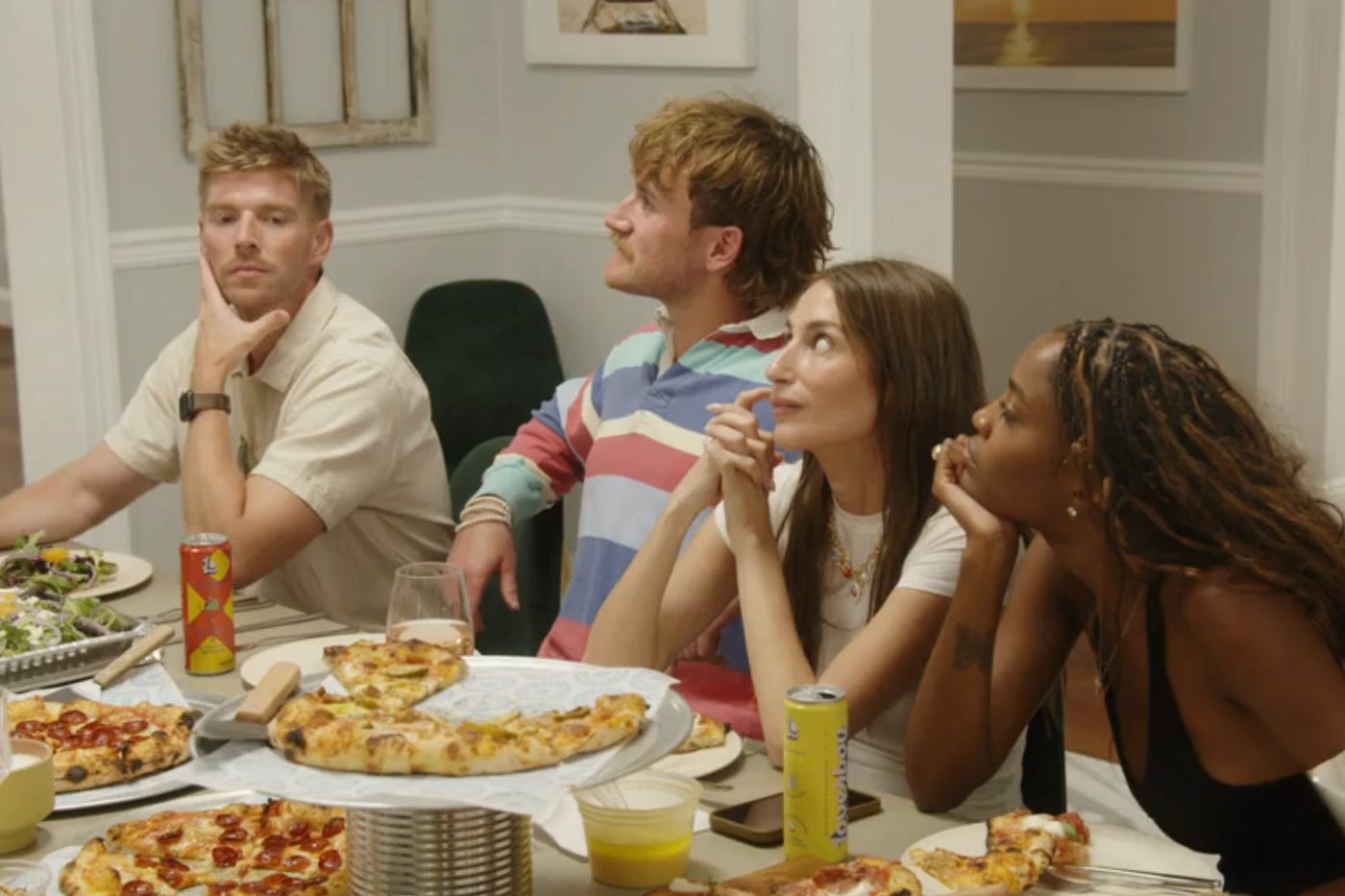
It’s coming fresh off the heels of The Bachelorette scandal, and there is more relevance of reality TV and mainstream media conversation than one would think possible in 2026, done by the perfect melding of social media stars and mainstream television and injection of playing good old-fashioned drama that doesn’t feel associated with existential doom of politics or markets.
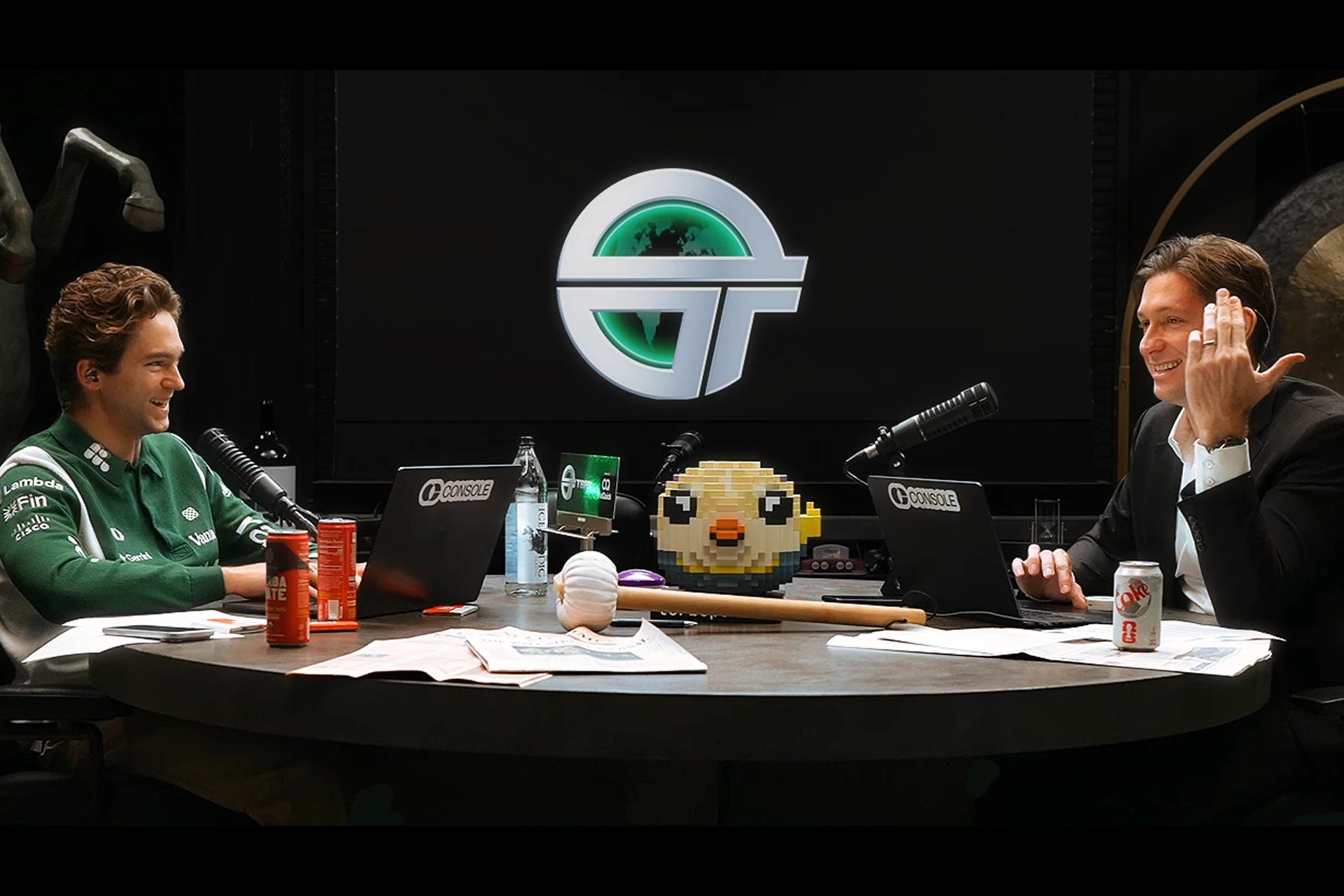
Compliment this with the latest acquisition news of Open AI buying TBPN.
TBPN is media, but not a journalistic endeavor; it is a show full of unbridled optimism, curiosity, and excitement for discussing technology in a world where the media focuses on whatever it can find to tear down and belittle.
Tech journalism has found that really only fear and anger get the views it needs to hold on for just a little bit longer. The media consumer now understands, after watching enough rage-bait, that the constant teardowns they watched from mainstream tech coverage are just a technique to have them consume more out of fear.
The business consumer is too educated for that now; there’s a reason I’ve never been sent Wired or Verge articles in group chats over the last two years, but I get a constant flow of TBPN. We want to be excited.
By going in the opposite direction of what seems like anti-tech tech media coverage, the TBPN squad, which we’ve written about ad nauseam in this newsletter for their dialed-in approach to media, delivered positive instruction and built high energy toward a 9-figure exit.
In a world now where everyone shares their real selves on iPhone videos, you’ll be surprised what a relentlessly optimistic or contrived drama will do to give the viewers what they want: traditional TV tropics, just not put together by massive corporations with a Hollywood agenda.
As every “new media” influencer or group chat spirals from the news's opportunity, and every tech and VC wonders how to build a real media play. This seems like a fitting time to break down my four C’s of influencer marketing - the art of utilizing personality inside the marketing conversation.
From there, we’ll continue to discuss the other throughline at hand in the modern cultural conversation of retail experiences.
We also dive once again into what journalism and PR look like in the modern age, and you’ll find all of it below.
Let’s get into it
The Four C’s of Influencer Strategy
This newsletter segment is in partnership with Later.
Something is happening in influencer marketing right now that I find genuinely exciting. Brands are getting creative and celebrity, influencer, designer and cultural ambassador are all blurring.
The Influencer report
Valentino signed Sombr. The 20-year-old behind “Back to Friends” is now a brand ambassador for one of the most storied fashion houses in the world.
A 23-year-old is redesigning Slazenger live on TikTok. Alexei Hamblin started a series of roasting “dead” sports brands he found in Sports Direct. Instead, Frasers Group brought him in as a consultant to reimagine Slazenger, a brand founded in 1881 that needs a new lease of life. He’s documenting the entire rebrand on via short-form video
Katjes appointed Jake Shane as Chief Creative Officer. The German candy conglomerate (about a billion dollars in revenue from gummies alone) is entering the US market, and they’re giving (at least some of) creative keys to a 26-year-old comedy creator with 3.9 million TikTok followers and a hit podcast. He’ll lead brand voice, campaign strategy, and cultural positioning for the entire US launch in 2026.
Reformation dropped a Divorce Collection with Laura Wasser. Hollywood’s most famous divorce attorney has represented Angelina Jolie, Kim Kardashian, and Britney Spears. Reformation hired her to front a post-Valentine’s Day campaign about moving on, feeling sexy, and starting a new chapter. L
imited edition “Dump Him” sweatshirt with proceeds going to a family law center. Not about followers but about a cultural anchor that signals the right thing to current and target Reformation audiences.
The 4 C’s framework
I think about influencer strategy in four buckets, let’s call them The Four C’s.
Culture: brings relevancy. You’re tapping into someone who carries weight in music, sports, or media. Valentino signing Sombr is pure culture. He wore the clothes because they matched his identity, and now Valentino gets to borrow that energy. When Nara Smith becomes the face of an algae oil brand and it somehow makes perfect sense, that’s culture working.
Creative: is when someone with influence actually designs, builds, or creates for you. Not just posts about your product. Makes it. Hamblin isn’t doing a Slazenger sponsorship. He’s redesigning the brand in public and building a new sub-line from scratch.
Core: is the traditional play. People who post about your niche and products, paid to do their best, boosted with paid spend, ideally in coordination around a campaign.
Category: is the wildcard. It’s using specialists to reach specific, unexpected, or test markets. Jake Shane doing Katjes isn’t a traditional CPG play. It’s putting a comedy creator in a C-suite role to reach an American audience that has never heard of this European candy brand.
If any of these scenarios sound weirdly good, it’s because they are. And the reason brands are getting better at this is that the discovery and tracking behind influence is improving. Tech is being used to quantify what used to be gut feel.
Why I Work With Later
The influencer platform Later has built its own proprietary AI engine called LaterEdgeAI. It’s trained on data that actually matters: 16M+ creators analyzed to predict performance, 136B annual impressions showing how content lands at scale, and $2B+ in verified influencer-driven purchases tied to real outcomes.
That last number is the one that should get your attention, because all channels are becoming increasingly measurable, whether your goal is awareness or sales.
Later strategizes, produces, and manages influencer campaigns end-to-end. They’ve done it for Nike, Chewy, Habit Burger, and more. If you’re looking to build or level up your influencer marketing, the link is here.
Learn more about Later here.
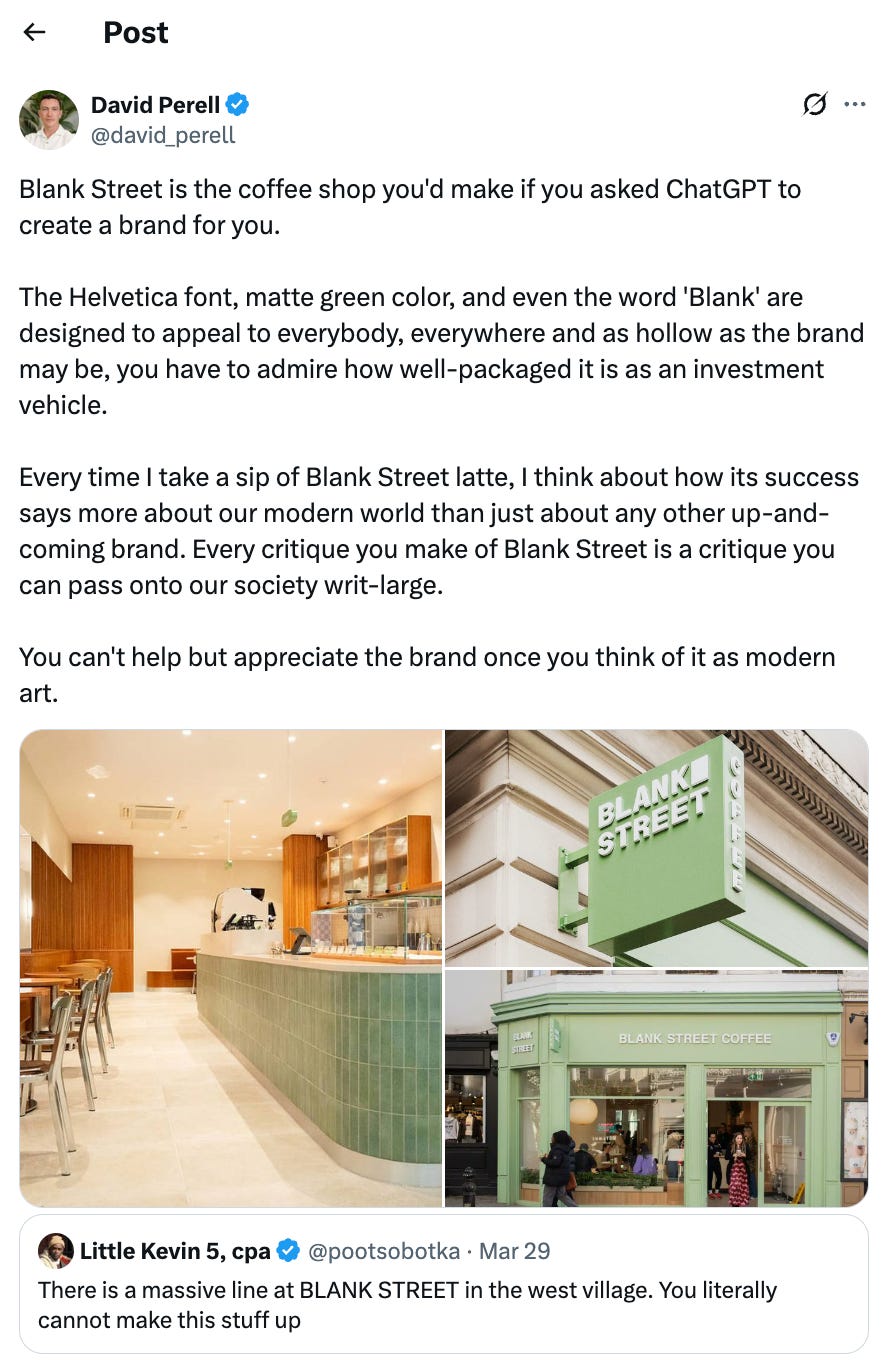
The Blankstreetification of physical retail
Loved this insight from Twitter-famous writer, David Perell, on why establishments like Blank Street just work. What other brands would you put into this bucket right now?
What outdoor brands understand about art direction
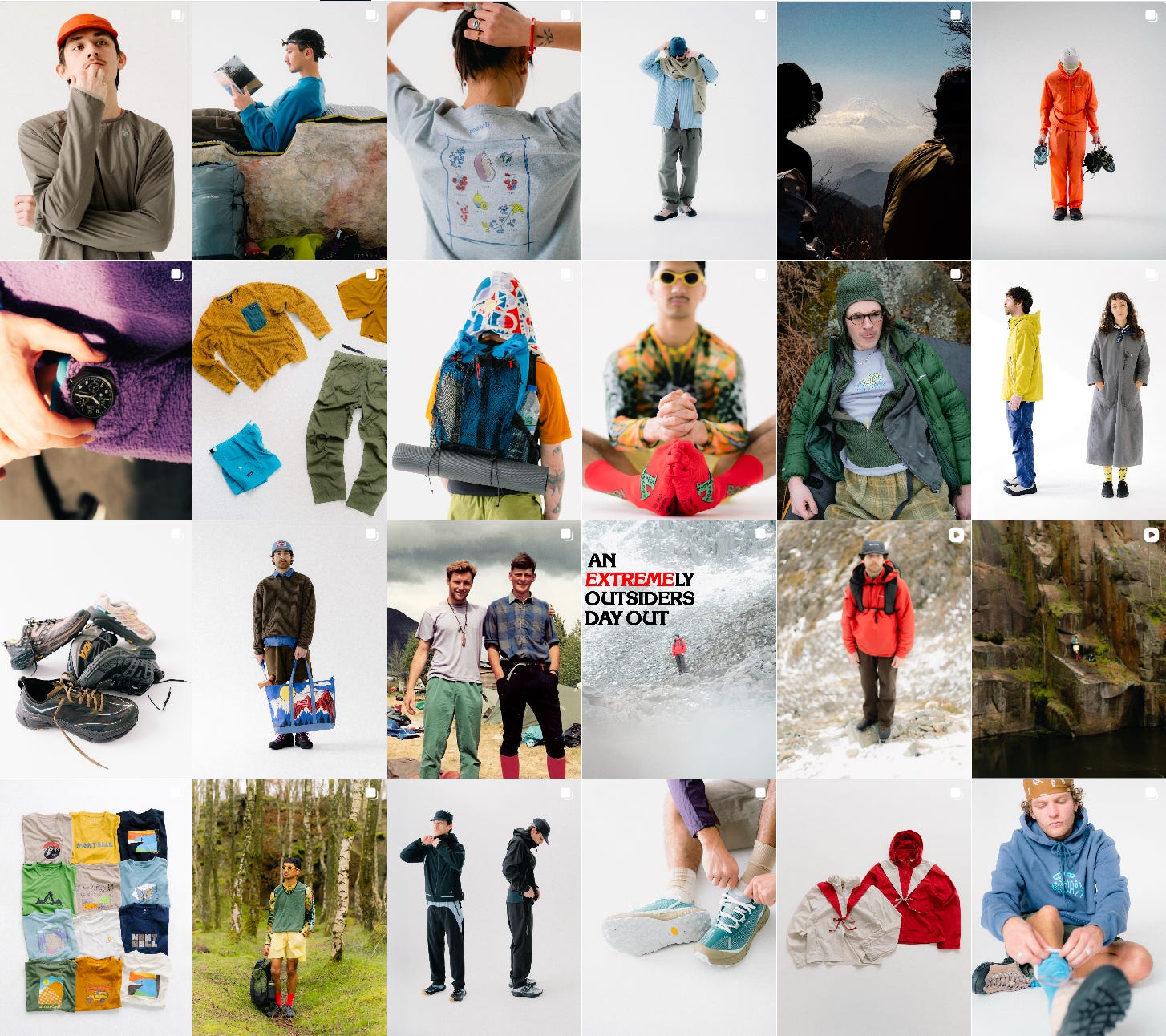
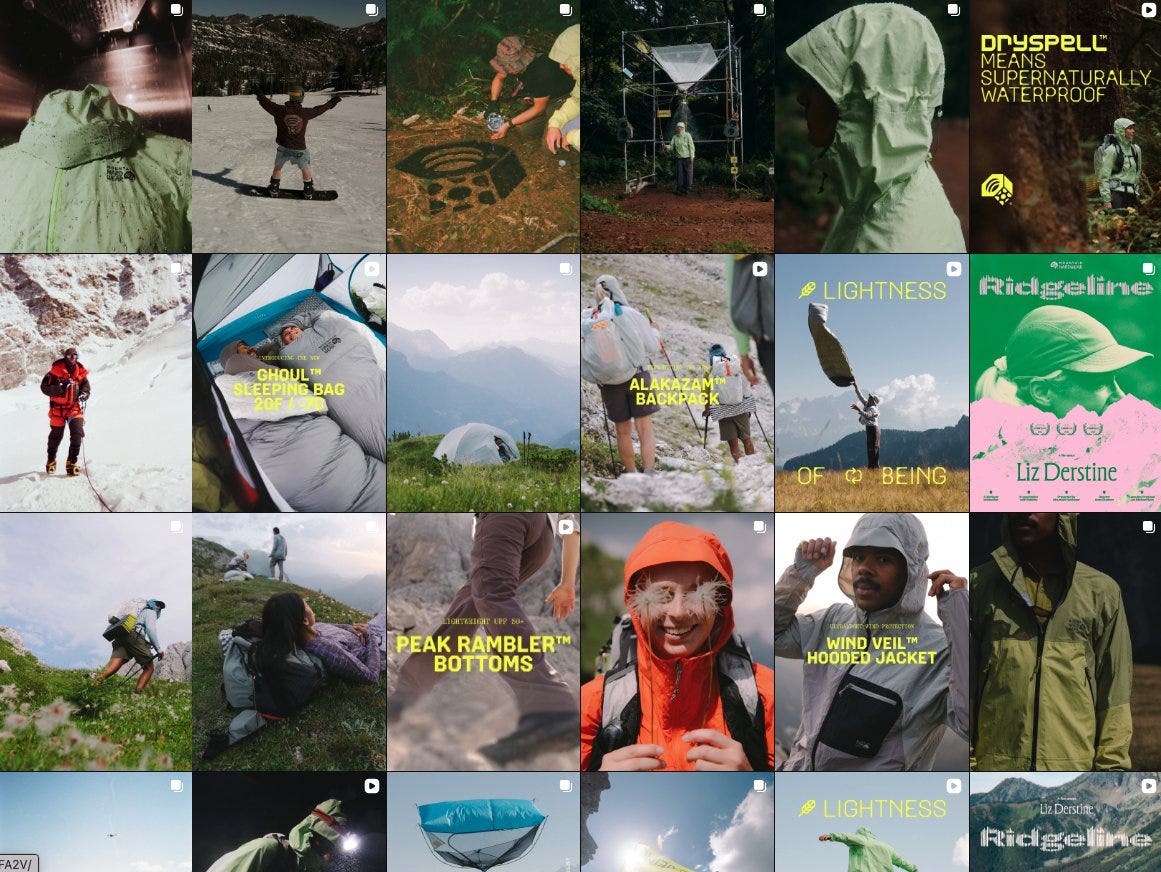
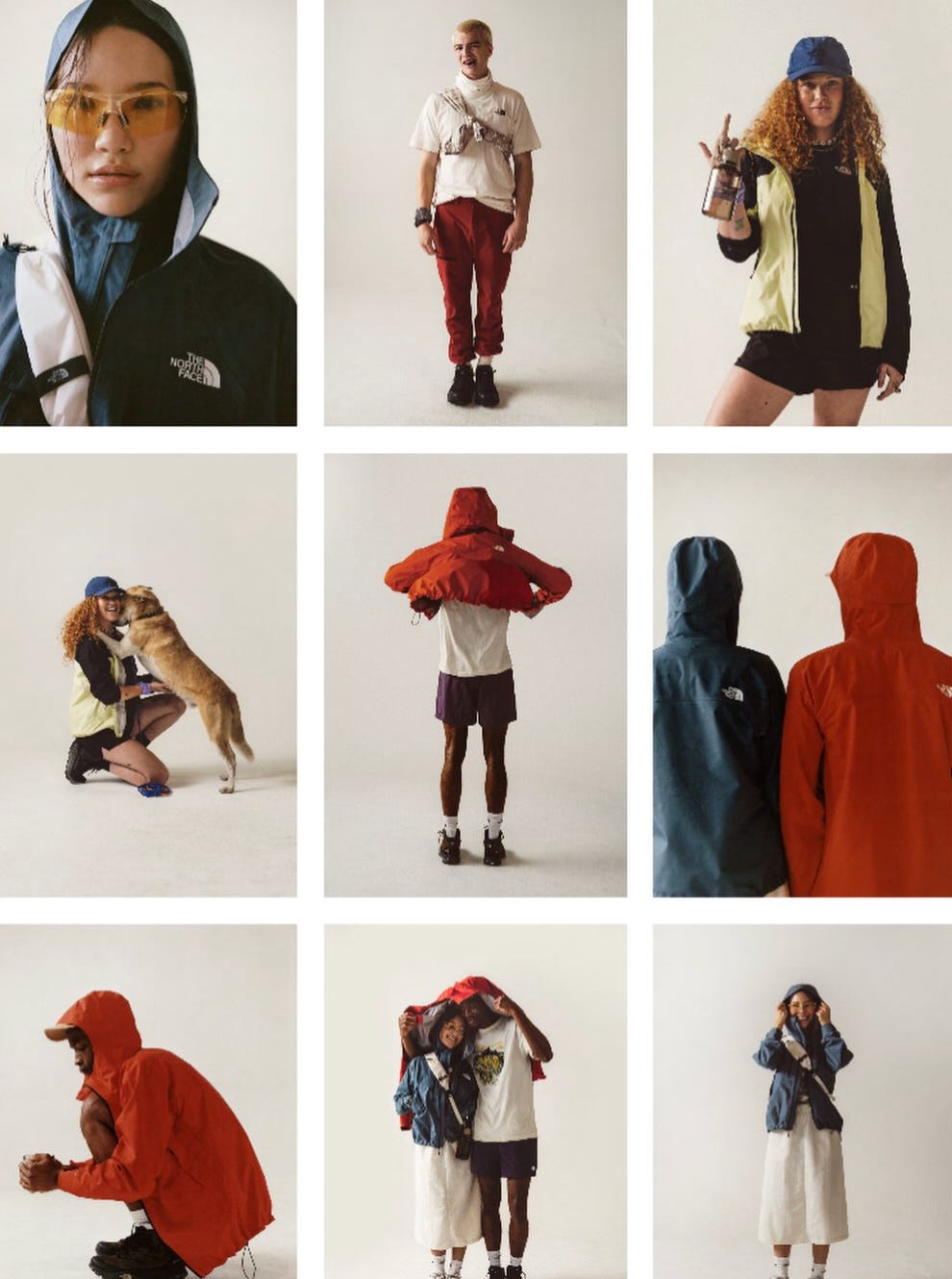
If anyone understands good art direction within content, it’s outdoor brands. From upstarts to more established companies, these are a few things they just get that other companies can apply to their own situation.
Color. They understand how to incorporate color in a way that feels both loud and natural. Part of this stems from the product itself, and the other part stems from how they pair colors to create tension for the customer.
Movement. They know how to place their models in natural environments and settings, and what actions
Narrative. They create storylines within each post that loop you into a greater point, and they do it both in the studio and in nature. You attach yourself to specific characters or connect with different environments, which only allows you to build a deeper relationship with the customer.
Consider the following examples to illustrate our point.
The State of Public Relations
Ashwinn, Jordan and Oren talk about media, PR and a scene report from Shoptalk.
As always, thank you for reading,
Clayton & Oren