

First, a housekeeping reminder, the next Cut30 starts today if you want in on learning short form video and following in the shoes of hundreds and hundreds of successful creators you can join here.
I just got back from Tokyo with the family. Fresh eyes, a lighter wallet, and a few things worth discussing about brand in the modern age.
Primarily, when everything is copyable, identity becomes the last advantage.
Japan figured this out before we did, partly because China’s been duplicating everything next door for decades. The stark differences in retail experiences, branding, the craft of product between Japan and the rest of the world are significant.
One of the more interesting examples is Family Mart hiring Nig (the BAPE founder, current Kenzo artistic director) as their creative director.
Because in a market where every convenience store has similar experiences, and they're all on every corner, competing both for local and tourist traffic, the brand that has an identity wins. And possibly, that ubiquity and brand value can be the start of something bigger. They already have a branded apparel line called Convenience Wear, treating owned product lines as a core part of the convenience store experience. Now they’ve launched new retail experiences focused just on that, have a full slate of collaborations, and are expected to have new interiors updates starting this year.
Perhaps the most interesting creative director jobs will show up in the most unexpected places.
In this HYPER.
- I’m redesigning all my various websites, and share a bit of how and why
- Further breakdowns on branding insights from Japan
- A dive into pricing psychology tactics worth knowing for your brand
Let’s begin.
Web Design Workflow
In partnership with Framer.
This year, one of my focuses is synching all the elements of my personal brand and brand extensions online.
My primary methodology for almost everything nowadays is to ship and catch up to “brand standards” later. I wouldn’t have done 1000 videos over the last 1000 days (which feels insane but what I’ve actually made) without starting with done is better than good.
We’ve had 2500 brands and creators through Cut30 and the logo is from a designer on Upwork.
But all mad-dashes must come to an end, and this year I’m turning it all into a brand.
The first focus… websites.
We just launched the new Cut30 site in Framer.
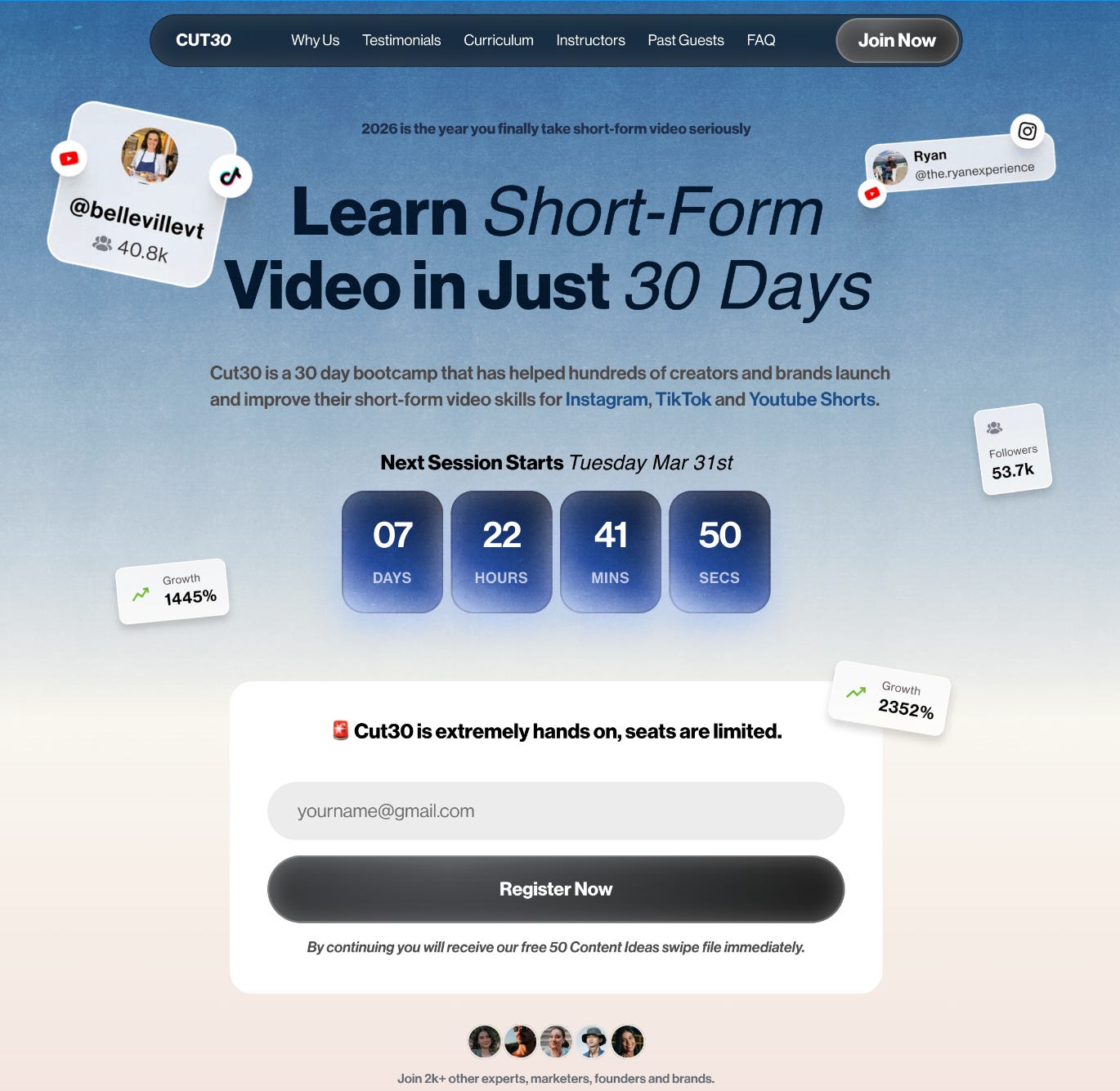
All my recent community calls are also in a Framer flow. Their forms sync direct to Kit or to Kajabi via API. We’ve matched all the styles to my Insagram carousels and video backgrounds.
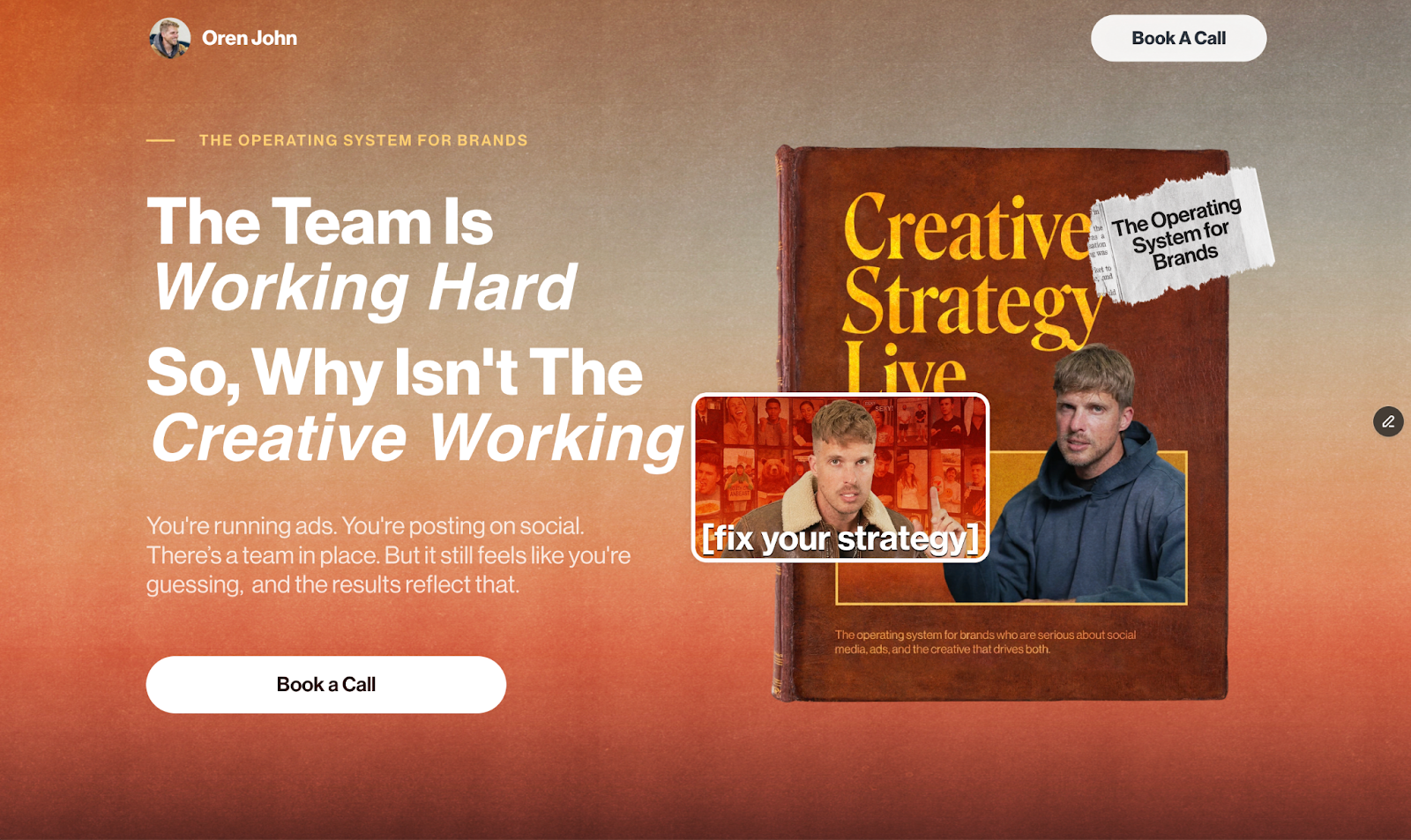
And through doing this, I can’t recommend Framer enough. See that little pencil icon on on the right of the screenshot above? I can just click that and edit any of the text on site or drag any objects live and it edits it responsively. I don’t even need to touch a backend.
I hired a developer/designer easily off of Contra, and then a more affordable admin for basic changes there, too theres an easy support community.
When we started and I wanted to get a site live quick I used this template below and we were live for a webinar promo in under 20 minutes.
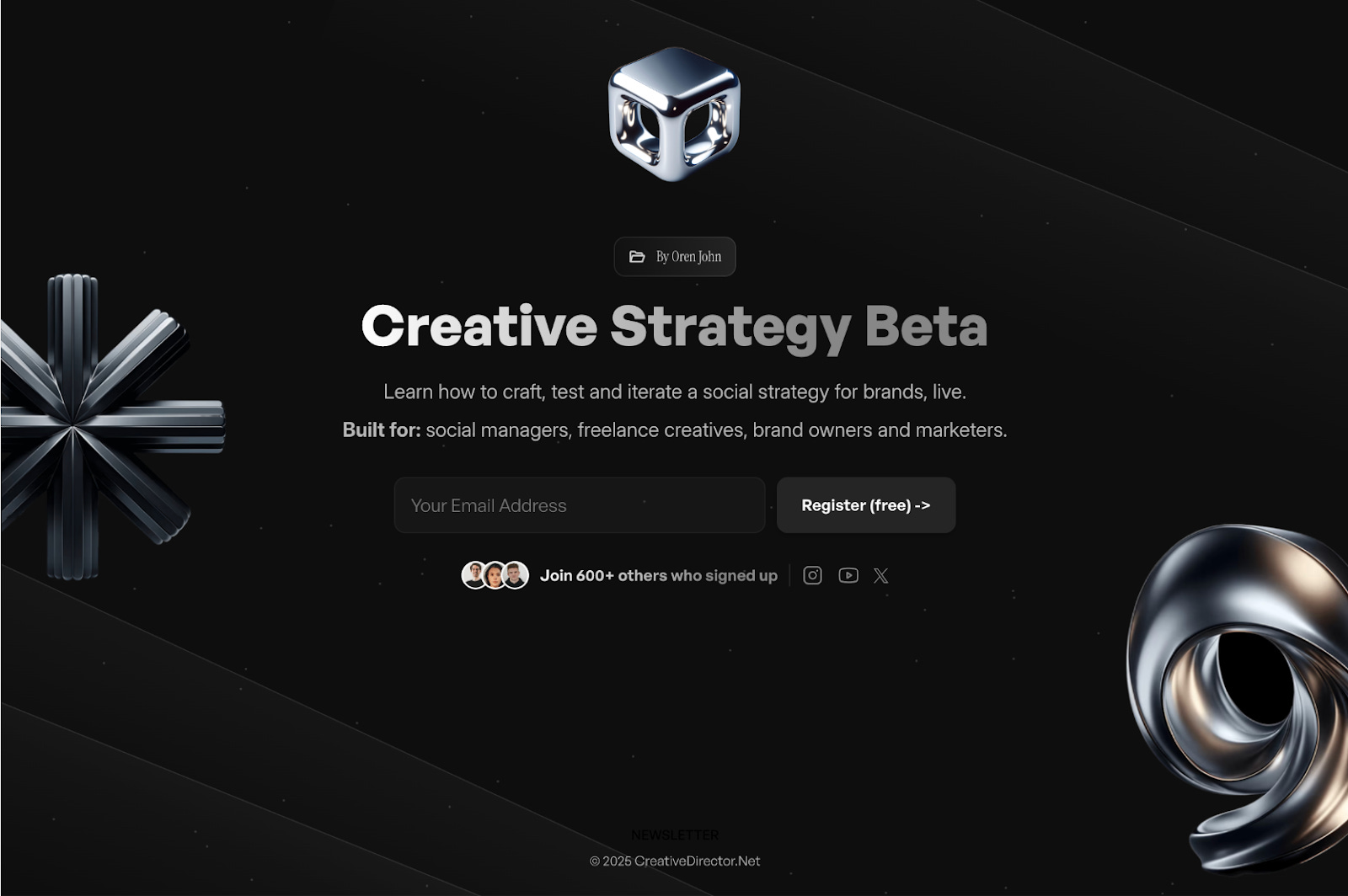
If you’re a creative who wants a portfolio site that doesn’t look like everyone else, a freelancer who wants to add web to your toolkit of what you offer, or a business looking for a better website, you can learn more about Framer here:
https://framer.link/orenmeetsworld
What to learn about the branding and commerce of Japan
The learnings about branding (and inspiration for design) in Japan is essentially endless.
The above Youtube video breaks down what’s happening there from a brand and consumer culture standpoint, convenience stores with creative directors, department stores that embarrass anything we have in the US, and a North Face that somehow outperformed its American parent.
I visit Beams, who took American workwear and Ivy League style, made a better version of it than we ever did, and turned it into a multi-floor destination where a Ziploc collab sells out next to Japanese ceramics and imported denim.
We go by the block of North Face experiences, where Goldwin took North Face, brand that was close to bankruptcy in the ‘90s ,bought the perpetual trademark for Japan, built 12 sublabels, a 3D body scanning custom service, and turned it into a $670M business running parallel to the global version.
Plus Muji, the anti-brand, Don Quixote, the chaos destination and more.
The thread: every one of these brands found a way to build a world. A point of view, a curatorial lens, a reason to show up that no one else can replicate because it’s theirs.
Pricing Psychology: Behind the Numbers
The carousel I excerpt below on pricing psychology was very popular. In content in general I’ve been looking more and more into explaining “why we buy” and sharing both consumer knowledge for awareness and tactics for brands to position.
Today I’m going to go through some of the concepts of pricing worth knowing.
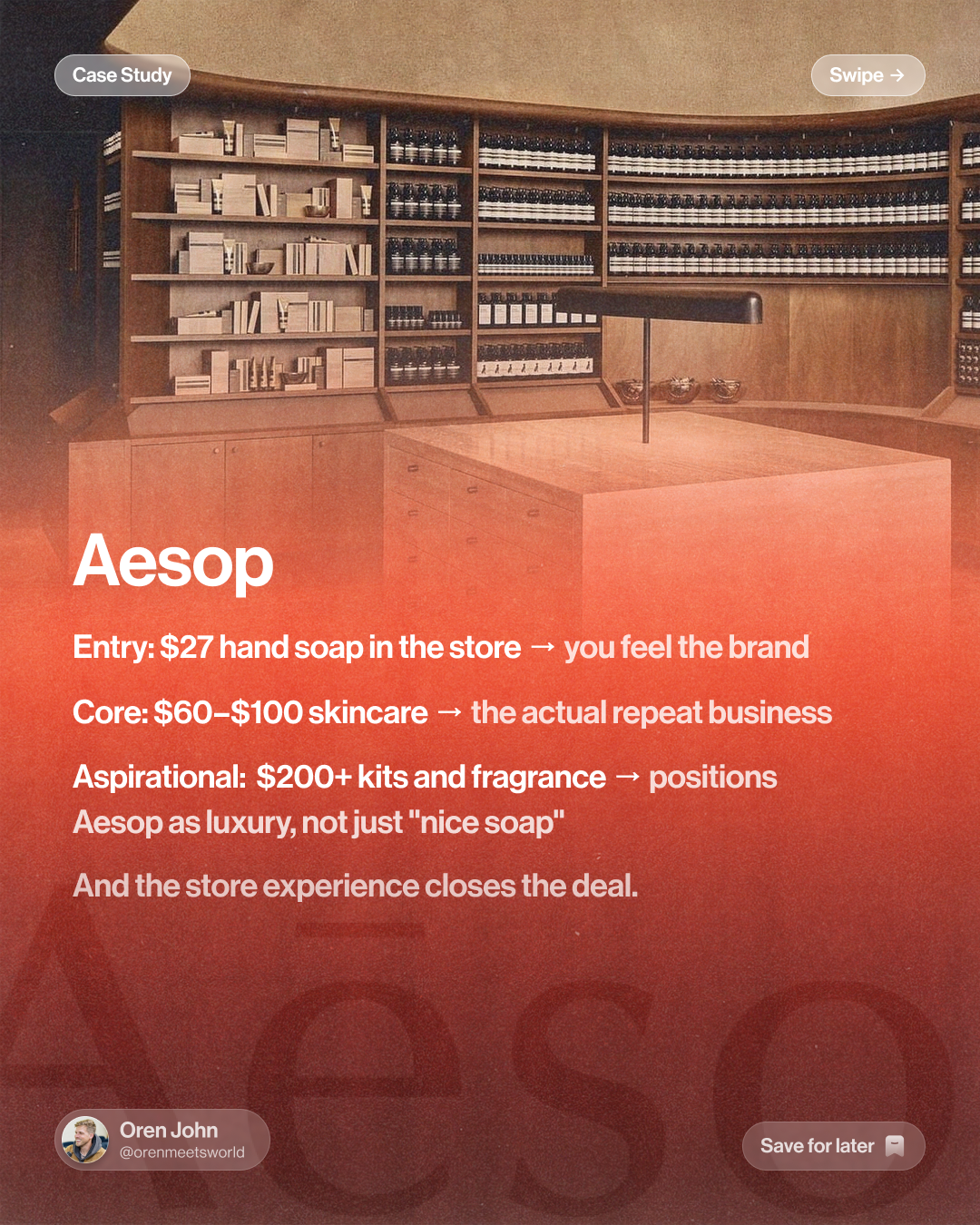
Anchoring
The first number someone sees reframes every number they see after it. This is why pricing pages almost always show three tiers: a high anchor on the right, a mid-tier in the center, and a low option that exists mostly to make the center feel justified. The decoy is there to make the real product feel reasonable.
Retail does the same thing. Luxury department stores stock a $900 candle not because they expect to sell a lot of them but because the $200 candle next to it now reads as accessible. The anchor does not have to be your product… but it helps to have it in the frame. Every Best Buy has three pricing tiers in every category for a reason - good, better and best (look at this next time you’re there).
Price as a Quality Signal
People do not have perfect information about product quality's specially online. So they use price as a proxy. In study after study, consumers rate the exact same product as higher quality when it is more expensive. Makes sense, this is a reasonable heuristic in a world where you cannot feasibly test many things before buying.
The implication is that underpricing is a brand problem vs just a margin problem. If your product is priced below category expectations, customers assume something is wrong with it. Premium pricing, when backed by the right product and brand signals, actually reduces buyer skepticism rather than increasing it.
Brands that undercharge often spend more on marketing to overcome the doubt their price creates.
Charm Pricing vs. Rounded Pricing
$9.99 versus $10. The difference is $0.01 and the psychological distance is much larger. Prices ending in 9 consistently drive higher volume in mass and value categories. But in premium and luxury categories, the opposite is true. Rounded pricing signals confidence. It says the brand is not trying to trick you into thinking $9.99 is a good deal. It is $10 and it is worth it.
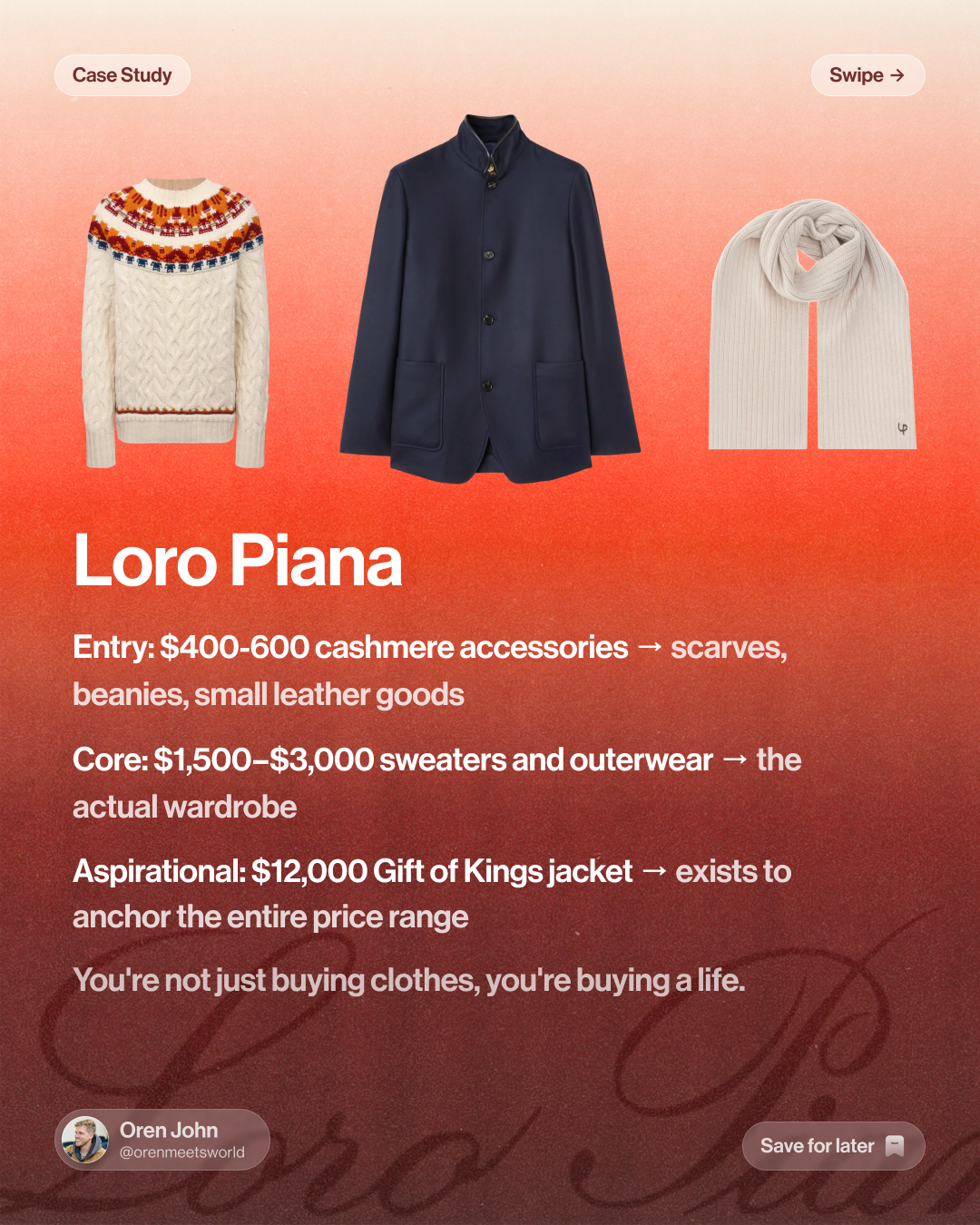
The Decoy Effect
When you add a third option that is priced close to your most expensive product but offers noticeably less, it makes the expensive option look like a better deal. Most subscription pricing pages use this without labeling it. Three options: a small, a medium, and a large. The small exists to justify the medium. The large exists to make the medium feel like the smart choice.
Loss Aversion in Pricing
People feel the pain of losing $100 more acutely than they feel the pleasure of gaining $100. Pricing strategy can activate this asymmetry. Limited runs, seasonal collections, and member-only access frames the purchase as a way to avoid losing out rather than a way to gain something. This is why fashion drops work, you are purchasing the prevention of future regret.
Patagonia does the same thing in a different way: the lifetime warranty is structured as a permanent protection against future loss. You are buying a jacket, and the guarantee that you will never have to buy another one.
Until the next edition,
Oren
the point about price as a proxy for quality is true irl, but not in software imo.