

Noise is increasing. Every major media property from Vogue to Highsnob eity is posting the same thing as your favorite creators were last year. Good form for a new brand isn’t to have one creator, its to have many.
And it’s gotten much much easier. Agentic editing has taken over the last two weeks, one of the biggest hurdles to making content, solved by Codex and Claude Code. I’m using it for half my content, my editing team is using it for what they spent tedious time on prior.
We are shifting from creator undersupply, where there was more demand for content than there were amazing creators, to content oversupply, where there is more bad content to consume than the algorithms know what to do with. More people reporting the news than news itself.
Over the next few week’s going into the New Year I’m going to be very focused on documenting this change. How to think about the marketing world in a new era where production is no longer a gate.
The first answer is, as always, creative direction. If everyone can create and edit, and production budgets for ads from CTV to Meta has had the bar drop… Personalities fully committed to the bit and persona are going to be paramount. Accelerators are already popping up to build this. The next era of creative directors will work for personalities, not for brands directly, and for personalities at the behest of brands. I’ve discussed this in past videos and community calls, but now it has fully arrived, accelerated by technology.
As always, I continue to be committed to real life, and believe most brands and personalities should as well, to complement online. You can find me on a lil fall speaking tour at:
Tatari Forward in New York this week.
Motion’s Chief Marketer in SF next week
Adobe Max in Miami November 12th
This week on HYPER - making ads work for tech, software, and “boring” businesses, plus a deeper dive into agentic workflows for creatives.
Let’s begin.
Two of the things that have been most surprising to me since my life became dominated by briefing ads for brands and pitching modern marketing and advertising services are:
how many brands believe marketing ads don’t work for them
how completely boring and useless the ads big brands are already running are.
Let’s unpack.
The modern world revolves around Meta and YouTube. Not just because of the size of their reach, but because they are proving grounds for validating creative ideas to see if they can generate money, done at relatively low cost and risk. Combine this with the fact that you can target anyone based on age, demographics, location and interest... it’s an incredible toolkit as a marketer, but I digress.
Many “boring” businesses, as well as software and technology businesses, don’t know how to think creatively about ads. They STILL run their launch video, product demos, and some on-brand statics with bullets. To survive and thrive in this era, you need to be INTERESTING, and a lot of those that aren’t are held back by a limiting belief from their team, or their agency. ANY brand can be interesting.
Creative Direct the Visuals
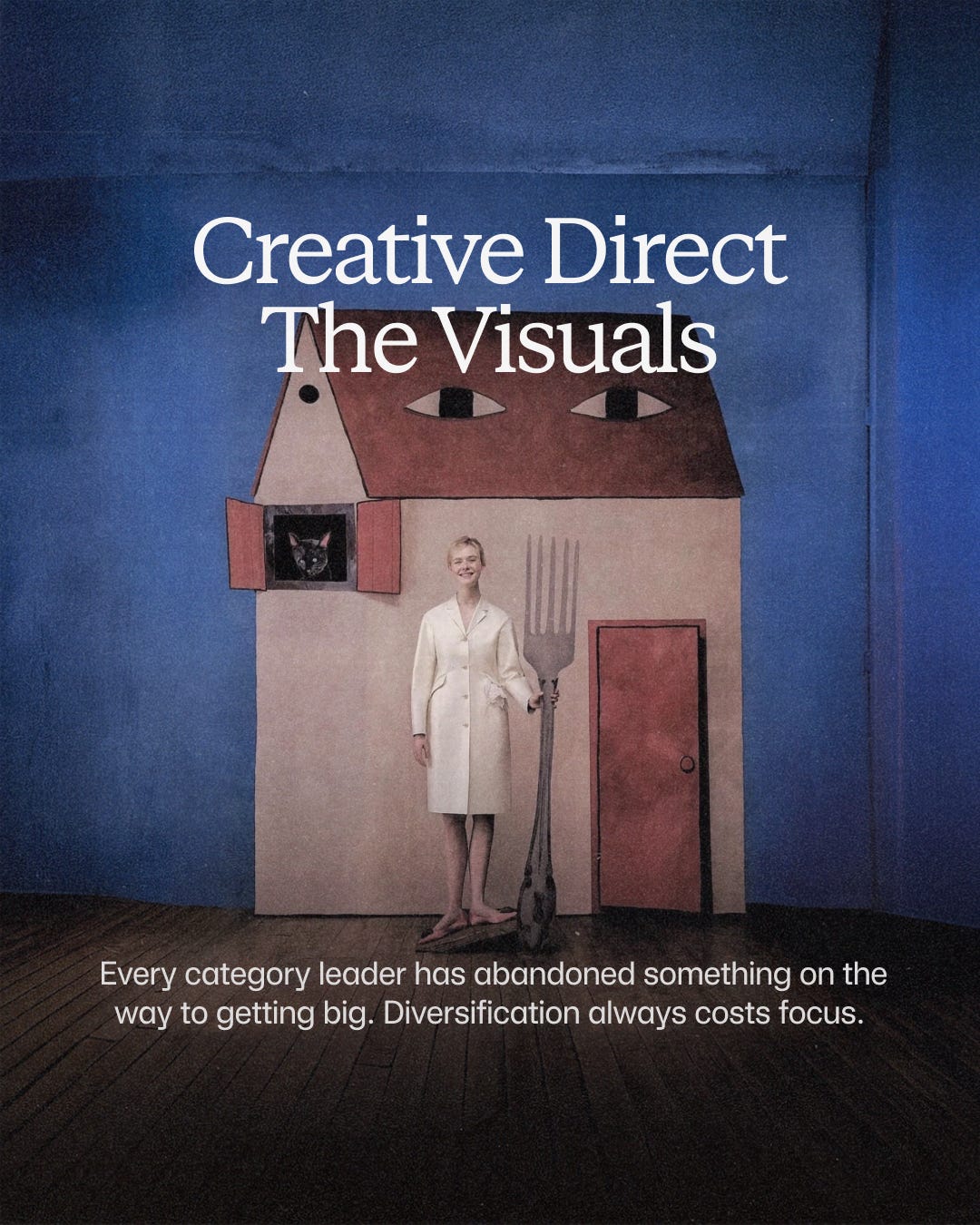
This is my reminder to tech, boring and software businesses that you do not need to have boring statics. You can use the creative direction playbook.
Scale - Make things dramatically small or dramatically large. Shoot your product as a miniature on a desk, or blow a single feature up to the size of a wall. Shifting the scale of something ordinary is one of the fastest ways to make a familiar object feel new, and it stops the thumb mid-scroll before anyone has read a word.
Props - Tell stories with whiteboards, objects and physical stand-ins. A whiteboard full of someone’s actual math, a stack of invoices, a broken tool, a pile of receipts: props turn an abstract benefit into something the viewer can see and recognize.
Wardrobe & setting - Where you shoot and what people are wearing. The same line delivered in a garage, a boardroom, a kitchen at 6am or a yacht lands different…
Split screens - Put two things side by side that actually heavily visually contrast.
Themes - Wrap the ad in a recognizable world: a heist, a nature documentary, a cooking show, a game show, a 90s infomercial.
Angles - Overhead, extreme close-up, POV, a low angle that makes the product feel monumental, a screen recording reframed inside a phone in someone’s hand. Most brand content is shot flat and eye-level, so even a simple shift in perspective helps with thumb stop.
Use Exciting Examples & Scenarios
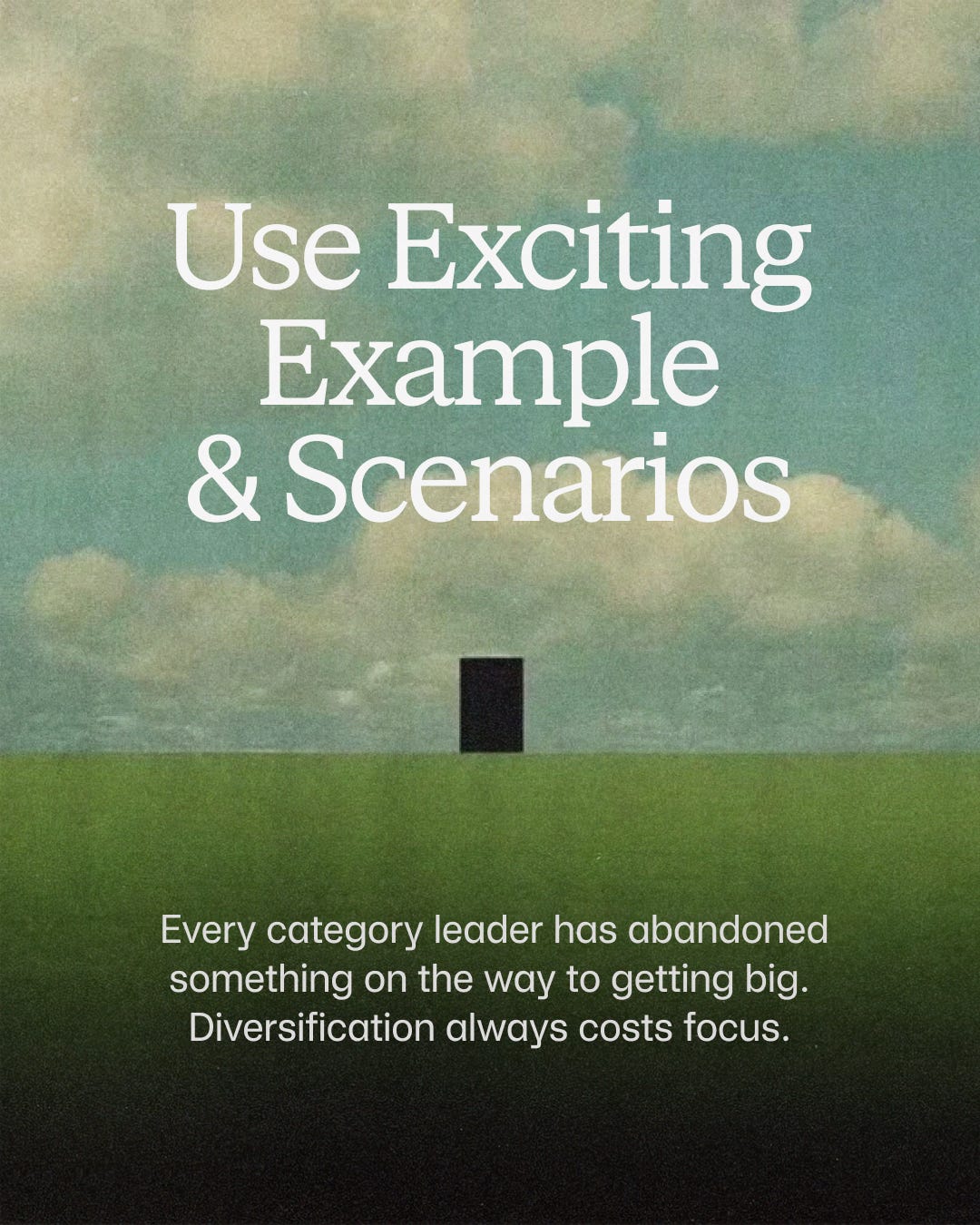
If you have creators talking on screen, why give them the same old briefs and features? On TikTok, storytime videos are always trending for a reason. Have them break down a fictional scenario and ask the audience what they’d do, or tell some insane story from history. My best example for this has always been accounting. Why would I talk about your taxes or a function when you could talk about the tax repercussions of a sports deal, or how people depreciate their insane cars or boats? Draw people in with excitement, and remember you can use fiction. The creator can literally be: “so if this happened... here’s what X would do.”
Leverage Creator Personalities
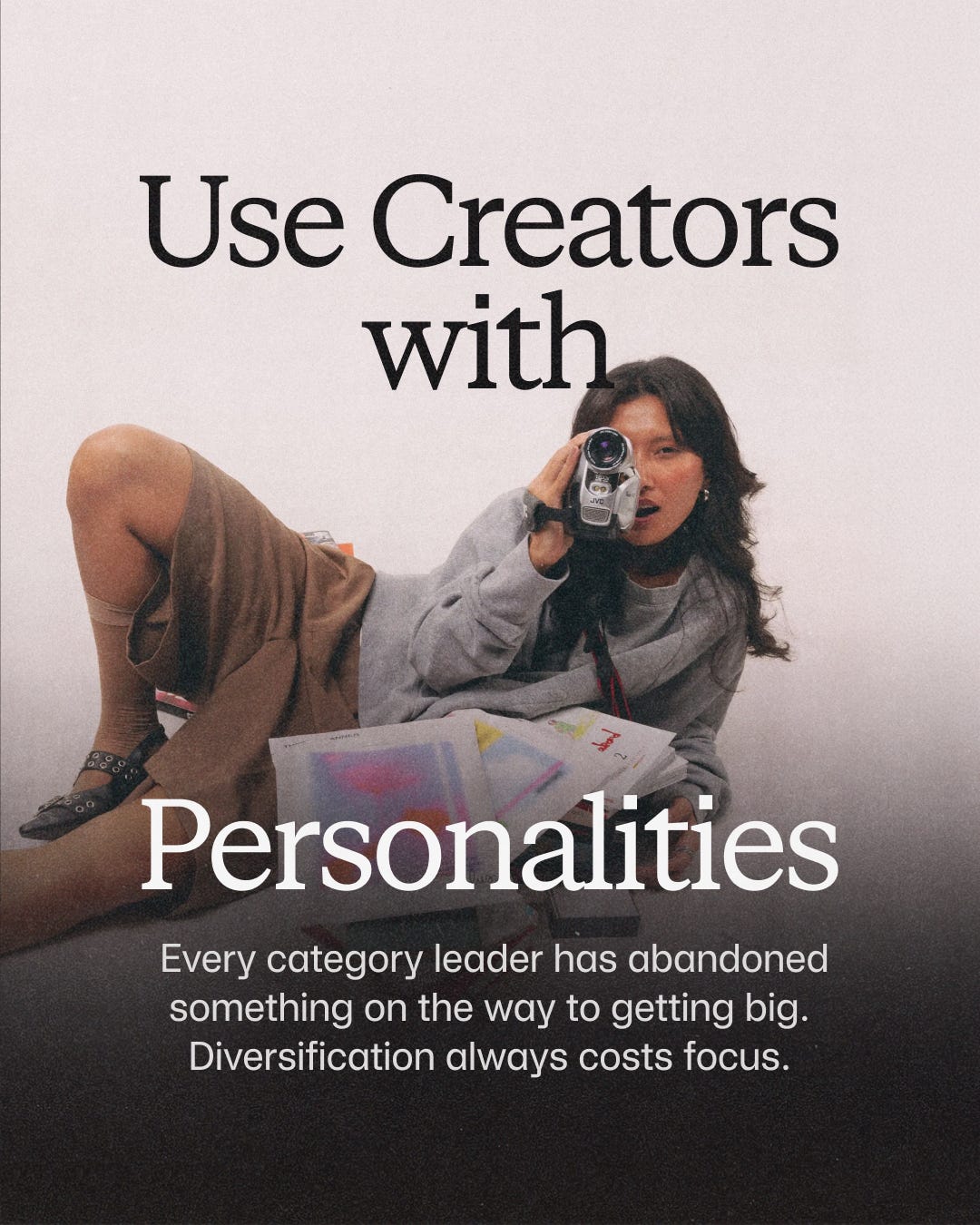
Brands have a world of creators to hire from. There are hundreds of thousands of all ages, races and demographics, and we have placed 100+ out of Cut30 into different deals with brands. If you can choose from the whole world, and you have a “boring” product, consider paying a little more for an exciting creator. Someone funny, beautiful, charismatic, is worth every dollar versus whatever generic UGC people your agency offers you or who show up on a platform. Scroll with this in mind. Your team should be hunting for personalities, scrolling and on Explore, and if you find someone under 50k, under 10k... pay them to just rip some ads for your account with that energy that’s lacking in your niche. Build characters, hire actors off Craigslist. Personality goes so, so far in the ad account.
And importantly, if your creator ads are working, GAS PEDAL. Everyone gets 4-5 UGC creators, gets some decent ads and some light momentum, and sticks with it. No. Scale it. More creators. You want a squad: more angles, more shots on goal, more likelihood to scale, more winning concepts to spread around, and then work outwards by age, gender, race, content style, etc.
Leverage Corporate Humor
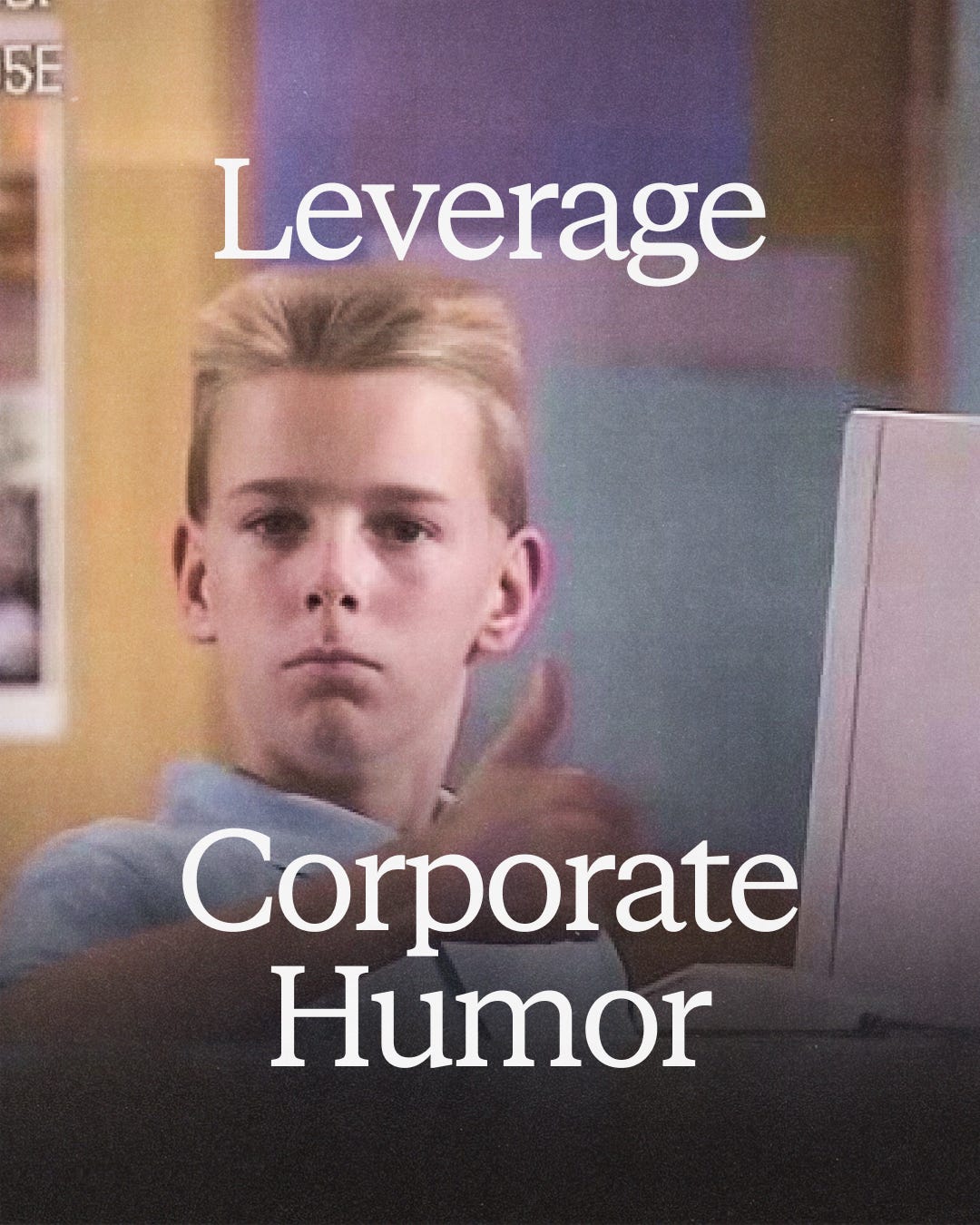
I am a firm believer in the age-old adage “no one buys from a clown.” I think a lot of initiatives from brands doing big influencer deals with comedy creators, down to the Gstaad Guy Bentley, are not going to drive any sales. But what humor DOES do is give cheap top-of-funnel awareness in a game where top-of-funnel reach enables middle- and bottom-of-funnel conversion. Algorithms NEED data on the full extent of your target market to better target your customers. If you have humor posts with big reach on ads or organic, even if they don’t perform, and they are relevant to your ICP, these are EXCELLENT algorithm signals to think about to grow the available audience Meta knows how to target.
Dial Up the Direct Response Copy
If I have to see another tech brand using jargon-filled copy that makes less sense than a San Francisco billboard... test hitting copy! Let’s take software: speak to the hard pain points of the person themselves, not the organization. Advocates for software tend to have to put a bit of their career on the line bringing a new tool or process on board. Speak to that, use that, show how you’ll support them, what goes on in their career arc, the terrible politics they probably deal with. If you sell services for the home, speak to the dad who wants to be taken seriously as the man of the house by handling things and having the right vendors that will get it done.
New Workflows
I am continuing to use AI to improve video editing, but also now adding Motion Graphics, more design work, and continuing to help in ad briefing. Details and screen shares above.
Until next week,
Oren
Want to scale your brand with us? darkroomagency.com
Cut30 is booked for 2026, get on the waitlist for January 2027: cut30.co