

Over the coming weeks I’m zoning in on the changing nature of influence and distribution, and the models brands and creatives can use to approach it. This includes macro-factors of how influence used to function, from how hotels became the leverage point for soap and shampoos, to the levels of connoisership involved in establishing yourself to be able to talk knowledgeably about say… caviar, truffles or cashmere.
But as always, it will also be tactical. We’re seeing Gen 3 of the influencer playbook being written by brands in real time. You’re probably seeing on your algorithm Claude’s extremely savvy brand positioning in tech marketing by using a relentless stream of artistic and creative women as their core influence demographic, a counter position to the “men in dimly lit rooms saying this model will change everything” AI breakdowns of the last few years. The campaigns concept, execution and most of all scale is nothing short of beautiful.
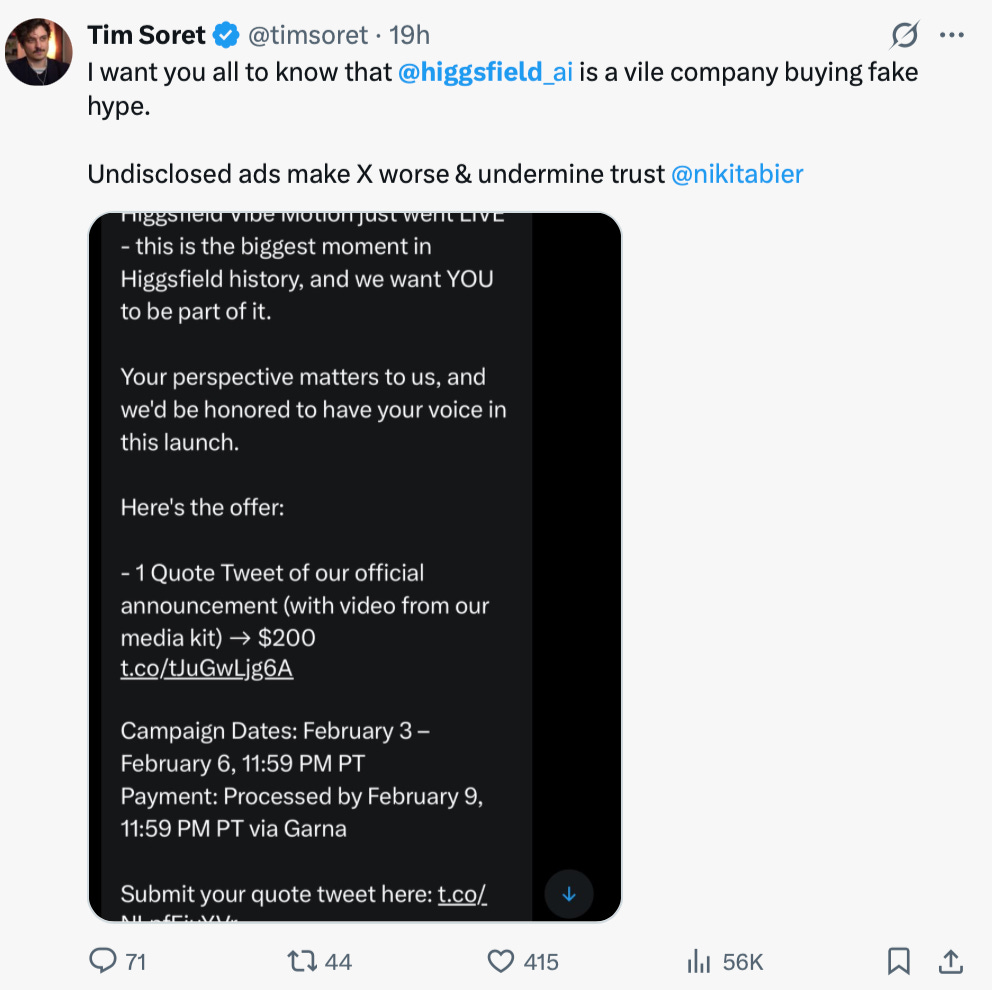
Meanwhile, in dark marketing Higgsfield is getting heat for their relentless undisclosed promotions on X (the ArcAds playbook). AI companies are choosing to completely disregard the rules to compute, the generation that read Super Pumped as a handbook coming into business unit ownership.
The Claude campaign has by-products too. If you’ve seen a wealth of new, super smart creators educating about design, art, and complex topics with well written essays that portrays knowledge and scripting that’s shockingly nuanced - you’ve hit the Claude creator algorithm. Harder to validate versus the easy ChatGPT tropes, pleasurable to watch and learn from, and further democratizing and already democratized medium. Luckily creator media still has the market share of the falling trad media establishment to take from, there is room for all to get far more than 15 minutes. I’ll save the question of “does it matter how something was made if we enjoy it?” question for a later time.
In this HYPER we’re going to talk about influence marketing basics for brands in 2026, and then deep dive into one of my favorite brands that show that even before all of our modern tools and algorithms, the “rules” of linear brand building don’t matter: Commes Des Garcons.
First…
I am hiring closers. Sales experience required.
My influencer management is hiring a Talent Agent.
Darkroom is hiring a ton of creative roles including Associate Content Director, (New York), a Managing Director for their content studio and paid media Creative Strategists.
Brick is hiring an Art Director.
Let’s lock in.
Influencer Marketing Every Brand Should Be Doing in 2026
Influencer marketing is on fire, and we like to regularly look at how brands should evolve their thinking. I just did a video with Later discussing this, and break down the concepts in full below.
What’s working now looks… practical. It’s less about “finding the perfect creator” and more about building momentum with people who already fit your world.
Here’s how I’d approach it in 2026.
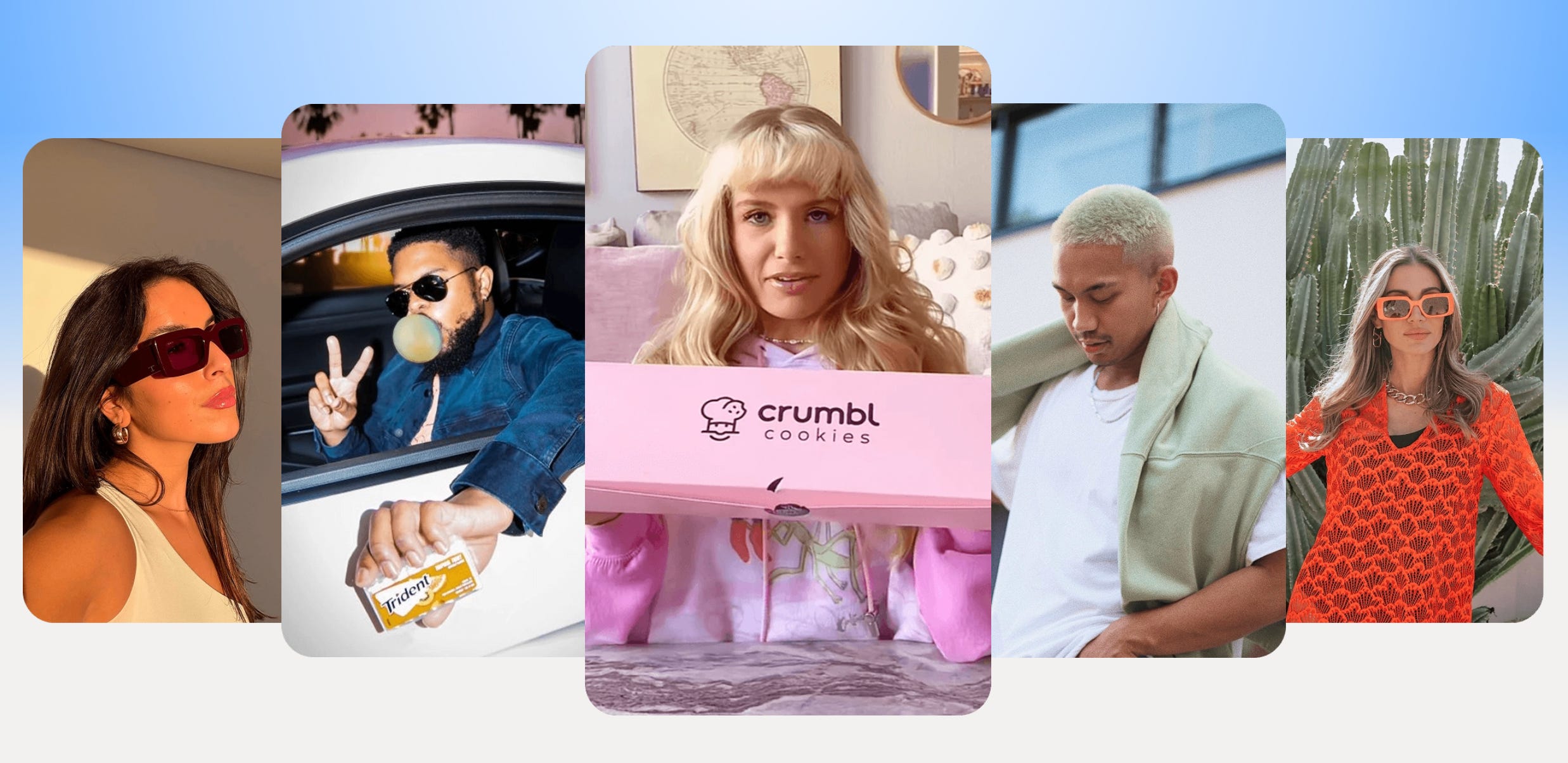
1. Double Down on Seeding (But Do It With Intention)
Giveaways and product drops should be designed with social in mind. That means packaging that looks good in someone’s home, notes that feel human, and an experience that makes sense to post. Not because you ask, but because it’s easy, because it will perform.
If you’re retail or hospitality, physical invites are still wildly underused. A well-designed card, early access, or a small IRL moment goes further than most paid posts.
And if you have something successful, don’t underestimate your potential volume. There are far more creators than people realize, especially in specific niches and regionally. You don’t need a handful of big names. You need a lot of people who genuinely like the product and are happy to share it, and most programs can scale far bigger than you expect.
Tactically, this works best as an ongoing program:
A rolling seeding list, not one big send
Regular refreshes, with tracked responses and 1:1 communication from your team
Whatsapp or group chats with your most engaged people
Those people matter later, because the best graduates are excellent candidates to be paid to support your launches.
2. Move From One-Off Posts to Recurring Presence
One post doesn’t do much... Repetition does.
The brands doing this well are turning influencers into recurring parts of their content, not just placements. The question isn’t “what post should they make,” it’s “what’s the format we can keep coming back to together?”
That could be a recurring series, a shared theme, or something simple that shows up regularly on your feed or theirs. When collaborations stretch over time, pricing usually comes down and the content gets better because there’s actual context. I’ve been talking a lot about “Signature Series” that we coined the idea for in Cut30 in 2024–and brands can use influencers to do this with them. I’m doing this as we speak with a series of content with CashApp as an influencer myself, helping them break down more nuanced topics.
There’s also a bigger version of this: social shows. More brands are experimenting with lightweight, repeatable formats built around a creator or a small group like we’ve seen with All Saints, Opal, Alexis Bittar and many more - if you have some genuinely creative people in your influencer world, support them in a creative vision that plays out on your channels together.
3. Start With Influencer Customers
Some of the best influencers you’ll ever work with are already buying from you.
Before reaching out cold, look at who’s tagging you, replying to emails, commenting consistently, or showing up as repeat customers. These people convert better because they already care.
This is mostly a research problem, not a budget one:
Search your brand name on social
Look through tagged posts
Cross-reference your email list or customer data
Outreach changes when someone already likes the brand. It becomes a conversation, not just a pitch, and you’ll have way less nuance around messaging.
4. Bring Influence Into Real Life
Digital-only programs hit a ceiling, fatigue of attention is high. Part of why you saw Clayton and I go on tour to meet yall (in partnership with Air, just like we discuss here)
What’s been working better is pulling influencers together in real life and letting the content come from that. Events, studio days, small trips, hosted dinners, or creators hosting their own communities under your brand.
The point isn’t the event itself. It’s the downstream effect. Content, relationships, shared moments, and the way those things travel online afterward.
We’re seeing more interest in groups and dynamics, not just individuals. Friend groups, squads, recurring faces. If your brand can be part of that, it compounds quickly.
The Throughline
None of this is complicated, but it does require patience.
Influencer marketing works best when you stop treating it like a channel and start treating it like relationship infrastructure. Build slowly, stay consistent, and let it stack.
And if you want help doing this at scale, platforms like Later can help you:
Find and connect with creators
Manage campaigns end to end
Tap into full-funnel support when you need it
They have a platform and a team that has done exactly what I've described for brands making a big splash on social like Unilever, Habit Burger, El Pollo Loco, and Chewy.
You can book a free strategy session HERE.
This segment is in partnership with Later.
The Model For A New Era
Graza got our attention and then has relentlessly dropped chips, collabs, mayo, going from a brand in a category to a brand across categories. They aren’t angling to compete with other olive oils.
Rhode dominated skincare, then launched viral iPhone cases… almost casually?
Satisfy charged outrageous dollars for running shorts, then sold one off cars… and now exercise food?
Influencers are grabbing roles in companies, successful brands, popups, testing the limits of their power. And for some, they’re shocked how far it goes. The relentless Kardashian machine. The expanding empires of pop stars in beauty and beyond. YouTubers in food.
There’s a model for this. For how far cultural currency can go when backed by creative genius.
It’s Comme des Garçons…
A SUB-LABEL EMPIRE
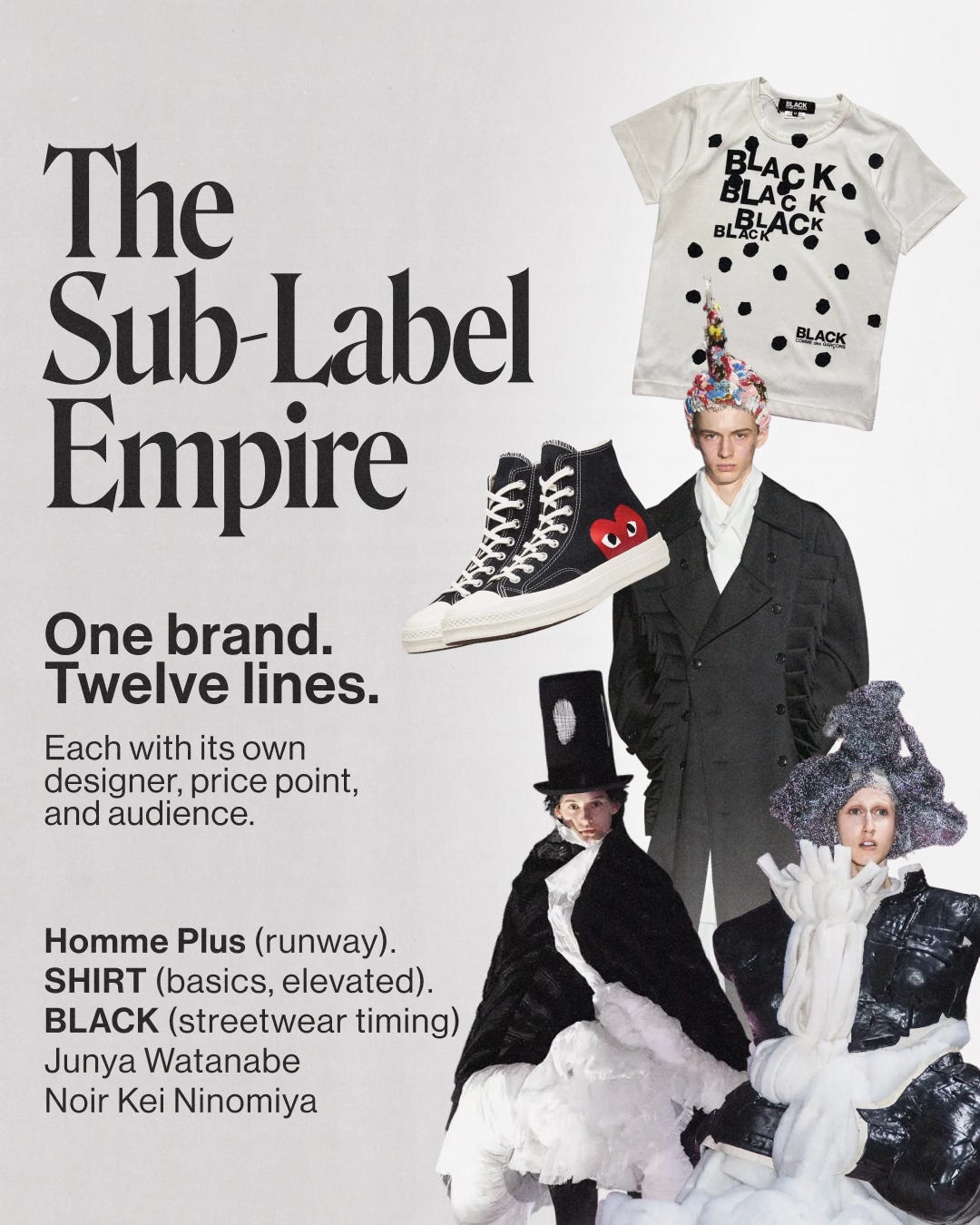
One brand. Twelve lines. Each with its own designer, price point, and audience.
Homme Plus for runway. SHIRT for elevated basics. BLACK timed perfectly to streetwear’s rise. Junya Watanabe got his own universe, Noir Kei Ninomiya built hers.
Rei Kawakubo didn’t scale one idea. She built a system, each planet with its own gravity, its own orbit, all held together by a singular creative vision and a web of relationships and influence
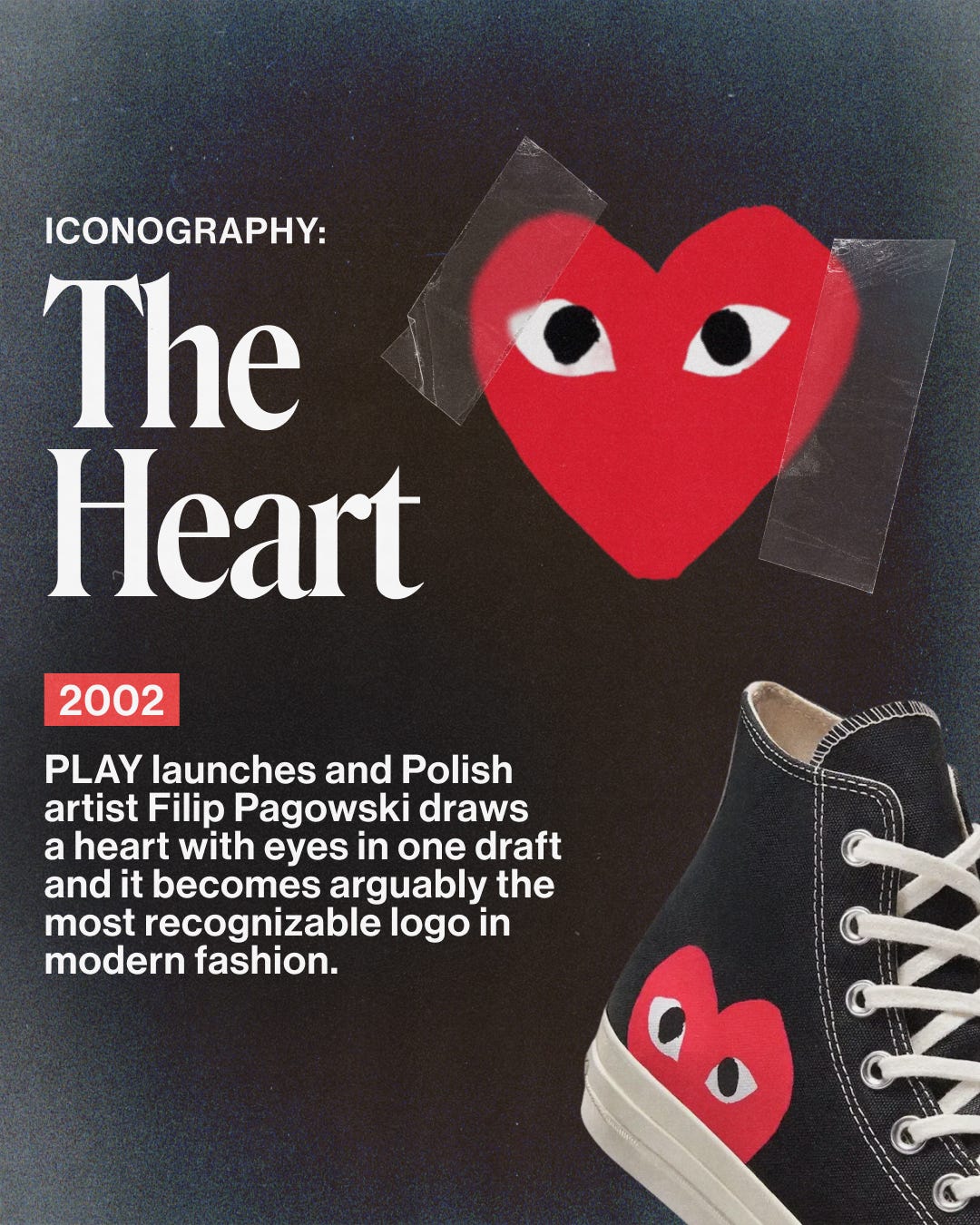
ICONOGRAPHY: THE HEART
The brilliance wasn’t just the design, hey brought one aspect of an intangible fashion empire mainstream. The heart lives on striped long-sleeves, on Converse collabs, on pieces that cost $100 instead of $1,000. It became the entry point to the CDG universe, a gateway drug to the mainline, and reached saturation that now leads to snobbery from the tasteful, both with the miracle of having essentially zero blowback to the actual CDG brand and essence.
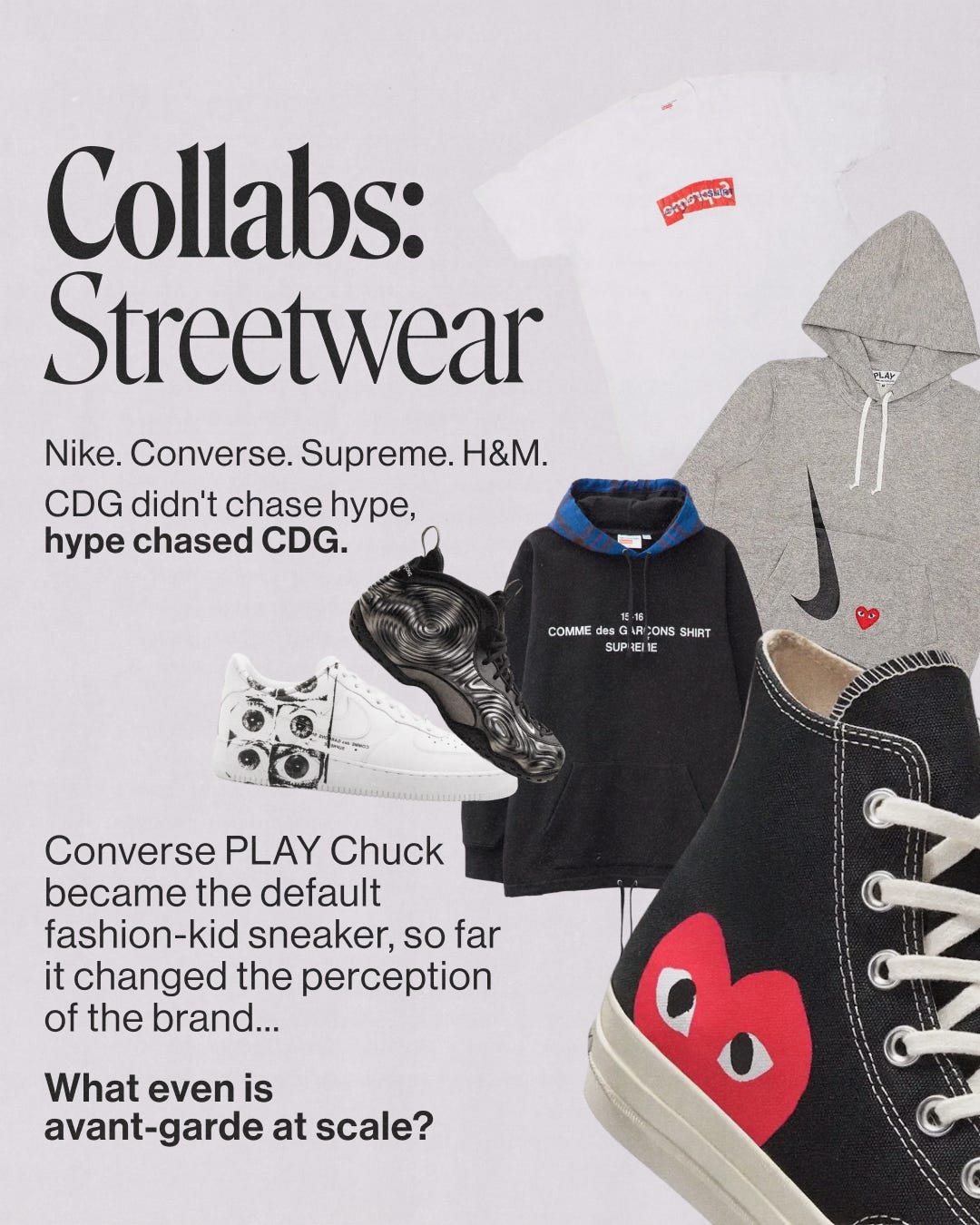
And they hammered in this resonance with COLLABS
Nike. Converse. Supreme. H&M.
Hype chased CDG, and they got to work out in public the question of what even is avant-garde at scale?
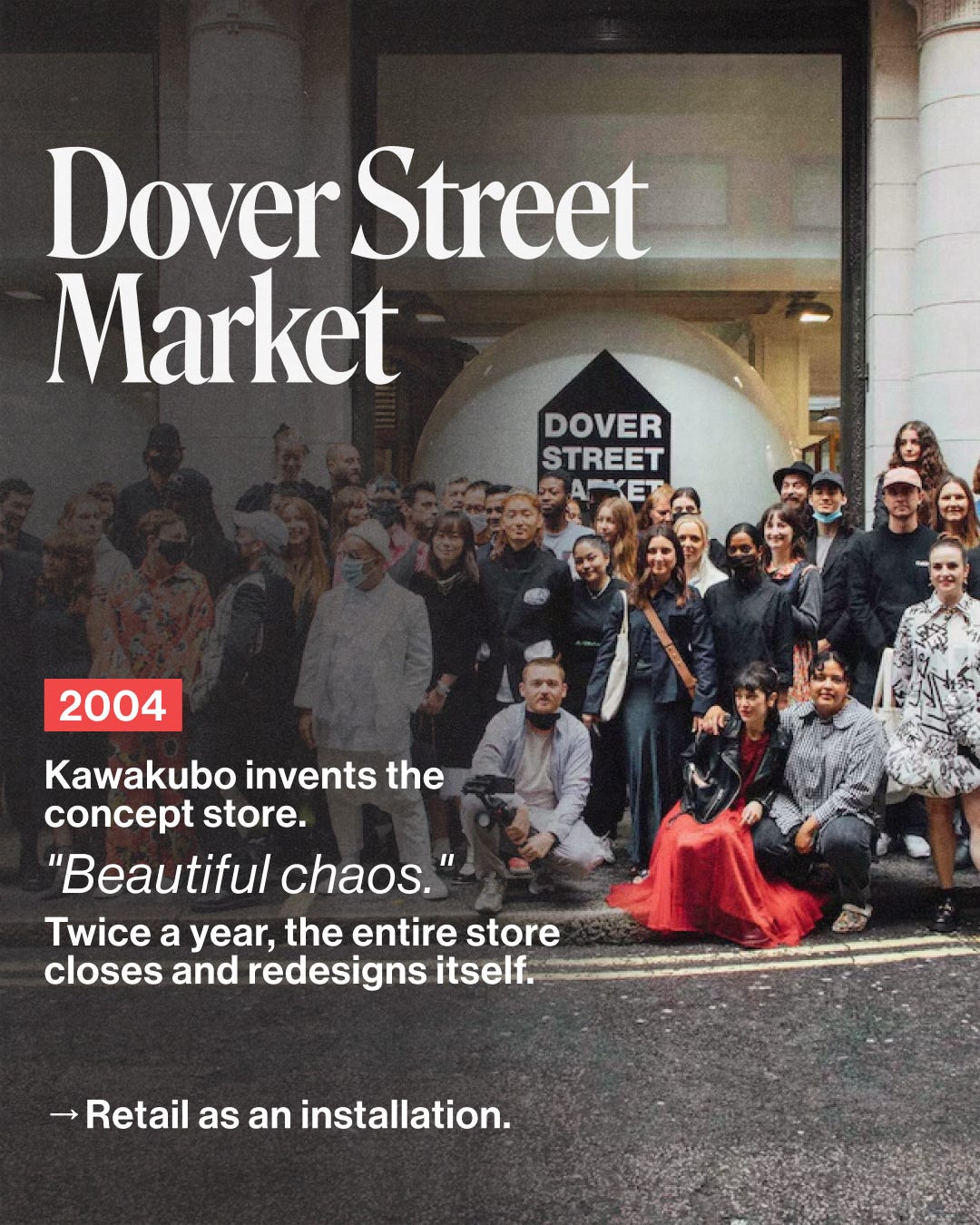
DOVER STREET MARKET
The ultimate concept store, started as another creative extension
Her philosophy: “Beautiful chaos.” Brands stacked together, art installations interrupting retail-the shop that many have paid tribute to but none have replicated. No logical flow or merchandising playbook, pure energy and discovery.
Why sell just your brand in stores when you can sell them all?
Speaking of which… I think we need less brands and more dealers.
The last decade everyone started a brand. DTC economics made it easy—find a factory, slap a logo on it, run Meta ads, call yourself a founder. I’m partially responsible here, But the result? A thousand candle companies. A thousand “timeless basics” labels. “we’re different” you’re actuactly the same.
What we really need is help sorting through it all.
That’s what a dealer does. They travel. They find. They edit. They say “this, not that” with their own reputation on the line, and not just with words online, with dollars in inventory.
A play for brands whose taste and influence goes beyond its product base, and for influencers who realize founder shit requires a product knowledge they dont have against a field of people who have learned a ton.
Do you have a point of view strong enough that people would trust your edit? Could you build a business on “we find the best stuff” rather than “we make stuff”? Will you put your own money on the line behind your decisions... and make it worth it? There’s power and fiscal success there. Something I think Shopify Collective is untapped for.
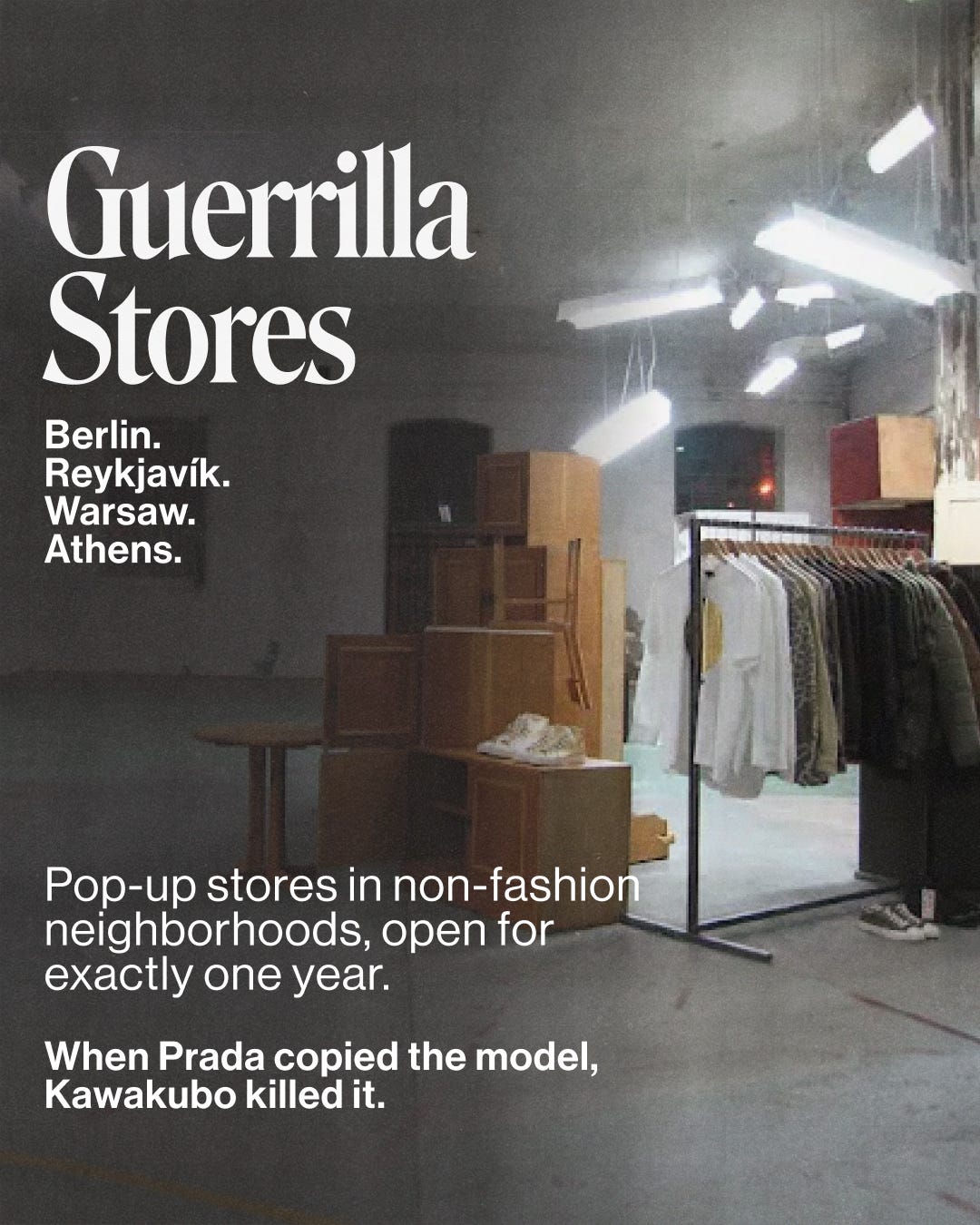
Which leads us to… CDG GUERRILLA STORES
Berlin. Reykjavík. Warsaw. Athens.
CDG opened pop-up stores in non-fashion neighborhoods, each designed to run for exactly one year. Raw spaces. Minimal fit-out. Then gone. A perfect model to be brought back for today’s temporary culture
When Prada copied the model, Kawakubo killed it. If it could be replicated, it wasn’t interesting anymore. Works for her… for us… maybe we double down
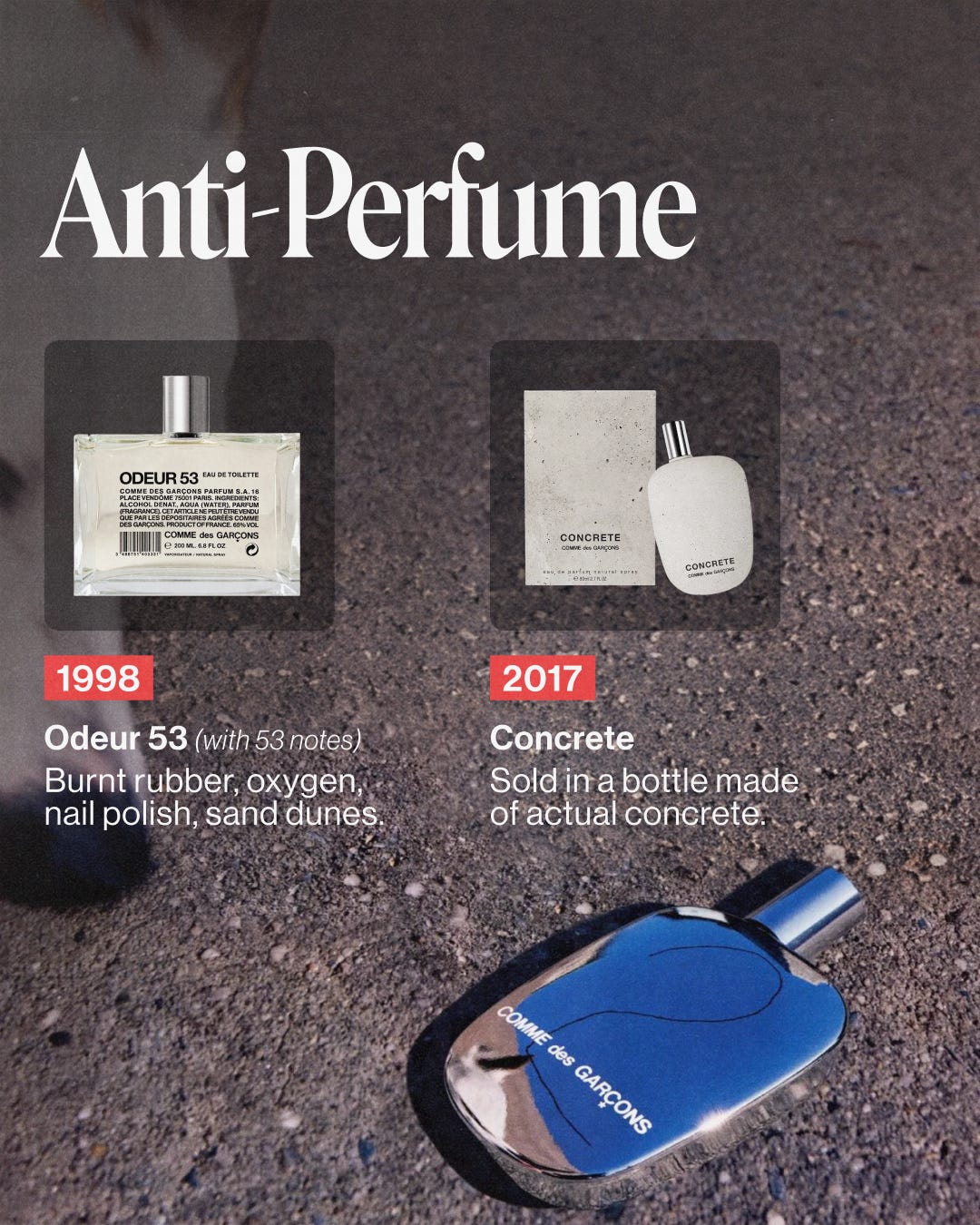
CATEGORY EXPANSION: ANTI-PERFUME
While luxury fragrance chased flowers and musk, CDG launched Odeur 53, a scent with 53 notes including “burnt rubber, oxygen, nail polish, and sand dunes”.
Then came Concrete. Sold in a bottle made of… actual concrete.
Positioning against perfume as seduction and positioning perfume as concept and art object. A natural play for the distribution era.
This is the blueprint. Not a brand that expanded. A brand that built infrastructure for infinite expansion while never compromising the core.
The question for today’s cultural brands isn’t whether they can extend into new categories. It’s whether they have a Rei Kawakubo, someone with the vision to know which extensions make the empire stronger and which ones dilute it. And if you don’t have it, in true moneyball fashion “can they recreate it in the aggregate”.
To the above note we started with, the “squad” era is real. In the world where anyone can become a star through content, where we get more founders and rugged individuals than ever, we still need more collectives to reach the potential of the era we’re in.
Graza, Rhode, the Kardashians, they’re all running plays from this book, the network of collaborators and specialists, the artists on stable. Graza with the up and coming, Rhode with the new guard, the Kardashions putting the best on retainer as patrons because they can.
The Brandfathers Are Back
This week the Fathers talk new technology, Super Bowl ads and current events.
Until the next edition,
Oren & Clayton