

My kid is 9, and he and his lil Gen Alpha numbskull brethren are roasting me.
They wouldn’t click on any of my thumbnails. I have ONE decent one.
I don’t even have a silver play button. The YouTubers they watch have DIAMOND play buttons.
When I hit 100k and got the play button, my son visibly had more respect for me. And now he grills me relentlessly on how long until I’ll get to the 1M or 5M mark. His boys mostly stopped talking shit, which is a good thing, because they all practice “roasts” (which they learned on YouTube), and they are uncannily funny. I feel bad when I have to respond by cutting so deep with an insult that they burst into tears (for the Canadians and Germans reading this, that’s a joke).
But I digress.
This is an email about YouTube, and how to succeed on it as an adult or a brand that doesn’t involve playing Minecraft simultaneously.
I put out a video earlier this week about why I prioritized longform in 2025, and I wanted to expand on it here.
To the point of why we’re talking about longform, I really couldn’t even cover the basics of the journey of the ’60s I recorded on IG in a way that would give enough value for people to love it.
And that brings me to the core outline here:
you need time to give true education, no matter how much you think you learn by consuming short-form
consumer interaction habits are far different on YouTube in a way that is massively beneficial for the creator
the shifting nature of entertainment provides a massive market opening for longform
the combination of a search-based and algorithmic platform brings a unique opportunity for concepts to get seen
being a “personality” or “creator” is competitive, and doing the hard things before others is a win
I’m going to dive into each of these, but we’re also going to get tactical:
concepting and preparing YouTube videos for success (packaging 101)
understanding and riding the meta on YouTube
how boring companies and ideas succeed
why the podcast format intrinsically sucks for YouTube
how often you should publish
the role of short-form and other networks
assembling a body of work
Let’s go for a ride.
I work extremely hard to make value-driven, educational short-form content that breaks down nuanced topics in branding, marketing, and business into chunks that succeed in 40–120 seconds. But even then, it requires someone with pretty incredible agency to actually take action from it. Really, it’s more of a catalyst to begin research for an action.
But in 10–15 minutes, I can set up why a concept is important, show examples of it done right, then actually screen-share how you and your team should do it. This is a massively superior way to actually enable an audience, and that is my number one focus as a creator: audience enablement. Are they actually doing the things I recommend? And are they succeeding with those actions?
So I prioritized longform, and it had the exact impact I wanted. The people I attracted there were far more likely to act and implement.
I found a couple of key consumer habit shifts worth calling out.
On Instagram, one of the most beneficial habits I’ve seen is that executives, founders, CEOs, CMOs, will forward my content to their teams. Directly on platform, into group chats, but mostly into Slack and Teams. People have pulled me aside at trade shows to show me their boss relentlessly slacking them my content.
I design what I do with this in mind. I love this action. I think through that target, how they consume, why they share, and what the person on the other end will do next.
But on YouTube, it’s the opposite.
I’ve been booked for more than one offsite because a team member forwarded a YouTube video of mine to their boss or dropped it into a team Slack. It’s coming from the other end. I think they’re more likely to share it because it’s a more credible piece of content. The complete details of the why and how are often broken down in my YouTubes, so the team member doesn’t have to defend it.
And with that came insights into fans.
When I started, I had a grip of younger college fans sending me photos of my videos on their TVs when I used to debut at the same time every Sunday. Not only was it appointment viewing (“Oren on Sunday afternoon”), but it was literally on their TV. I wish I hadn’t stopped that cadence, but sponsor calendars are too fluid.
Then came the next interaction pattern: lunchtime work content.
For a lot of people, at home or in the office, YouTube is on during lunch. If my content is too educational, it doesn’t really work in that context. But if it’s edutainment, easy. Marketing and branding people especially kind of like the field they work in. They want to do cool stuff and get better at it. I’m there.
All of this feeds into the bigger shift. People consume way less TV. And TV kind of sucks.
I’ll put my YouTube videos on Stüssy or Loewe up against any fashion or marketing content on streaming in terms of enjoyment value. Consumers know this. Netflix knows this. That’s why they’re courting podcasts and YouTubers. But not nearly enough brands and creators are treating this opportunity as what it is. A shift of hundreds of billions of dollars in production, advertising, and media attention to, frankly, us.
Then there’s the platform structure.
YouTube is two things at once:
search consumption, people trying to solve a problem
algorithmic consumption, people being served things they might enjoy
TikTok has some search culture. I even get a shockingly decent amount of IG traffic from search now. But YouTube is another level. It gives your ideas longevity. Strongly packaged videos can pop months, or even years, later.
But the biggest reason I shifted?
Green-screen marketing content has gotten insanely competitive. Hundreds of people make content like me now. I have more formats, I work hard to be better, but it naturally caps upside.
YouTube is pretty fucking hard. I won’t lie.
It’s intimidating to start and to stay consistent. You can’t train it. You’ll never see me launch a Cut30 for YouTube.
This is creative alpha.
Doing hard things is an advantage.
Creatives have gotten soft.
When I was in high school, I was in a band that alternated between the names Seeds of Doubt (bad) and Shake Your Keiki (arguably worse). But the guitar player absolutely shredded. He played so much his fingers bled regularly. Man was on a mission. I remember he had a girlfriend way out of his league, and everything felt right with the world.
My point is this. Not many creatives are playing until their proverbial fingers bleed.
They’re prioritizing “work/life balance.” They’ve let themselves go a little because they’re prioritizing themselves.
Maybe I’m just old now, but I’m more of the “obsess about something until it kills you” school of creative. And I think you should be too. Not out of masochism, but because this is the most important moment in history to act as a creative.
You have never been more respected.
Never been better compensated.
Never had better tools to promote yourself.
And now all of that is a content practice away from outcomes people in your profession couldn’t dream of decades ago. But sure, take the night off and order a lil Uber Eats.
Fuck that. Let’s make some YouTubes.
“Oh Oren, these newsletters are so long, my attention span is only a few paragraphs.”
Dig in. If you can’t finish this, you’re NGMI. Go back to dirty soda TikToks and Dan Koe notes like a lil cursed child.
I digress, again.
Do not even think about publishing a YouTube video before preparing your packaging.
Packaging is:
the topic
the title
the thumbnail
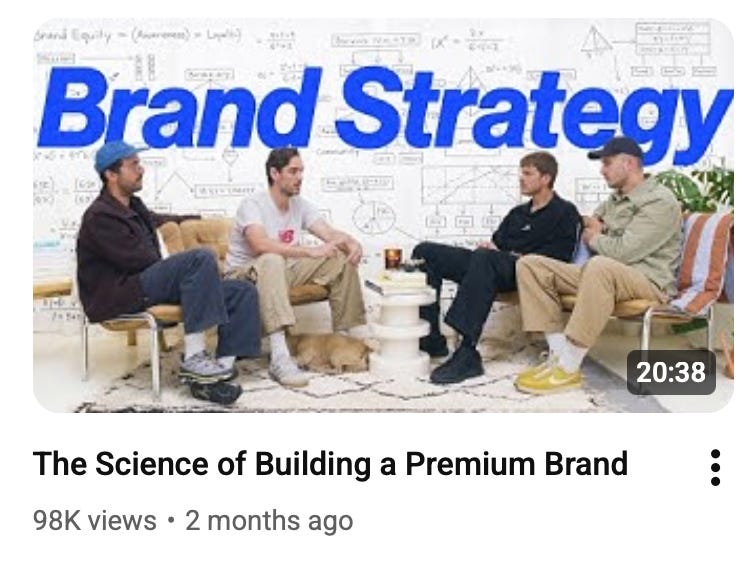
Topic selection
I’ll make this simple. There are only three video types I’d recommend for a creator or brand starting out:
How to do ____
The story of ____ (with niche context)
I did ____ (and you can too)
How to do ____.
Easiest. Take your specialty or a hot niche topic. Literally title it “How to do X.” Then add parentheses:
(full playbook)
(step-by-step)
(idiot-proof screenshare)
(for experts)
(for designers who don’t want to admit they’re lost)
Brands especially should do everything around their niche, even if it feels dumb. These might get fewer views, but every viewer is your customer.
The story of ____.
Don’t talk about abstract topics without narrative. “The Rise and Fall of Ocean Spray” beats “Retail Marketing 101.” People want TV shows.
I did ____ (and you can too).
Wherever you are in your journey, break down something that actually happened and how it happened.
There are more formats, but these are the most foolproof. Take them seriously.
I’ve done YouTube strategy for brands across the spectrum.
For a surf brand, we did two things. First, we owned every searchable topic in our niche (foiling), even if videos only got hundreds of views. Every viewer was a buyer. Second, we complemented that with pure YouTube content. Documentaries, visual relaxation edits, athlete stories, launches.
It worked. Sales, enablement, loyalty.
Then I did a series for my friends at Air. They sell digital asset management software, which is objectively boring. But they branded around creative operations. We made a banger series. Traveling, interviewing businesses about their creative ops.The product wasn’t front and center, but it was involved. Every video funneled to a co-branded report.
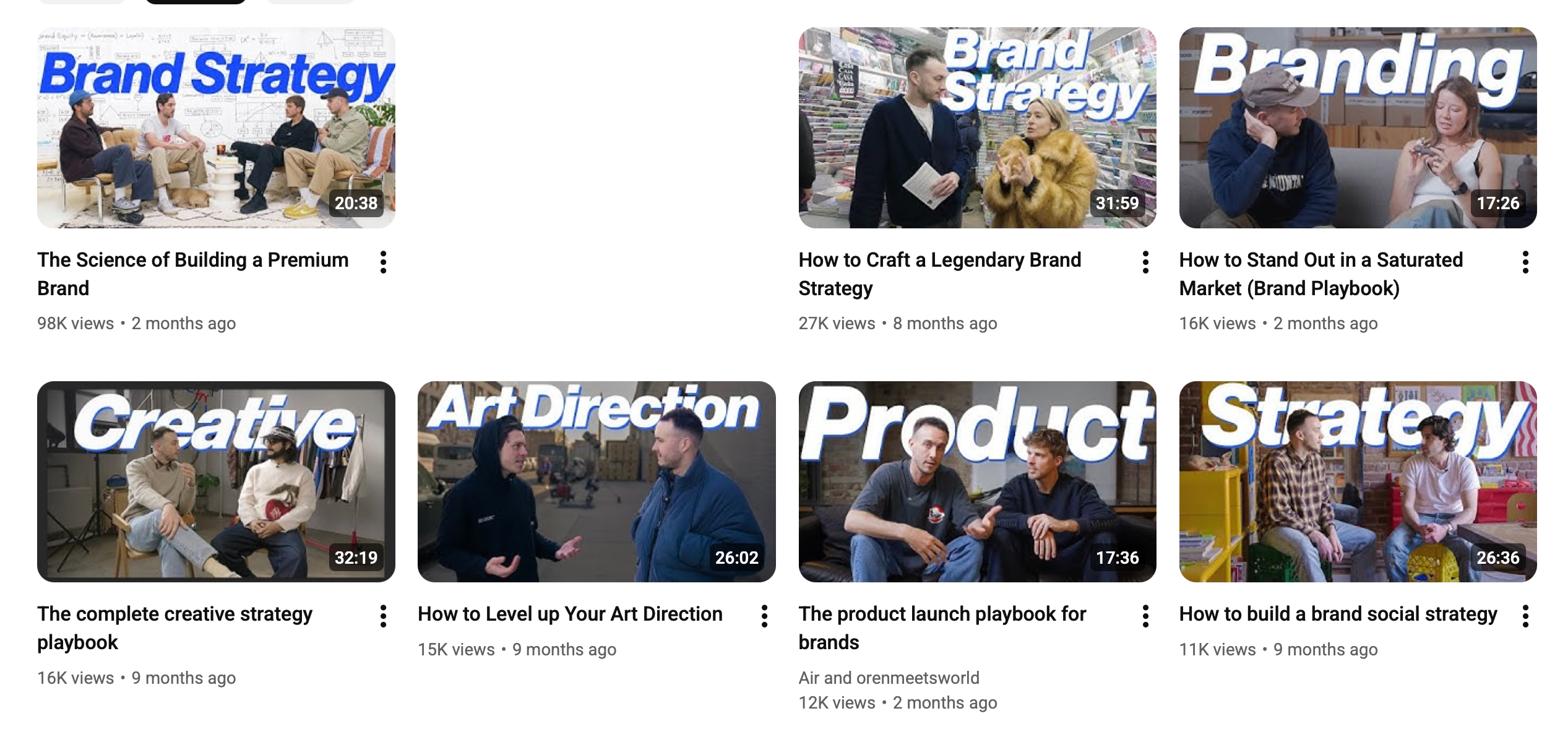
Proof that literally any business can win on YouTube if they care about the content.
But in all cases, it starts with the thumbnail.
Thumbnail rules:
big, recognizable imagery (or 2–3 images combined)
one or two words max, hyper readable
you don’t need to be on it, and it often hurts
if I see your face plus text and no imagery, I already know you’re going to lose
If you’re not a designer, hire one.
If you are a designer, don’t overthink it.
Decide all of this before scripting or recording.
In the video:
restate the title immediately
confirm what they clicked
outline what you’ll cover
First 30–45 seconds. Then go.
This is why podcast content usually sucks on YouTube.
Podcasts that work there either existed pre-YouTube, have massive followings, or cracked a new visual format. That is probably not you.
Podcasts meander. They don’t reaffirm the idea, they don’t outline to start. Don’t do it. Make YouTubes.
Production notes:
don’t overthink it
don’t make it terrible
light, steady framing, decent audio
visuals on screen about 50 percent of the time
I use Riverside for everything that involves more than just me on screen because:
separate screen-share tracks
auto audio cleanup
clean text-based editing
one-click handoff to editors
live streaming support
strong interview tools
works with pro gear
Once you’re in YouTube, you’ll want to ride the meta.
Example: “7 Levels Of ___” videos. A lot of people ran that format. I’d allocate about 25 percent of content to meta-riding.
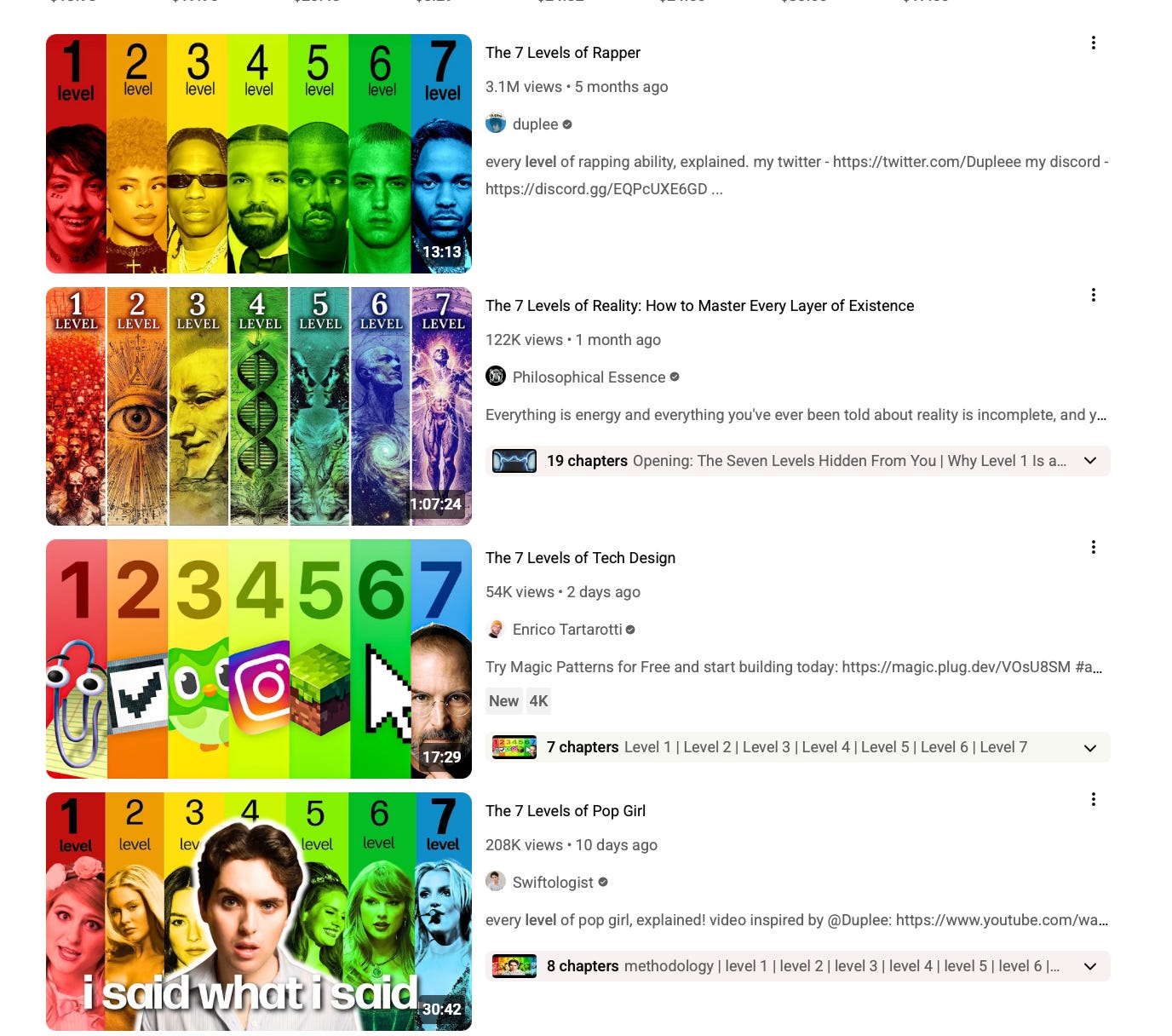
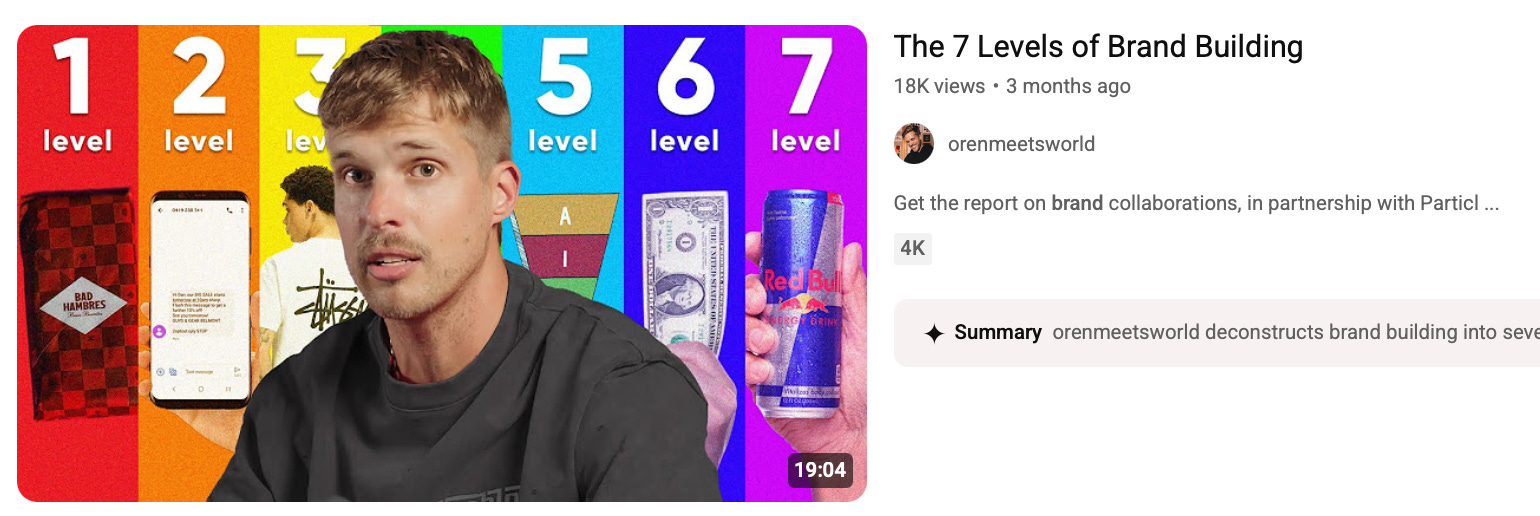
If you’re a brand… same thing - seven levels of surf progression, seven levels of creative operations, legal defense, building your retirement, whatever it is.
Tools:
scrolling subscriptions weekly
optional strategist help (not required)
Publishing:
once a week
maybe twice if testing
daily is cursed, don’t do it
YouTube heavily weights how subscribers behave. Flood them and they won’t watch. That hurts you.
Promotion:
If you have a big audience elsewhere, don’t immediately push them over. Wait a few weeks so you don’t tank early signals.
Final point: Get leads.
Ask for them. End every video with a CTA. Don’t sell yourself short.
This was a lot. Not everything… just what I’ve learned.
Lock in. Make longform.
Related to the point above of making your asks… I've launched my new Creative Strategy program (which we are rebranding as "Weapons", story on that soon). It's a small group that is focused entirely on turning creatives and marketers into absolute units who can brief organic content, brief paid content, and know how to do every aspect of marketing, with an ongoing group that supports them.
I’m opening the next round next month, drop in an application here to get more info when it goes live.
Oren
Great content as always and very timely as I'm getting ready to launch my new YouTube channel. I agree we're going to see a shift this year away from apps like TikTok & IG and toward more educational long-form content which also entertains. And the new Substack TV app announced today will provide an additional platform for long-form video content to live, engage and inspire.
Giggling at the dan koe notes mention