

My next community call is Tuesday, we’ll be doing live training and workshopping on building brand social media plans, join us here (these have been a lot of fun): http://creativedirector.net/creative-ops
And speaking of which…
Every brand I respect right now has something in common.
They stopped thinking about content as a marketing function and started treating it like a product.
Red Bull didn’t invent action sports. They replaced a TV genre that died. What used to live on Tosh 2.0 or Ridiculousness now lives on their Instagram.
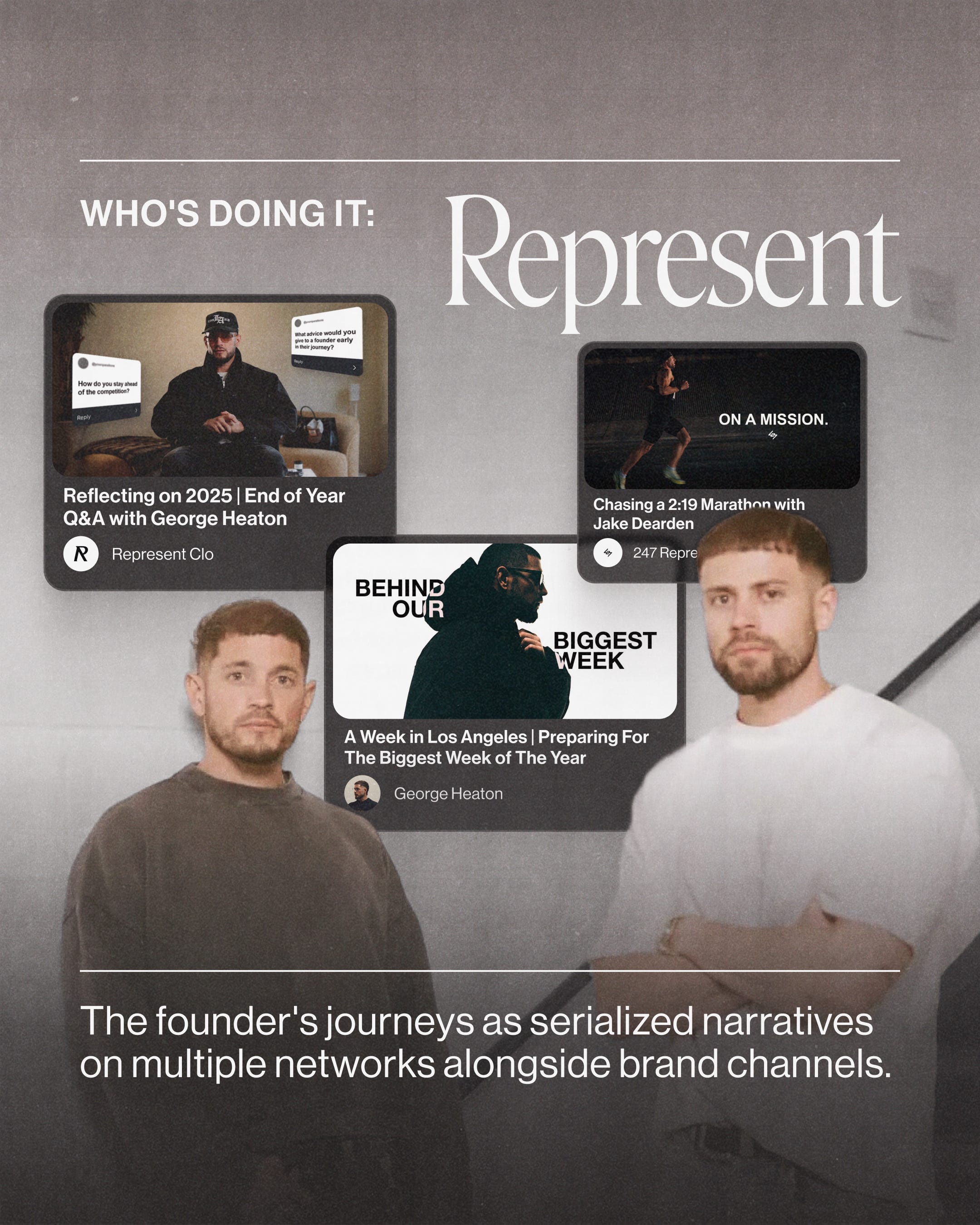
The development of this has just as much attention, if not more, than the product itself.
The question isn’t whether this applies to your brand. It does. In a world where software can be duped, any brand’s supply chain can be hunted down, it is definitively a time when the people behind your company and its distribution both of product and of media matter more than ever.
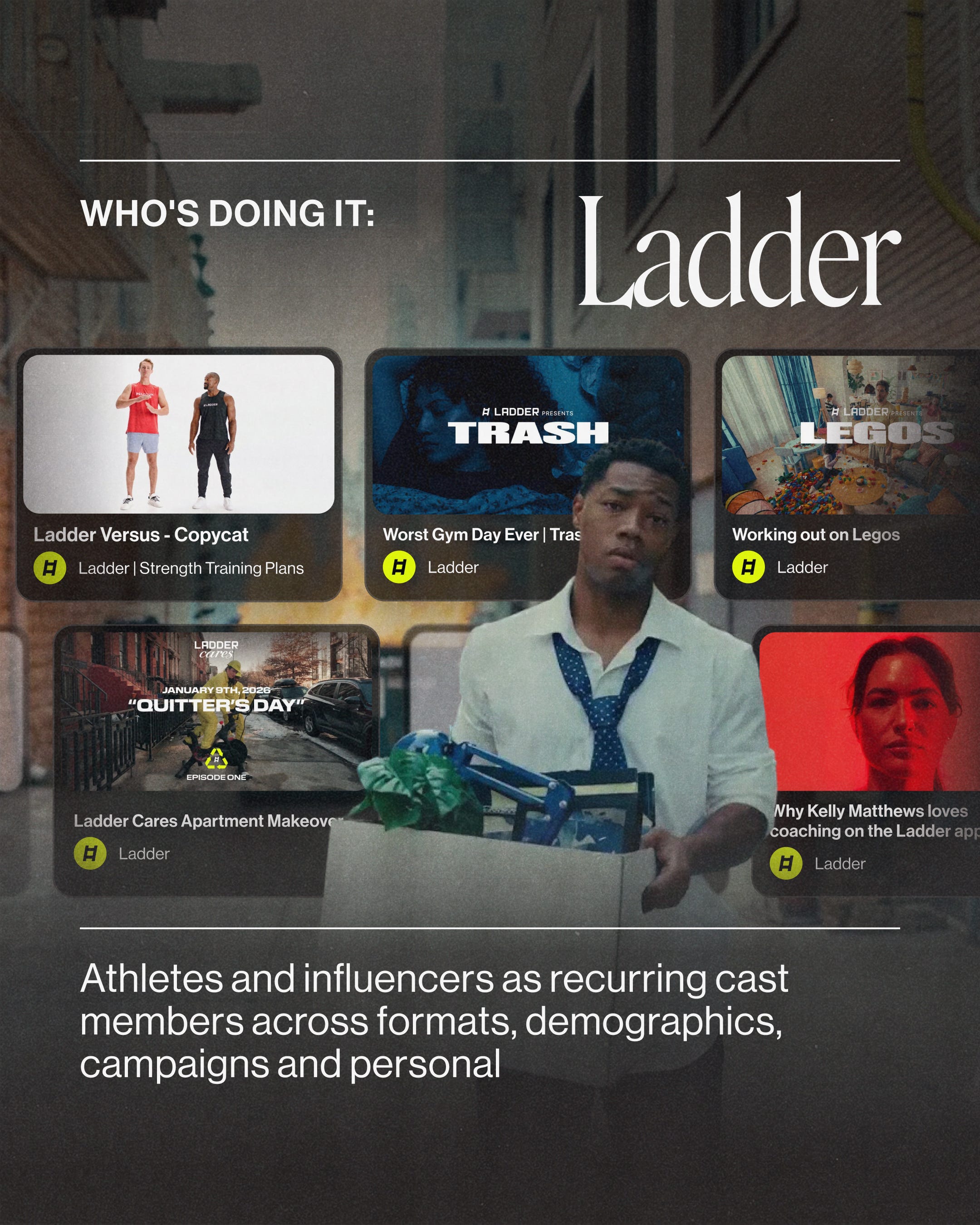
“Just hire a social media manager” is the most expensive mistake you can make right now.
Not because social media managers are bad. Because one person doing everything, posting, briefing, shooting, editing, reporting, ideating, is a machine that leads to trash content
The move is pods.
A pod is a minimum two-person unit. One strategist, one creator. The strategist writes briefs, pulls analytics, manages the posting calendar, and runs coordination. The creator shoots, records, and edits. They don’t swap jobs. That separation of left brain and right brain is where the output actually gets good.
That core pod then expands. Three to four external creators getting briefed in on a retainer or per-video basis. Some of that content goes to organic. Some gets sparked into your ad account. The strategist runs one-on-ones, a weekly creative review, and a monthly analytics pull. You know what worked, what didn’t, and why.
Then you add more pods.
One for TikTok. One for founder content. Shared resources: editors, designers, sit across all of them. Eventually you have a creative director holding vision across the whole thing.
The brands doing this right are running a media company inside their marketing org.
The goal for a two-person pod: 10 strong creative concepts per week. Five going to organic, five going into the ad account. Some overlap. From there you iterate.
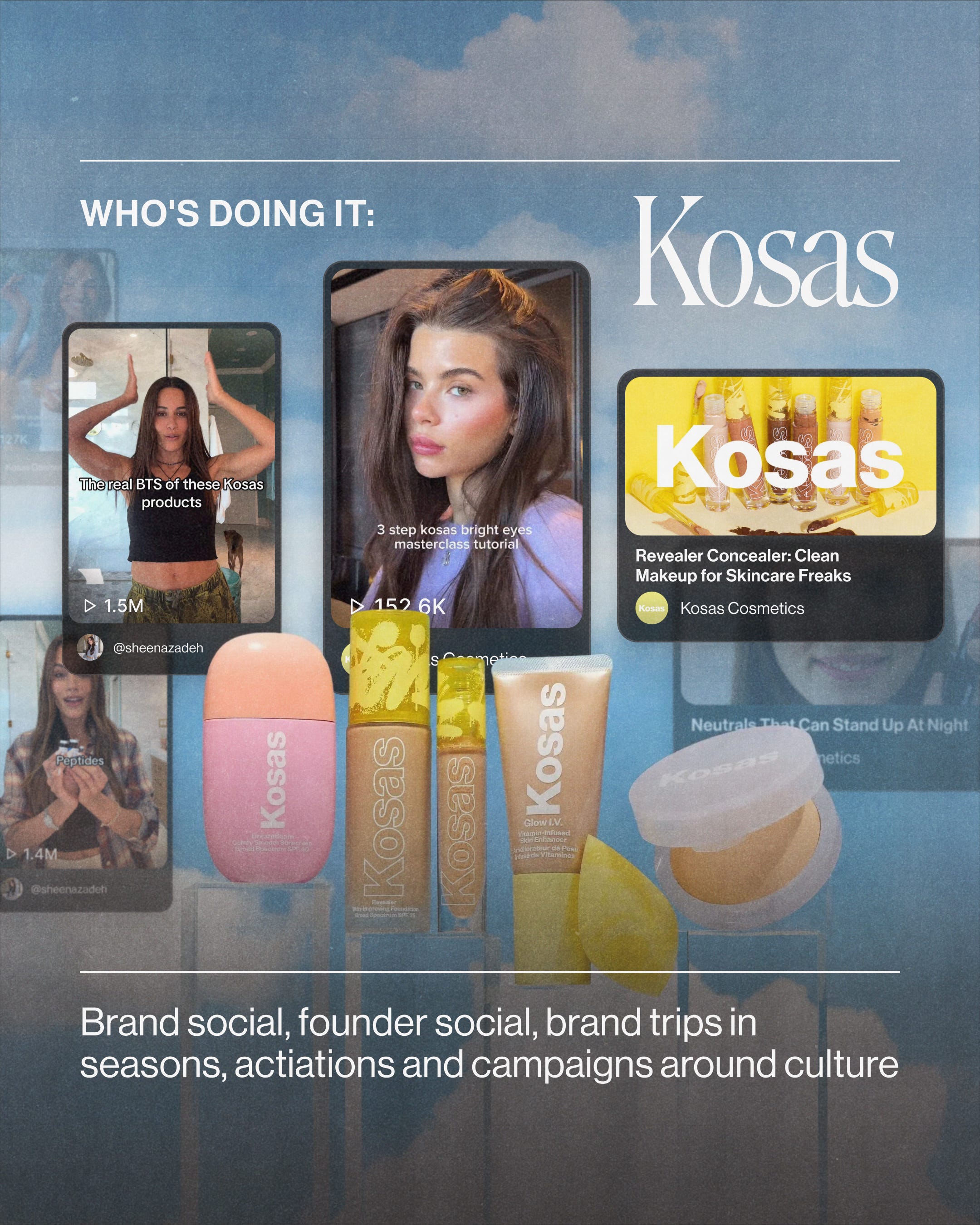
On March 24th, we’re gonna go through all the questions you have about building systems like this in a brand live. Don’t miss it.
Join the live call here → https://www.creativedirector.net/creative-ops
Making better content by understanding shot types
If campaign footage is looking impossibly good right now, even from creators with a phone and small budgets, it’s not luck. It’s a combination of understanding shot language and knowing the tools to replicate it.
In this video I described how you need to update your vernacular to help make better video. Lets get into how to do it
If you want to focus on retention (increasing watch time, which impacts overall content performance on social media), it’s worth having a library of techniques you can use when creating, and also know you have a technology suite to help you in post.
Here’s a few good examples to start with, and workflow on how to get more and use them.
Shot types starter kit
Bolt Cam is a motorized camera arm that moves up to 6 feet per second in any direction. The result is that otherworldly speed you see in high-end campaign footage. Replicable in AI generation if you describe the motion correctly.
Focus shift is when the focal point moves from one subject to another within the same frame. Simple technique, massive emotional impact, especially between two characters or objects.
Parallax is the visual effect where a foreground and background move independently, creating the illusion of depth. Think of it as the camera revealing dimension rather than just moving through space.
Dolly zoom is the disorienting effect where the camera physically moves one direction while the focal length adjusts the opposite way. What you’ve seen in moments of shock or realization in film. It creates that stomach-drop feeling of the world shifting beneath someone.
A tracking shot follows a subject in motion, keeping them centered while the environment changes around them.
The Freepik workflow
About 90% of the examples I’ve generated in the video above start with either a single still frame or a start and end frame. That still image can be a photo, a screen grab from existing footage, or a reference image you’ve collected.
From there the process is:
Pick your shot type from the list above. Pick your model (I’ve had the best results with Seedance, but test your own). Then describe it the way an art director would brief a cinematographer. What is the camera doing. What’s the focal point. How fast is it moving. What’s happening in the background.
That specificity is everything. Vague prompts return vague video.
My actual cheat code
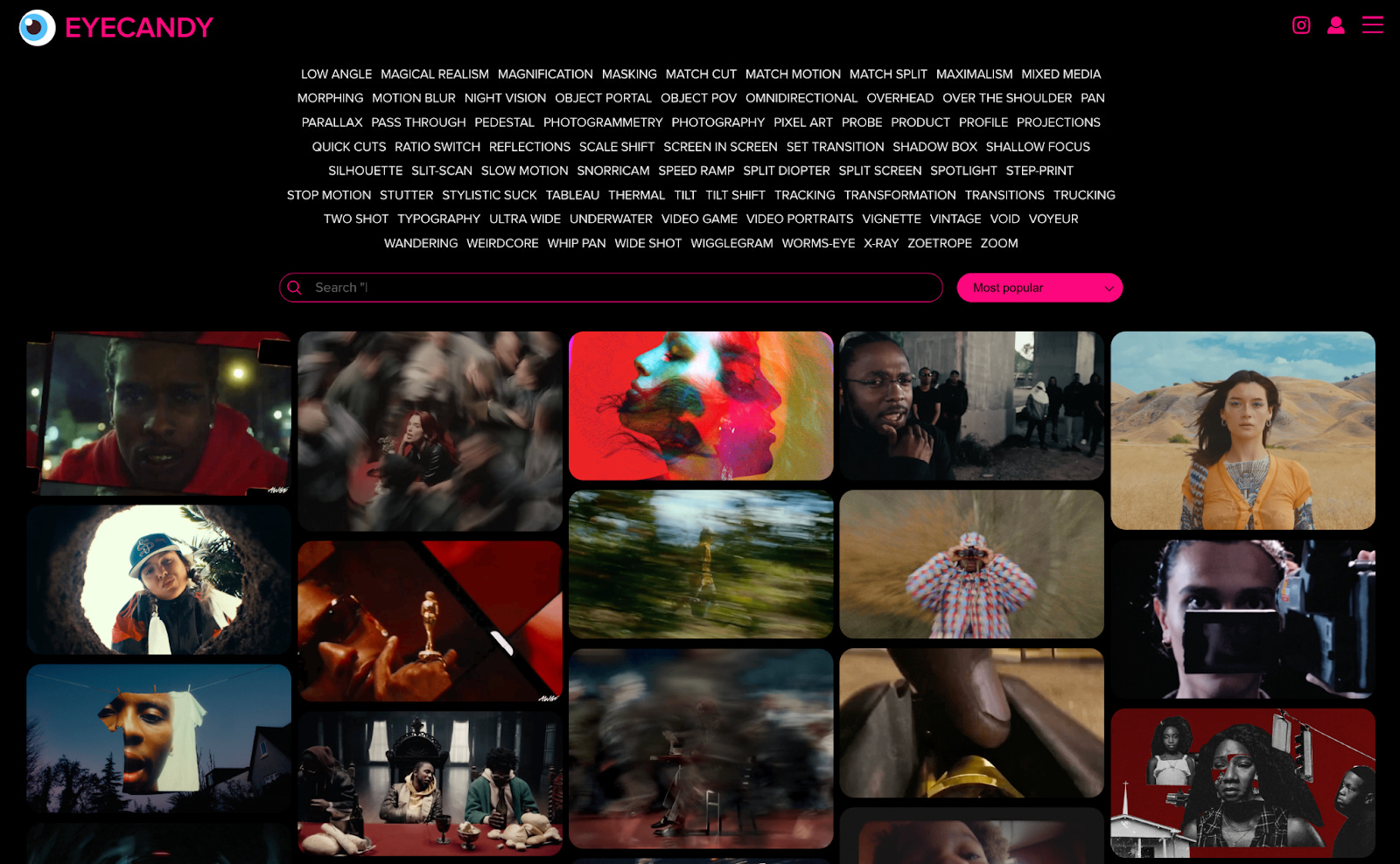
I keep Eyecandy open in every production. It’s a reference library of shot types and transitions used by cinematographers. When I need a hook, a hero moment, or a transition that hits differently, I pull something from there.
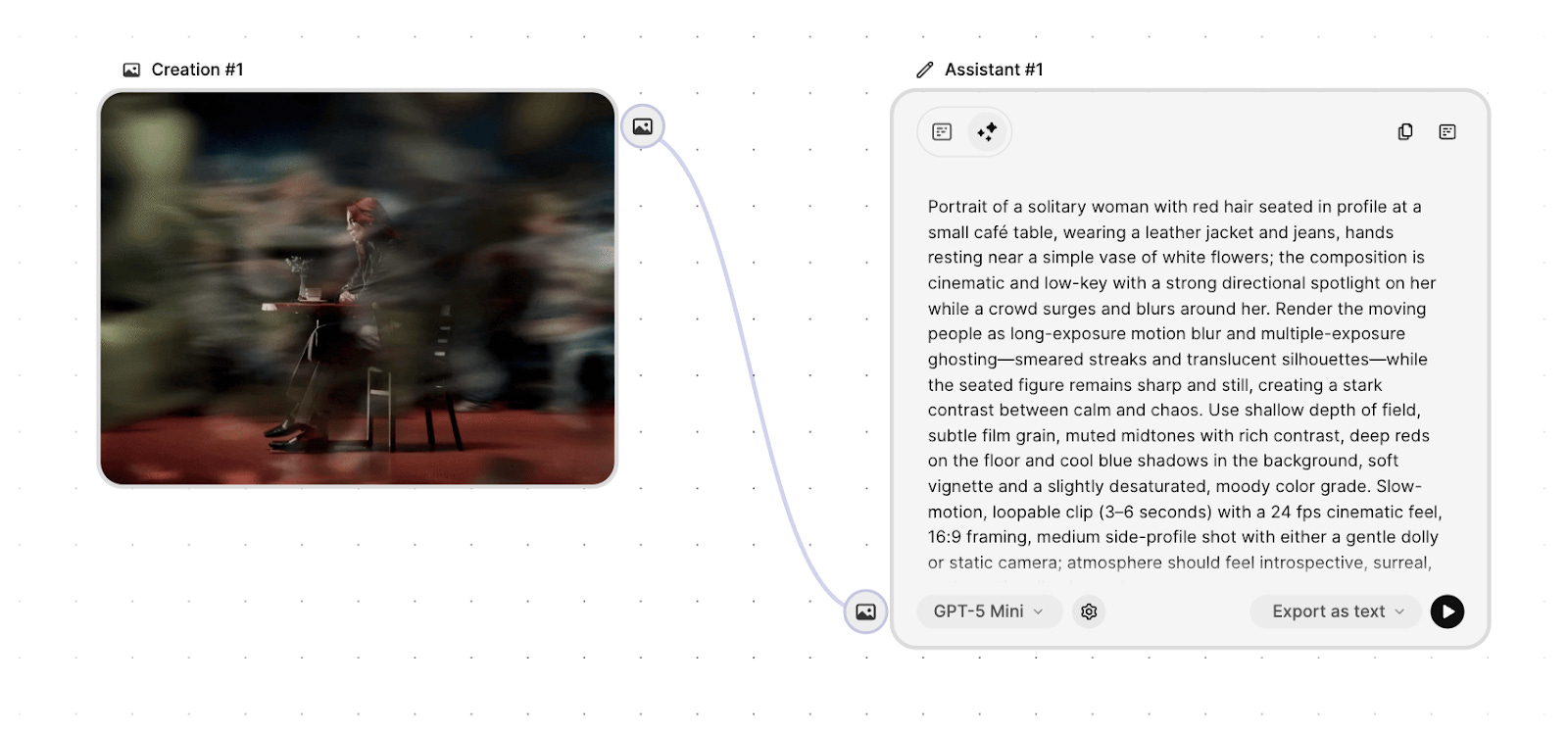
The bridge to Freepik is simple. I drag a gif from Eyecandy into the Freepik Assistant and ask it to describe the shot in prompt-ready language. Then I take that description and apply it to whatever image I’m working with.
My prompt for the assistant: “Describe this gif so i can use the prompt to generate a similar video effect on a different image” and then I have a great setup prompt to use for effects and transitions.”
Exploded Views Pro tips
For product exploded views like in the video, the prompt structure matters more than people realize. You want to describe the disassembly in sequence, specific components lifting away in a specific order, each part suspended and legible.
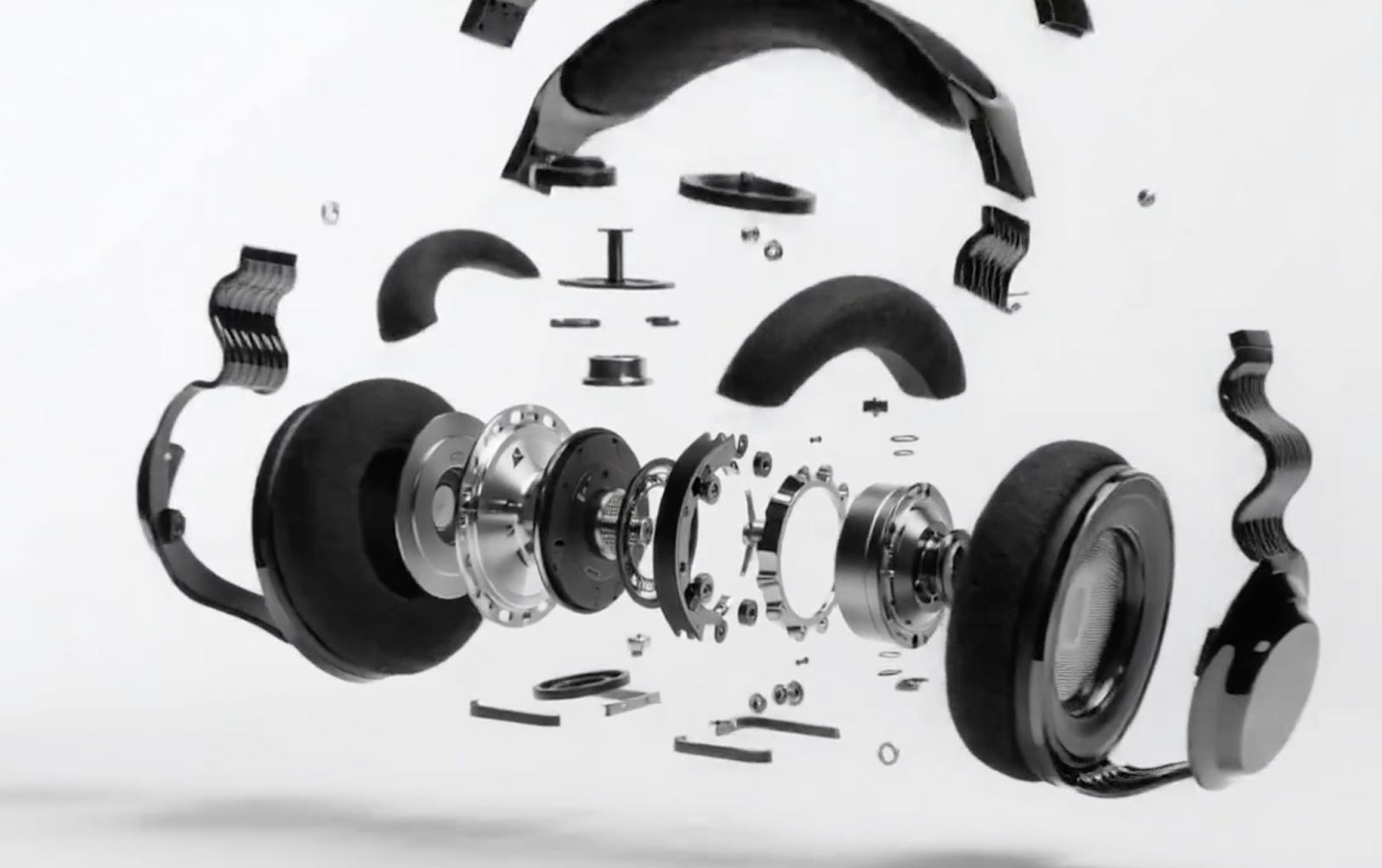
a. Example prompt: Then the decomposition begins — the headphones smoothly and elegantly disassemble in mid-air, each component separating and floating apart in slow motion: the glossy shells drift outward, the felt cushions lift away revealing the internal drivers underneath, the headband segments separate one by one fanning out, the tiny screws and magnets and mesh grilles all suspended in space, perfectly organized, every single part visible and floating in a constellation around where the headphones were.
b. I will then ask Claude for a realistic list of parts that are internal to the product, and ask it to list those out in an order of the build that is accurate that I can give to Freepik to generate the exploded view realistically.
Learn more about Freepik here: https://www.freepik.com/spaces
The video above was sponsored, but this newsletter is put together just for value.
The Brandfathers Discuss Storytelling, Mainstream Ads & The Rising Value of Creative Talent
You’re regular dose of deep dive marketing conversations from Oren, Ashwinn and Jordan.
From around the web:

As always…
I am training creative strategists and marketing teams for brands and agencies how to navigate the new world with Creative Strategy
and teaching anyone how to be a creator who actually gets views in Cut30.
Thanks for reading.
-Oren