


You have no competition, for anything really.
There’s a parable out there I’ve mentioned on Youtube before, that breaks down a 100 of your personal “competitors” at any given time into buckets. Let’s do the exercise with marketing and brand strategy in mind.
If you want to be an absolute creative weapon, do the most interesting projects in the world, never want for work, be wealthy enough to create what you want, on your terms, say there’s 100 other people in your city, state, scene, whatever that even desire that.
I’m not even talking general population here… just 100 people who want to achieve the goal you also want.
80 just wont start. Scrolling, lost in their own excuses.
10 quit too early.
The classic “I made content for a few months, I bought the marketing course, I made the freelance website, bought the agency domain, then I just went back to what i did before”. Happens to all of us.
5 get shiny object syndrome, (my curse for too long)
You do it and it goes well and then you jump with equal vigor into something tangential instead of doubling down. Not a bad path, but also not your competition.
2 more get unlucky - life happens, health, family, bad company, whatever.
There’s 3 left who are even in the game, of which you would be one.
When there’s only three of you... you’re not even competing, you’re probably better off helping each other and working together.
Extrapolate this out, say you’re doing this, in marketing, in New York City. How many people have that goal? 1000 at the absolute and utter highest? Your cohort of doers is 30.
You have no competition (besides yourself)
I’m not going to give a faux motivational talk about how the only time you need is locked inside your phone (still true), but I will say that having no competition is even more pronounced with the toolkit we have available to us. Once we have a solid foundation, our ability to act and be actually good at things fast is radically enhanced by modern software. So is our ability to take our expertise and make it replicable to scale operations, which I’m going to discuss below. If you are just learning, everything I’m about to say will be overwhelming. If you’re an operator... this is your time.
I watched a talk the other week at FWB Fest that put into words a concept that had been on my mind.. the basic premise was that software is now so much lower cost to create that you don’t have to design it for a big TAM, or mass adoption. You can make it for... yourself.
Your team, company, your niche, your community. Your social scene.
And we haven’t seen this hit real adoption yet, just the fringe layers, mostly because of the gap between who is building on networks like X and at tech companies in SF, and the kind of people that actually are on teams in companies, are interesting people in various niches, have communities and social scenes in the real world.
There is a chasm between those two social graphs.
But it is changing, and it is radically important to understand why and how to act on it for your career, and also life.
The internet democratized access to general information, social media democratized who gets to benefit from attention, and the personalized software era is something I liken to The Matrix.

In your brain, go to the scene when Neo is loaded with the ability to learn Tai Chi or specific skillset in minutes that feels like science fiction - well now an ambitious adult with critical thinking trying to perform a task is going to have access to super-intelligence to assist them in a similar way, not instantaneous, not innate, but surprisingly close.
Before we go further, let me explain how this happens, because it’s NOT by opening a search browser or an LLM and asking a question.
For years we have logged into programs built for specific tasks. A CRM to log actions, a calendar to book meetings, a camera app to take a picture.
And now we are in this world where people assume that the hot new thing is a chat. I can ask the all seeing AI oracle whatever and get the answer. That’s... level... 1. This is not thinking big picture or seeing the advantage.
We need to be creating...
Luxury Agents
Let’s define some terms
Chat - ask a question to an LLM that goes and sources an answer and prompts you to help make the answer better. You search on Google, or type into Chat “best flights to italy” and you get an AI summary and some followups.
Skills - reusable instructions, examples, templates and resources, one repeatable workflow that doesn’t operate by itself. A perfect example is my popular “flight search” skill for ChatGPT that gives you cheapest business class options if your dates are somewhat flexible. You can modify this for any flight versus just business class to just hunt general deals, and it gives you a more robust solution that trying to do it in flight search software or via an airline and automates something that would take hours, and the skill is shareable so anyone can get a file and plug it in their own ChatGPT.
Agents - are an AI worker with instructions, tools (access to the internet, access to specific connectors) permissions and run time. To keep the travel association, my friend James recently tweeted about an agent called Miso that works on travel options and points discounts. It has access to your airline status and points, it also has access to Virtuoso (travel agent network that provides deals and has rare access for luxury clients) and direct deals with airlines. So now your agent is using access to give you an advantage, with the ability to use the data of your points and redemptions to have context on the right decisions, and take actions.
These are not new concepts, most software is simply a series of connected simple skills in an interface, now they just have the ability to reason in the layer of information that’s provided back to you and you can control the context, parameters and voice of that reasoning. So much AI has been used to build software we use today, and is built inherently now into its functions as of the last 18 months that they are essentially becoming synonomous.
But how these become useful to you is going above the defaults. Creating luxury experiences.
I use the word luxury specifically, in addition to being a trigger it has codes behind it. An implication of expertise, skill, access requirement and branding that make the experience... pleasurable, memorable, quality, better, worth a premium (we’ll get to worth later).
A framework for how this pertains to the creation of skills, agents and software you can create (and remember, you can and should be creating things JUST to enable you)
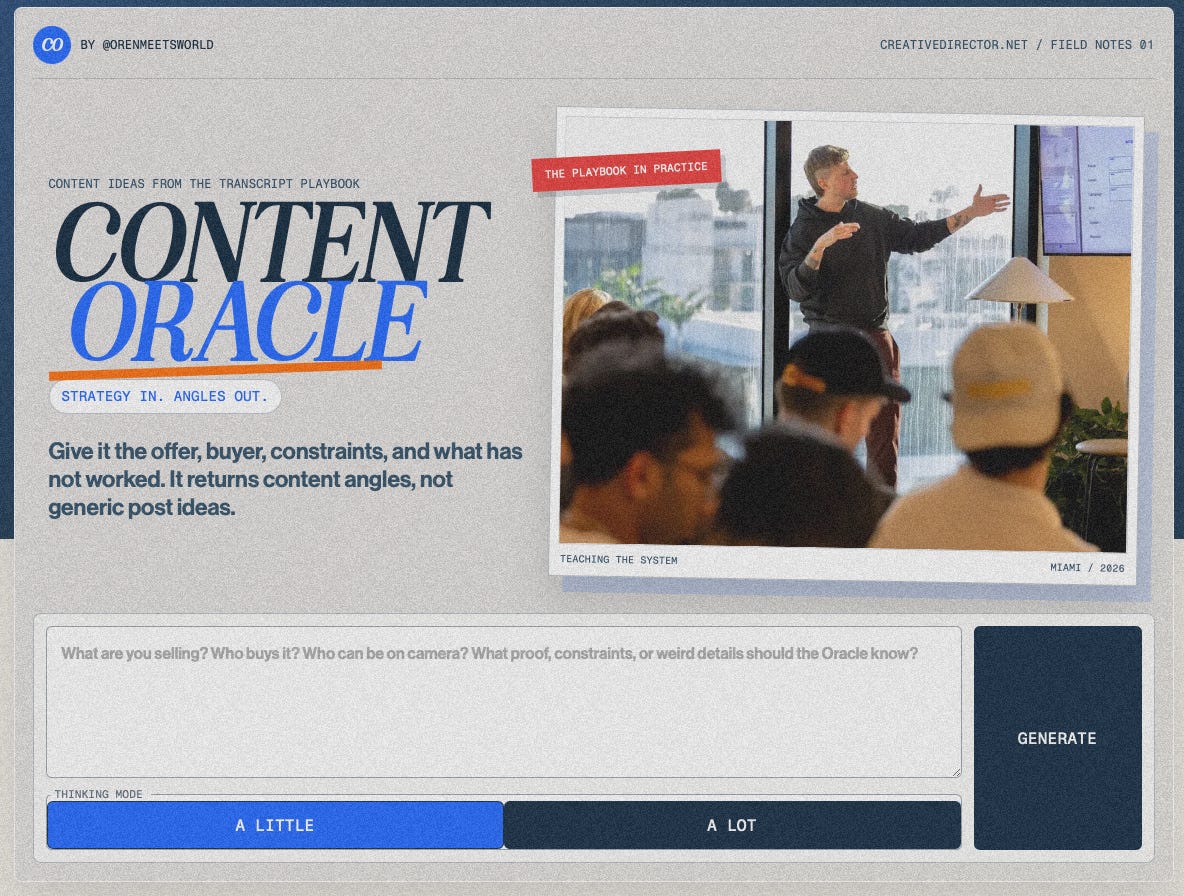
Curation - everyone assumes to create something you give it a pile of information, as much as you can (dump all the brand materials in the project!) or allow it to search the internet at large through an LLM interface. While that works, the critical selection of material and applying strategic filters to what can be decided and how, allows you to create experiences with improved efficacy. For instance, in my Content Oracle product that gives social ideas for brands, it has ONLY my idea frameworks, access to data from my curated library, and my terminology lists, information on what I consider good and bad etc. The skill is trained to ONLY get information on the subject being asked, all tactics must come from the material. If it was to use the LLMs access to the internet... or I dumped a bunch of guru guides to social and random youtube transcritps... it would be significantly worse. This is one of the core reasons its so much better than asking the LLM directly, or tools that just throw a bunch of transcripts into a project.
Access - can you include something in your tool not available to anyone. The Miso example was perfect. Enabling an agent with access to partner pricing and flight and hotel access not available to a consumer online that only a travel agent would have is a differentiator. There’s a reason everyone’s hoarding rare brand and design books and its not just for clout...
Personality of result - standard chat response is... often off-putting to intellectuals, or mirrors your conversations with it in a way thats uncondusive to the experience of specific tool--the output and answers given by what you create should feel like a boutique experience, a bespoke voice for that specific problem, whether that means simple language or the nuance of a mentor, all depends on the problem being addressed. This also needs to be relentlessly feedbacked. Is it presented in the right tone? Is the information right? For all the tools I’ve built the back and forth feedbacking the output has been the longest process
Actionability of result - providing just the written answer is different than providing the idea, the outline, three steps, recommendations for who can complete them for you, let me scan your account and take a first stab... A designed infographic versus a text dump. What is the best format for a result? We need to measure the success of our tools by the likelihood someone actually uses the output.
This is a big one for when what you build goes beyond yourself, “can others intuitively use this” is a critical factor to plan for, and varying degrees of tech literacy and willingness to actually want to be better at work mean team adoption is a bigger challenge than enabling yourself.
Let’s talk about that.
I’m saying all this above to say that if you are an excellent creative, marketer or operator at anything... lets start with... website designer as an example, you are going to be able to build skills and agents that reduce your time on work significantly. If you then wanted to improve your skills at copy, you could follow that same framework to create a partner that will learn with you and give you a running start far better than what you would have been able to do yourself.
Need to rethink positioning? Grab one of my skills...
Setting up a new meta ads account? Grab a specialists skill to go through step by step campaign and ad set based on your scenario.
You’re building a toolkit that will enable you for your career, and you are ahead. Most of the skills you operate with in marketing now work like this. You can reduce the time needed and improve the result of your efforts, and then add more to your specialist skillset so you can function far more independently. It is no longer generalist or specialist, it is software enabled multi-specialist (examples coming).
The biggest gap? A lot of people don’t want to be better at work. They’re in the 80 above. They’re not going to do this. They rather comment angrily unsure which propaganda they’ve fallen for, their head hurts when the word “software” or “process” comes up.
I beg you, do not give in to this.
The next level is sharing these tools with a team. If you want to move from web design to running the design agency, can you deploy your existing templates, SOPs, skills and agents to those people you hire and can they use them? Now your personality and actionability of output have to change to accomodate more than you. If I walk into a new job and want them to use my social tools, thats different than brainstorming myself.
Then if you released something paid or for a community, the stakes raise again. More functions, better guardrails to prevent dumb inputs, actual security etc.
If you’ve built or done product marketing for software before you’ll probably realize a lot of this is counter-intuitive to those experiences. They’re all about mass ability to easily use, getting to the next task seamlessly, building for everyone, for scale. This is building for the few versus for the many, and it is a core skill of how we will work going forward.
Speaking of adoption, lets get back to the infrastructure. There are two ways this new generation of technology is deployed
Within an existing interface - you call a skill or a connector inside ChatGPT. You setup an agent to run, maybe it can text you, maybe it’s in your Slack. For those spending a lot of time natively in those apps, for power users, thats an amazing flow. For people that do not... they hear things like MCP or integration and their eyes glaze over. It won’t work, or someone has to install it for them. Which leads us to:
Presented in a specific, designed interface for that task - like a traditional web app or mobile app. It gives the creator the ability to control the outputs, what they look like, are they bulleted, overlaid, is there a before and after image. For many more complex tasks, and for anyone who doesn’t spend a good chunk of their day in a LLM this is actually preferable, a dedicated service for a task they want to do, that they can connect by MCP if they are a power user.
With all this context, let me break down examples of what I and the team are building.
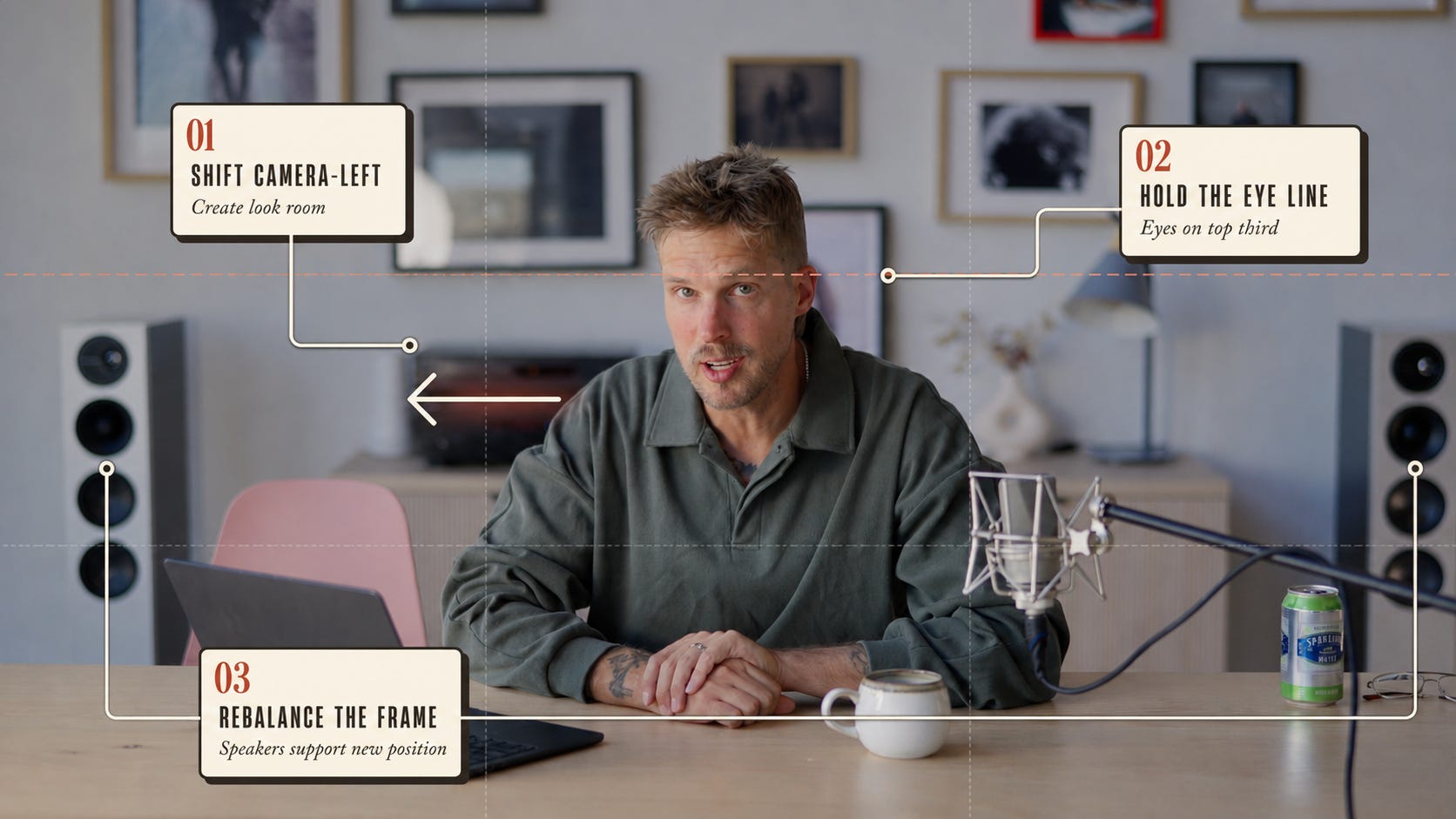
One of my next releases is called Deakins, its an internal tool I built to film more professionally. I make content every day, I’m on shoots constantly for myself and for brands, and I’m not a videographer. I have watched Youtube tutorials an still just don’t understand lighting or framing the way I’d like, and I can’t really get anyone to help on every one of these occassions. So I took a dozen video transcripts, diagrams from extensive vlogs and tutorials on setup, and I built a tool that will feedback a screenshot of any setup and advise how to fix its lighting and framing in 9x16 or 16x9. It’s incredible, and will take anything to a B+ relatively fast. It gives prioritized lists of what will improve setup, has me lighting my shots from the back with LEDs, and if I take the instructions into ChatGPT with the screenshot it will give me a diagram and mockup of what will change. You can save setups to compare them and the notes in “rooms”. This is the perfect example of something I suck at, that I built a repeatable skill to help fix that is better than asking an LLM directly. I’m not a lighting expert, but I have one I can use on any shoot in minutes.
Content Oracle is a skill I put in a UI, that also works in any LLM chat, that gives cotnent ideas for brands based specifically on my methodology. We relentlessly feedbacked the output, so that now it’s good. Every answer has a viral vehicle from my list like a comparison, math element etc that increases the videos likelihood of retention and sharing. It pulls common questions and tropes for categories in, it develops scenarios based on winning content. It’s sick, extremely useful, and free (for now).
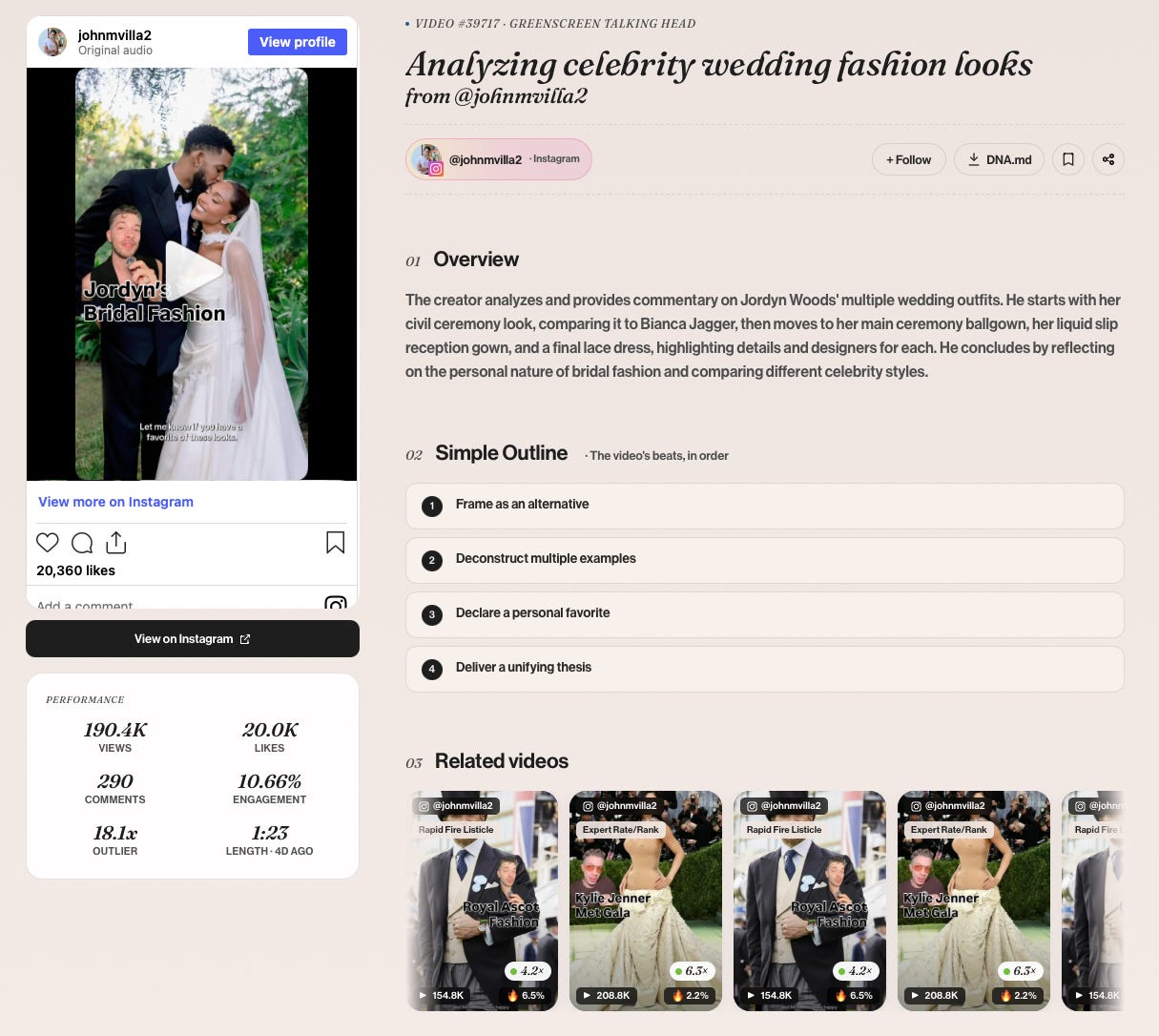
Video database - The big dog. We catalog every Cut30 grad and all their videos, plus every creator we or any brand I’ve worked on tracks and rferences, and any request from community, into a datbase of videos. You can sort them by video concept (storytelling vlog, comparison), niche (real estate, marketing, beauty), format (carousel, 1 shot, vlog), and then if they’re an outlier. When you find them they’re broken into outlines, hook recaps, scripts etc, and formatted exacrtly so the user can copy them as the basis of a brief for UGC or an ad. It’s sick, it has related tools for things like transcription and carousel scripting, has thousands of active users, and access to it is a huge benefit of taking Cut30. Landforce vibe coded it.
Landing page builder (was public, private again now) - my tool that uses three specific tones of voice from different marketing copywriters (direct response, evidence led, narrative driven) to give you landing page options, and shows them to you on a mock landing page to visualize it. It does copy for specific sections in specific ways base don your briefs, and will get you to a 75% landing page fast, or take an existing page and give you narrative options. Great example of the visualization element being a useful component. All made in ChatGPT Codex. I have deployed 100+ pages with it for client projects. This plus Replo for Shopify and Framer Agents for services/info is an absolute monster workflow.
Positioning tool (as yet unnamed)- The next one to release is a tool that workshops positioning for a new brand, brand refresh, product or campaign. It’s been an odyssey to assemble and we have pulled hundreds of docs, scanned books, built sick context and its so valuable but so niche im not even sure how to release or market it or what to charge.
I have built all of these (Landforce built video database I just annoying message him what would make it sick). I am not a developer. There are logins, permissions, hosting, accounts, things are linked on the backend, SSO. It is not an exaggeration that anyone can do this, especially at this micro-scale I am discussing.
Disclaimer here. A year ago I was really fed up with all the AI bros in my life who talked a lot about these concepts but didnt really make anything useful. I have come around fully because I have real ideas and genuine workflow issues I’ve been able to solve. They were right about capability, but lacking need.
And this seems like the right time in here to have the AI in work and life conversation. I am personally, professionally, deeply all-in on building with the new technology we have. I have tested EVERY piece of software. ChatGPT, HyperAgent, Emergent, Manus, Cursor/Grokbot, Claude, Lovable, Gemini, Notebooklm, Perplexity, a dozen others.
I build mostly with ChatGPT because
a. codex is incredible
b. the majority or people in business uses it so it can be integrated to teams easier (this is a much stickier point than expected).
I’ll use any tool that will be the best for its specific job, and I strive to have complete command of the field to be able to critique use or application accordingly.
In more niche news, Runneth and Framer Agents (credit cost be damned, real ones know) are critical to my workflow every single day.
If I say this in any business setting, it is rewarded.
If I say this on video on social media, it becomes... controversial.
I will say this once. The only moat left is obsession.
You are either learning these tools and getting good at them enough to be selfishly assisting yourself and building teams that move at the speed of modern competition... or... if you are resisting, if you are not all in on whatever it takes to play at the highest level you will be lost in the never ending shuffle of hr auto-assessment if you are not a singular 1/1 individual visual creative.
The online conversation around this will use whatever propaganda it possibly can to fulfill its goal which is purely to keep the argument going. More views, more likes, more videos, more dopamine from angry comments, regardless of any nuance is the ONLY priority of this conversation online and you have to move past that professionally like the rest of us.
So how do you actually build something good for you or others?
The Process (for inside ChatGPT Work)
define inputs: what curated set of text/pdfs/instructions can help enable me
optional: add access, look at what wouldnt be accessible elsewhere (if you have it)
define ideal output of format: what makes it easy to act on
define voice of result, and QA it relentlessly (skill that tone once you make it)
look at default way users will to engage - throw it inside ChatGPT? MCP to Slack? its own interface to better display unique outputs?
define presentation, the look and feel of the interface if you do that (skill this, ours look the same because we made a skill out of the first good one we did we can ask ChatGPT for repeatably)
free Github and Cercel accounts will get you online in ChatGPT sites and it will handle all setup for you once you create them, you don’t need to know anything just let Codex cook
run the results into the ground and keep feedbacking until A-/B+ output, it will never be perfect
incorporate comms/feedback if others are using it so you can see whats going wrong. Simple feedback submission at bottom that triggers to you (just ask ChatGPT)
And then... how do you define its value?
To you: I would be focused on hours saved, dollars saved (whether in paying for expertise or team). For example the video setup app allows me to not have to source someone to come film with all the time, or pay someone to setup the lighting in my home studio setups.
To your team: this is all about success of enablement / adoption. The number one battle is getting people onboard, using, feedbacking and excited. This needs to be an inherent process in any company onboarding and you need to be fighting any IT or politics that prevent it from being a priority.
To others: relative value - there is no price comps out there for this new era of software. There are vibe coded tools at $29 all the way to my friend Jeremy Haynes runs Jeremy AI and I think charges $1000 a month for it... which is cheaper than paying to be in his agency. The value is relative.
So to wrap up this... lengthy diatribe, let’s talk about REALLY IMPORTANT SKILLS in this era.
There are two
1. deciphering and shaping the outputs of software into useable work - you cannot simply copy and paste results from this new era of tools, you need to be able to go through, humanize, improve, and apply a critical lens. I’ve become good at this because i’ve feedbacked easily 10000+ videos in Cut30 (this is crazy but true) so I’m use to reviewing scripts and text and providing thoughts, making edits. Same for all the things I’ve worked on over my marketing career - landers, ecom descriptions etc. You need to become an actual good writer with a knowkledge of the common internet formats (content script, landing page, product description, personal email etc)
2. Making strategy acceptable to decision makers (and increasingly... their agents, but ill save that). Selling ideas in a fringe world, bringing in relevant parallel examples, plus establishing matrices for measurement and following up, basic decks. Incredibly valuable, hard to learn.
The last step here. You need to be hunting constantly for areas you or your work need help in you could solve with an agent or skill and real problems facing your ICP you can build solutions for as a creator or professional.
I keep a running list
Examples from it that I’ve tied into
good content has a far higher standard to succeed than a year ago, and brands can’t even generate ideas worth testing at the new standard
I made the content oracle because of this.
Meta Ads is still the core business builder of our time in almost any industry and everyone is too scared by the interface and terminology to learn it (someone should make a killer setup skill for this that just asks questions then prompts you on campaign and targetting types and gives you step by step what to click to setup)
As AI is treated as near political, stances on it are becoming core personality traits, and anyone positioning against it is setting themselves up to be at a massive disadvantage in their career (the impetus for this writeup)
Successful marketing is increasingly fringe to non-marketers, making it harder to get signoff (on my mind)
Thanks for reading. I am more invigorated than ever to share the processes I am going through as a part of Darkroom, as a growing creator, and as an advistor to brands dealing with this. More intensives are coming.
Until next week,
Oren
Want to scale your brand with us? darkroomagency.com
The next Cut30 short form bootcamp starts September 16th: https://cut30.co
Quote from an Ai IT conference called Qbits in Montreal. "In a sea of solutions, you have to ask the right questions to be solved"
Loved this and completely agree on the AI stance now becoming a core personality trait. I agree that it will leave some people in deep shit at some point.
I enjoy exploring how to use these tools to become better at a job you were already good at.
This is where I believe we’re seeing the split.
As a stylist who worked agency side and large marketing campaigns for years, it’s super interesting to think how to use this technology in a new way for that industry.